

Some watches tell the time. A select few alter the trajectory of human history, redefining aviation, warfare, space exploration, and global manufacturing.
These are often referred to as “timepieces” by enthusiasts. These are the people you usually exclude from the braai WhatsApp group the next time people in your circle arrange a meet-up. This is usually because they will wax lyrical about the horological significance of the watch they’re wearing while you’re trying to have a discussion about Chinese SUVs or how the Springboks are the only good thing about South Africa at the moment. I urge you to read on, learn a bit, and maybe, the next time out, you can be the pretentious know-it-all at the social event.
If horology were an engine bay, these five references aren’t just cosmetic body kits—they are the core engineering breakthroughs that accelerated humanity into the modern age.
1. Cartier Santos (1904)
The Blueprint for Modern Aviation
The Automotive Equivalent: The Ford Model T meets the Wright Flyer.

Before 1904, gentlemen carried pocket watches. Wristwatches were viewed strictly as delicate jewellery for women. That changed when Brazilian aviation pioneer Alberto Santos-Dumont complained to his friend, Louis Cartier, about the sheer danger of taking his hands off the flight controls of his airship just to pull a pocket watch out of his waistcoat.
Cartier’s solution was radical: a flat, square, geometric wrist-borne instrument with exposed bezel screws designed specifically to be read at a glance while flying. It wasn’t just the first purpose-built pilot’s watch but also the world’s very first purpose-built men’s wristwatch. By strapping an instrument to the wrist, Cartier liberated humanity’s hands and created the fundamental layout for how we wear time today. Legend has it he inspired the Moon Bag, and drug dealers have been grateful ever since.
2. Blancpain Fifty Fathoms (1953)
The Birth of the Underwater Tool Watch
The Automotive Equivalent: The Original Land Rover Defender 90.

While the Rolex Submariner captured popular culture, Blancpain got there first and established the exact design rules for every dive watch created since. Commissioned for the **Nageurs de Combat** (the elite French military combat swimmers), CEO Jean-Jacques Fiechter and Captain Bob Maloubler engineered a watch built for life-or-death underwater operations.
The Fifty Fathoms introduced three non-negotiable innovations: a lockable rotating bezel to track remaining oxygen, high-contrast luminescent markers on a pitch-black dial for zero-visibility ocean depths, and a double O-ring sealed crown system. A fathom is about 6 feet as a nautical unit of measurement, and depressingly, I’m not even a fathom tall! Rated to 50 fathoms (roughly 91 metres, the maximum operational depth for scuba divers at the time), it transformed the wristwatch from a splash-proof accessory into a life-saving tactical instrument.
These days, if your dive watch isn’t capable of surviving the murky depths of the Mariana Trench, is it even worth looking at? I usually spend most of my holiday time in the crushing depths of Challenger Deep, so I need 11,000 metres of water resistance.
3. OMEGA Speedmaster Professional (1957/1965)
The Outer Space Instrument
The Automotive Equivalent: Ford GT40
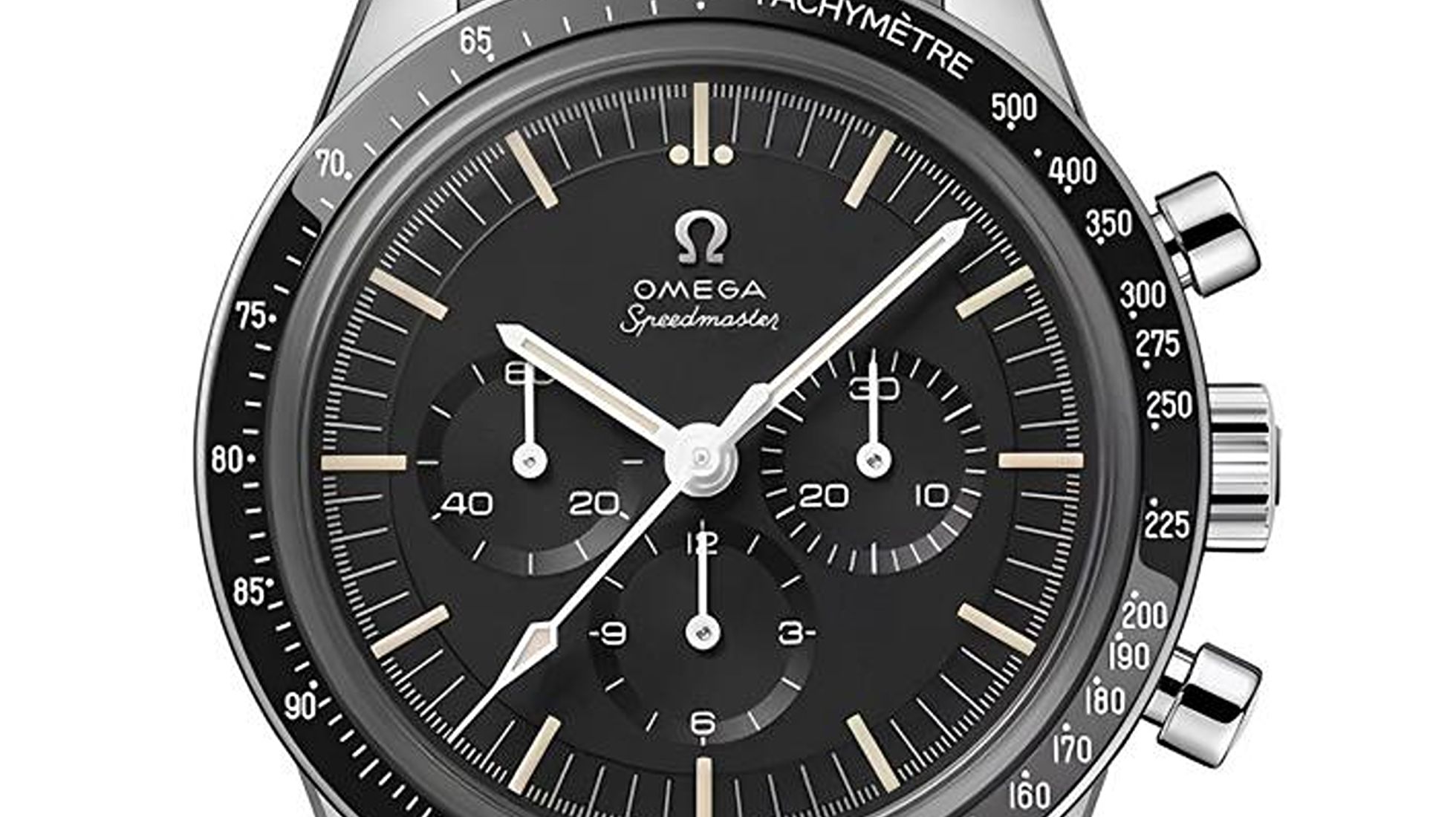
Originally introduced in 1957 as a manual-wind chronograph for sports car drivers and track timing, the Speedmaster’s trajectory changed forever when NASA secretly bought off-the-shelf chronographs to test for the Apollo program. Officially flight-certified by NASA in 1965, it survived thermal vacuum chambers, extreme G-forces, violent acoustic vibrations, and temperature swings from -18°C to +93°C, emerging as the only watch qualified for all manned space missions.
On July 20, 1969, strapped over Buzz Aldrin’s EVA spacesuit, the Speedmaster became the “Moonwatch”. More than just a moonwalk flex, it famously saved the Apollo 13 crew in 1970 when Jack Swigert used his Speedmaster to manually time a crucial 14-second engine burn to re-enter Earth’s atmosphere safely after the ship’s primary digital computers failed.
This is my favourite watch story and is one of the primary reasons I got into the hobby in the first place. How do you know that I own one of these? I’ll tell you about it all the time, that’s why. I am totally insufferable about the entire thing.
4. Seiko Quartz Astron 35SQ (1969)
The Industrial Revolution
The Automotive Equivalent: The Toyota Prius

On Christmas Day in 1969, Seiko dropped a grenade on traditional Swiss horology with the release of the Quartz Astron. Powered by a tiny battery and a quartz crystal oscillator cut into the shape of a tuning fork, the Astron was accurate to within 5 seconds per month – a level of precision no mechanical watch on Earth could hope to achieve.
By miniaturising and mass-producing quartz technology, Seiko triggered the “Quartz Crisis” (or Quartz Revolution), rendering thousands of mechanical watchmakers obsolete almost overnight. The Astron fundamentally democratised accurate timekeeping for every human being on the planet, shifting time from a luxury item reserved for elite craftsmen into a ubiquitous utility. If it wasn’t for Seiko’s innovation, I’d likely not be on this platform sharing my shower thoughts every month.
5. Audemars Piguet Royal Oak (1972)
The Birth of Luxury Steel
The Automotive Equivalent: The Lamborghini Miura

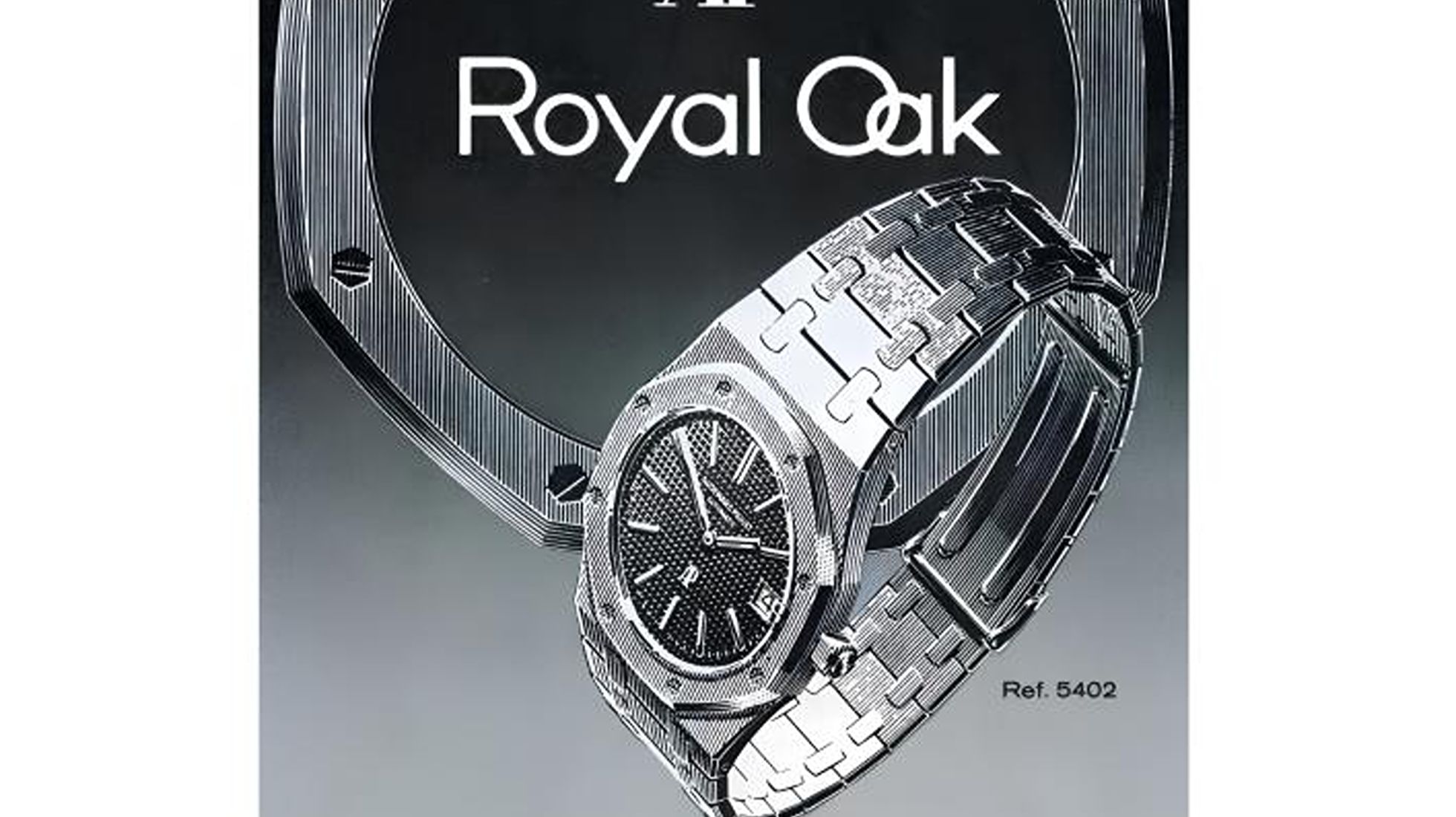
By 1972, the Swiss mechanical watch industry was on the brink of extinction due to cheap quartz movements. Audemars Piguet needed a Hail Mary. Enter legendary designer Gérald Genta, who allegedly drew the blueprints in a single night.
Inspired by a traditional deep-sea diving helmet, Genta designed an integrated-bracelet steel watch with an octagonal bezel and visible, exposed structural hexagonal screws. Imagine being so talented that you’re able to design something, in one evening no less, that millionaires everywhere will lust after for decades to come?
Before the Royal Oak, luxury meant delicate 18-karat gold dress watches. AP priced a stainless steel sports watch higher than many gold timepieces of the era, brazenly celebrating industrial steel as a precious material. It single-handedly saved Audemars Piguet, invented the entire category now known as “Integrated Luxury Sports Watches”, and rewrote the modern definition of luxury design.
These days, you’re more likely to spot one flexed on Instagram by handsome European chaps with suspiciously good hairlines, or tech bros who have never seen a diving helmet in their life. That being said, its legacy and desirability are hard to match. Any bitterness you detect from this paragraph stems purely from my jealousy.
Words: Gareth Cross