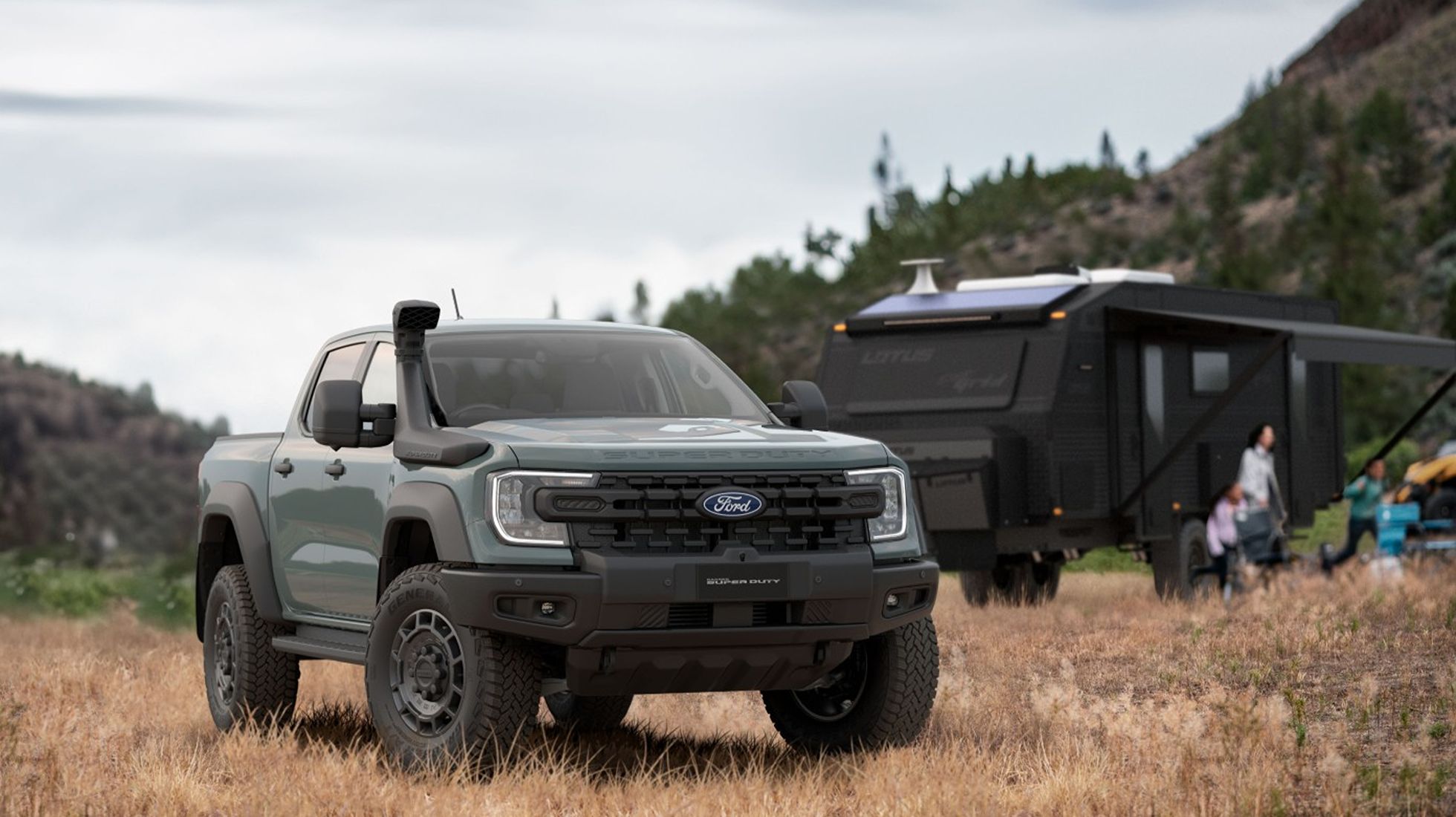
First Drive: Ford Ranger Wildtrak 2.3 EcoBoost
I came into this with baggage. The Ford Ranger is everywhere, and when something is like that, it gets easy to actually stop seeing it. The numbers always tell the full story. Ford SA moved 2,013 Rangers in April, making it the second-best-selling bakkie in the country for that month.
Even with that, Ford knows very well that the ground is shifting. The new Toyota Hilux is coming, and it seems to bring with it the kind of renewed energy that the world’s best-selling bakkie tends to bring to any segment. That said, the blue-oval manufacturer isn’t waiting to see how that plays out; instead, it’s giving its Ranger lineup a technical revamp, as it calls it. The biggest news, though, is the 2.3-litre EcoBoost engine, which is a different kind of answer to a segment that has largely been diesel-dominated for as long as most of us can recall. So yes, I came in with baggage.
What’s the 2.3-litre 4-cylinder EcoBoost engine about?

Firstly, it replaces the 2.0-litre bi-turbo diesel unit that was phased out at the end of 2025 and in its place gets the 2.3-litre 4-cylinder EcoBoost engine from the previous-gen Mustang. Ford says it has ‘massively’ revised it to suit the Ranger’s identity. Here’s the thing, though: this engine is strictly paired with the 4×2 drivetrain, while the existing 3.0-litre turbodiesel is for the 4×4 with an electronic shifter.
To answer the big question of why you’d choose the 2.3-litre 4×2 over the 3.0-litre V6 with 4×4. The answer, mostly, comes down to money and use case. The V6 4×4 sits considerably higher in the range, and not every Ranger buyer needs to go off-road, a contractor doing urban kilometres, a small business owner, or someone who wants bakkie practicality without overlanding ambitions. For those buyers, the 2.3 4×2 makes a practical case for itself. With both bakkies shuffling through 10-speed automatic gearboxes, they are capable in their own right, but I’ve always liked diesel for its efficiency and workhorse duty and petrol for thrills, and this engine, at least, earns its place as the latter.
And the revised 2.0-litre single-turbo?
Well, the 2.0-litre single-turbo engine in the XL and XLT variants has been revised. Gone is the wet belt timing setup, and it’s been replaced with a timing chain for longevity. Also, the fuel injection system has been enhanced for improved efficiency. This is the same engine that powered our recent long-term Ranger XLT 4×4 bakkie, and I can confidently say that efficiency wasn’t one of the XLT’s strongest attributes. Power remains unchanged at 125kW and 405Nm, accessed either via a 6-speed manual or a 10-speed automatic transmission.
With the departure of the 2.0-litre bi-turbodiesel unit, the Tremor now employs a 3.0-litre V6 turbodiesel engine with 184kW and 600Nm and a 10-speed automatic transmission plus a 4×4 system.
There’s now a Sport variant in the range…

Yes, there is. Though the range can seem a bit confusing, this is the best I can do to simplify it. The Sport slots between the XLT, Wildtrak, and Tremor models. It’s also available with the 2.3-litre EcoBoost with a 4×2 system and with the existing 3.0-litre V6 turbocharged diesel engine with a 4×4 configuration. It’s worth mentioning, though, that the Wildtrak-X is now offered as an optional package. In simple terms, not discontinued; it’s just moved from being offered as a model to an optional upgrade that you tick on the list.
As for the entire Ranger lineup, Ford offers a 12-inch infotainment system as standard, dual-zone climate control, premium safety systems to base models, while XLs are now bolstered with park distance control and lane keep assist, as well as adaptive cruise control and a blind spot monitoring system with cross traffic alert in the XLT. The Wildtrak variant now comes with Matrix LED headlights and heated seats as standard.
Any aesthetic changes?

Not so much. In fact, you’d have a tough moment trying to figure out the changes since this is mainly a mechanical and powertrain update, not a styling one. Fair enough since it’s been roughly three years since the current generation entered the local market. However, there are new wheel designs and new paint colour options, including the stunning Ignite Orange.
How is it on the road?

At the launch in George, Western Cape, I only got behind the wheel of the Wildtrak with the new 2.3-litre EcoBoost engine. Sure, 222kW and 452Nm are serious numbers, but the way it delivers them is what catches you off guard. It delivers power in a linear and progressive manner that is reminiscent of the previous-gen Amarok V6 with 190kW. Our drive included the rain-drenched 23.8km Swartberg Pass, and despite only sending power to the rear wheels, it never flinched. On the open road, the ride is comfortable, further complemented by a subtle diesel clatter sound, with the 10-speed automatic transmission working smoothly with the engine. It’s no Raptor, but it has long legs, and that counts a lot.
A strategic move by Ford?
To me, at least, this isn’t just another Ranger with a more powerful engine, or another ‘sticker’ launch. It appears to be a well-thought-out strategic move. The local sales champ and the most important model in Toyota’s product range, the Hilux, is arriving in the coming months with renewed energy. The Chinese marques aren’t standing still either, continuing to undercut on price while slowly closing the gap on quality and capability. Ford has clearly calculated the move by dropping a 222kW petrol engine into the Ranger lineup, and it’s less about filling a gap and more about giving customers exactly what they want. It would be interesting to see how the market receives the updates. As for the baggage I came in with? The Ranger bakkie’s presence shouldn’t be overlooked. These updates will prove crucial in keeping it a serious contender to the Hilux.