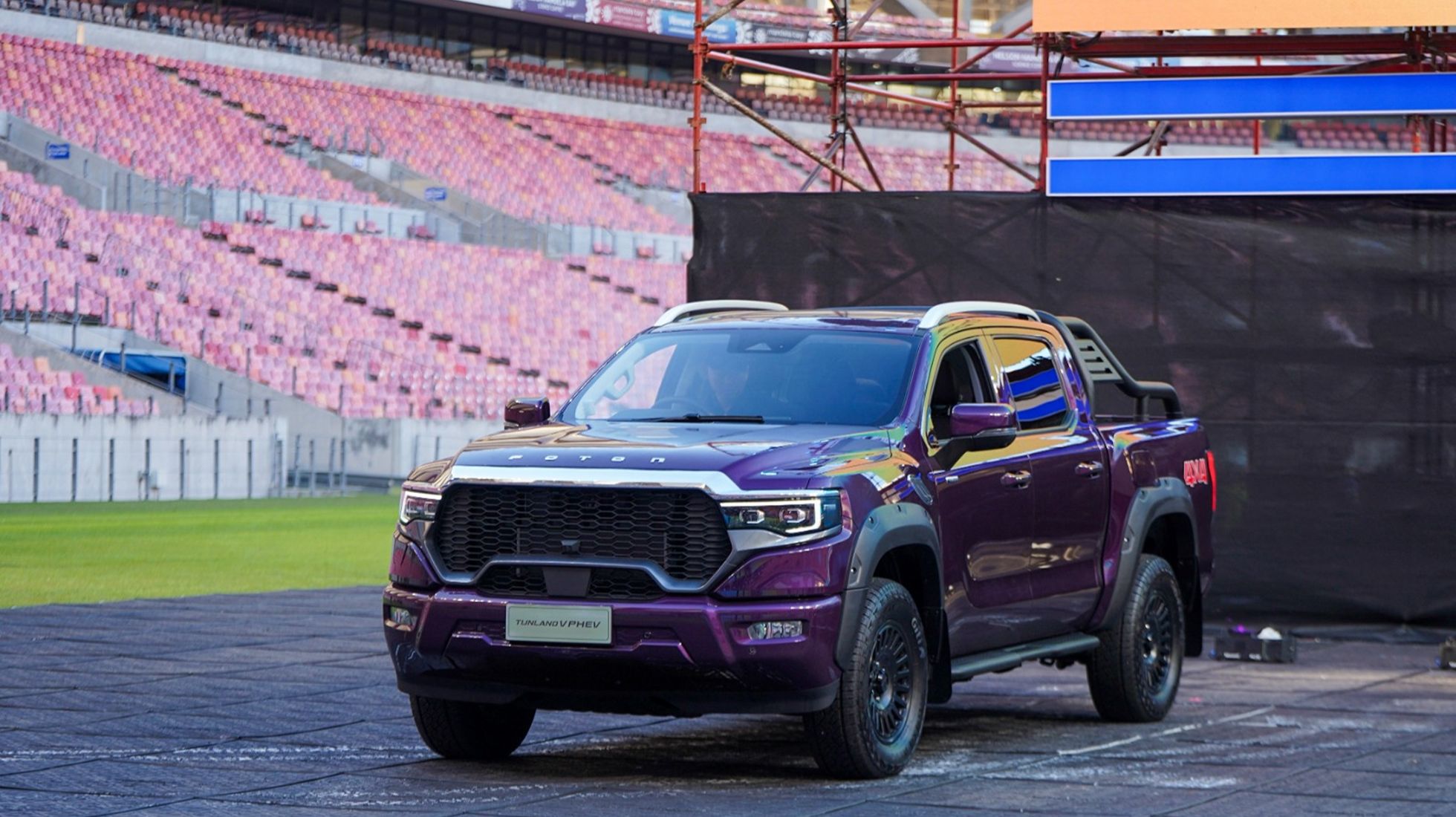
Foton Tunland V9 PHEV has the Shark 6 Performance in its sights
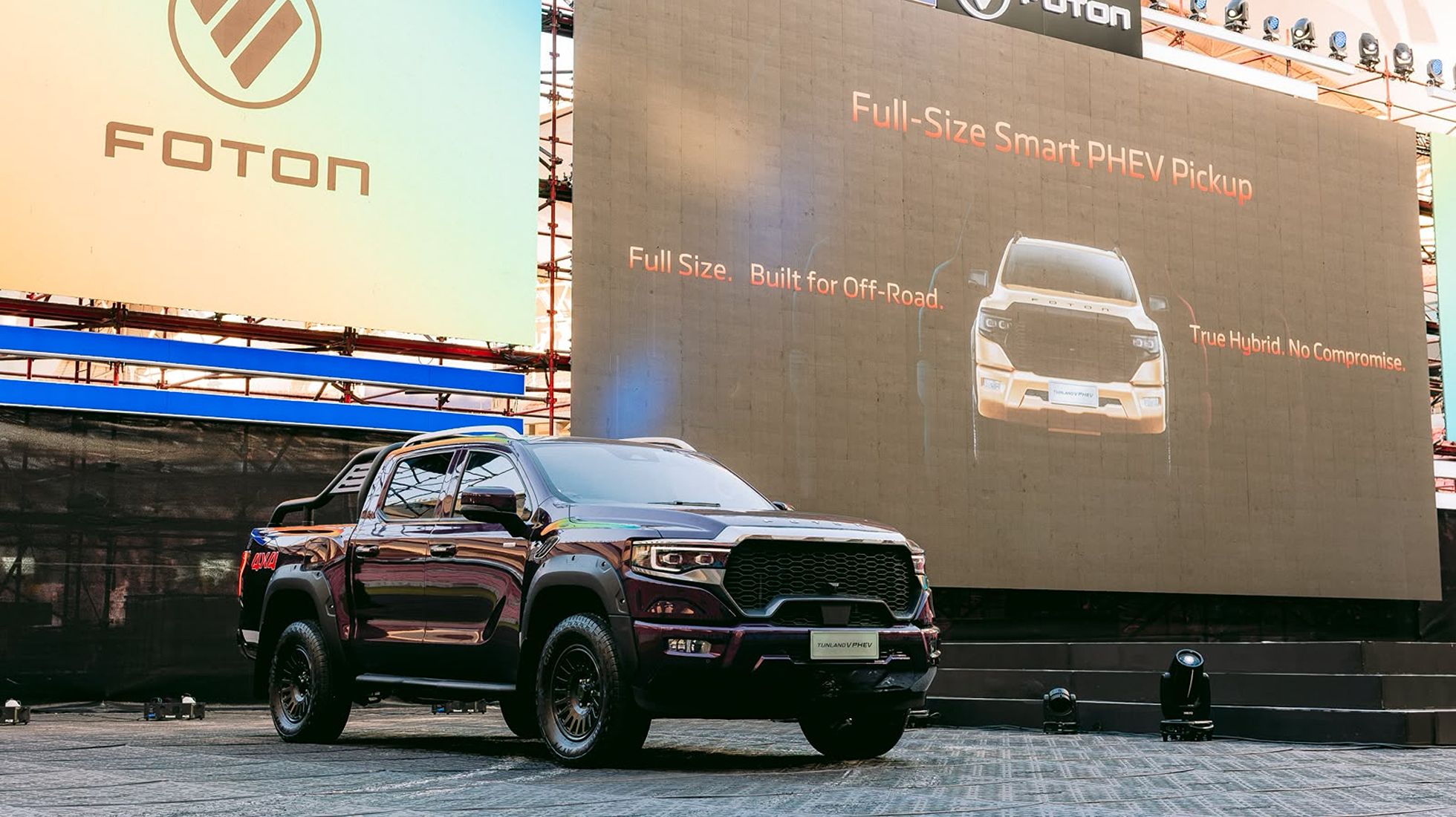
The BYD Shark 6 will have some new company in the power group chat, with the Foton Tunland V9 PHEV’s imminent arrival. It’s Foton’s answer to the question no level-headed person ever asked: How to make a bakkie stupidly fast while keeping some semblance of efficiency? The answer they arrived at is electric assistance.
Let’s start with the hardware. The Tunland V9 PHEV packs a 2.0-litre turbopetrol engine with front and rear electric motors, powered by a 32.8kWh battery, for a combined 350kW and 800Nm. That puts it in the same ballpark as the Shark 6 on power, with a healthy torque advantage. Foton claims the V9 PHEV can travel up to 100km on electricity alone (20km more than the Shark 6 Performance) and as much as 1,000km when the engine steps in.
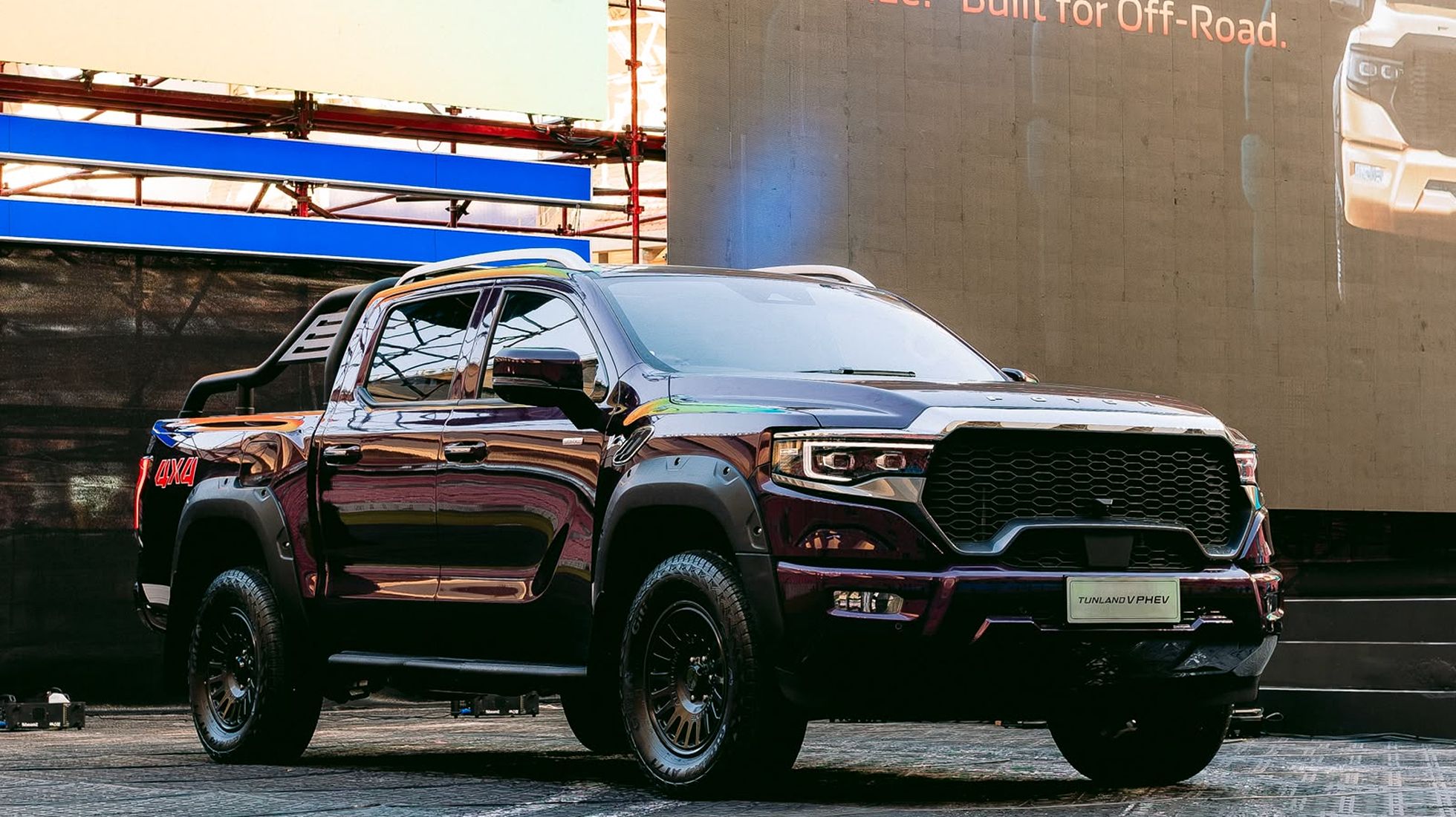
It’s a large double cab bakkie with an imposing size and hints of American SUV-ness, particularly at the front. It measures 5,617mm long, 2,090mm wide, plus a 500mm deep load bin.
Inside, there’s a large 14.6-inch touchscreen infotainment screen, a 12.3-inch digital instrument display, a wireless charging pad, and dual-zone automatic air conditioning. As for safety, it comes with adaptive cruise control, automatic emergency braking, lane-keeping assist and lane departure warning.
Like most electrified vehicles sold locally, the V9 PHEV also features a 220-volt vehicle-to-load (V2L) functionality that lets owners run tools, a fridge or a braai-side kettle straight off the battery.
Electrification is expanding the once humble bakkie’s range of competencies into something closer to what, not long ago, was supercar territory. While these figures are entirely unneeded for something made to haul loads, it’s nevertheless intriguing, and the Tunland V9 PHEV’s existence suggests that this fast-bakkie fight is only getting started.
The Foton Tunland V9 PHEV is scheduled to go on sale locally in early 2027, and pricing will be announced closer to the time.