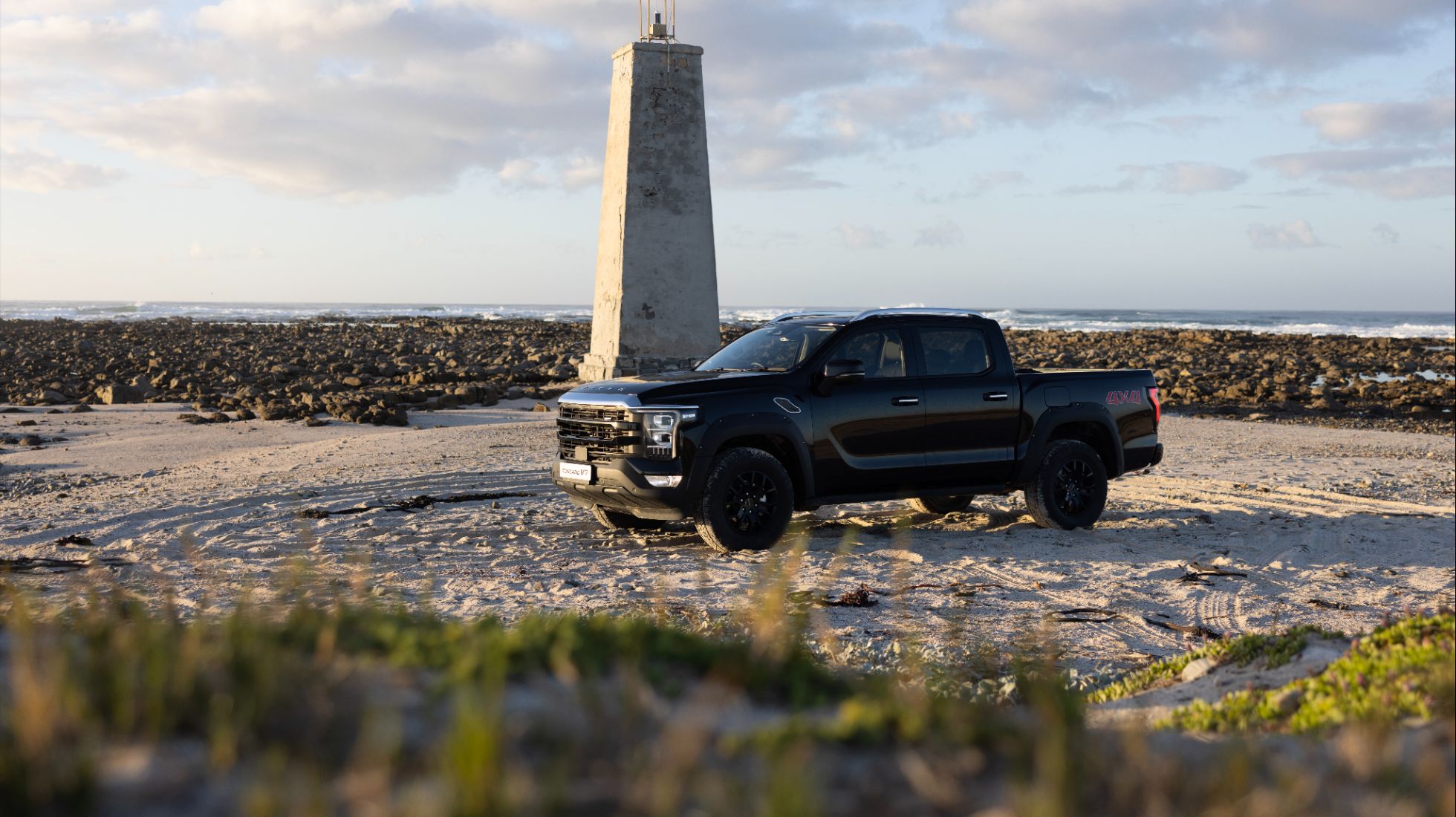


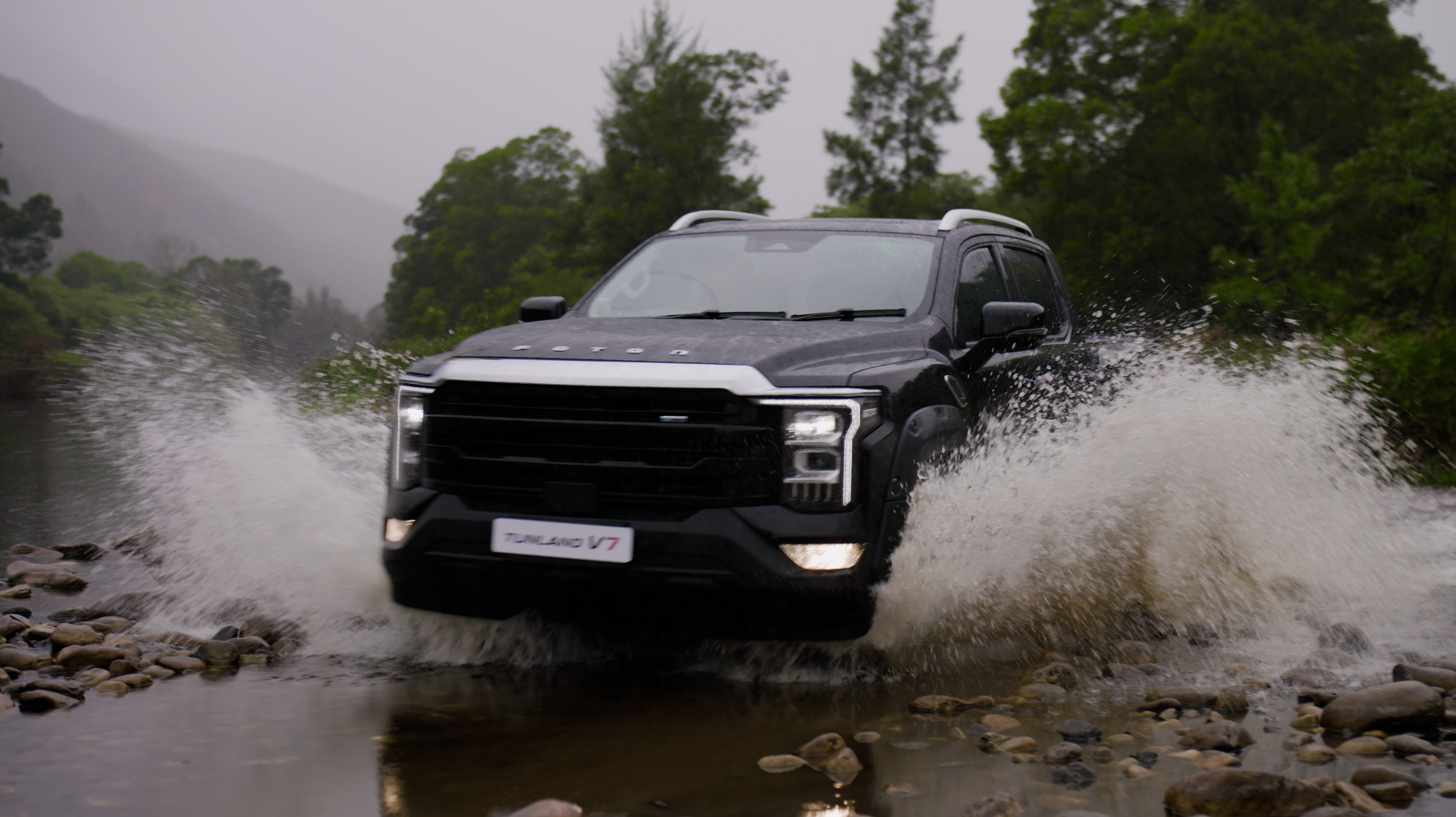
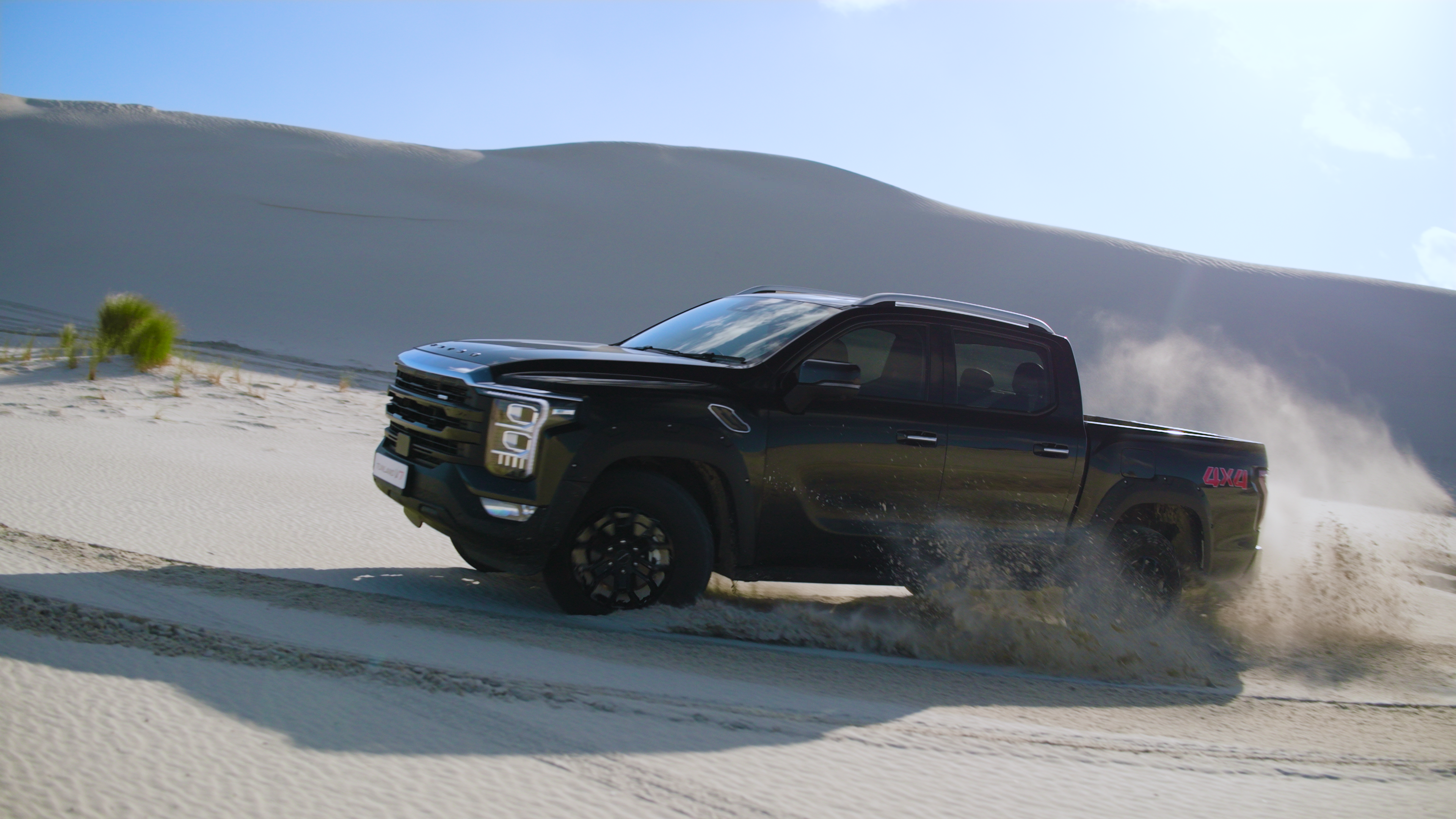
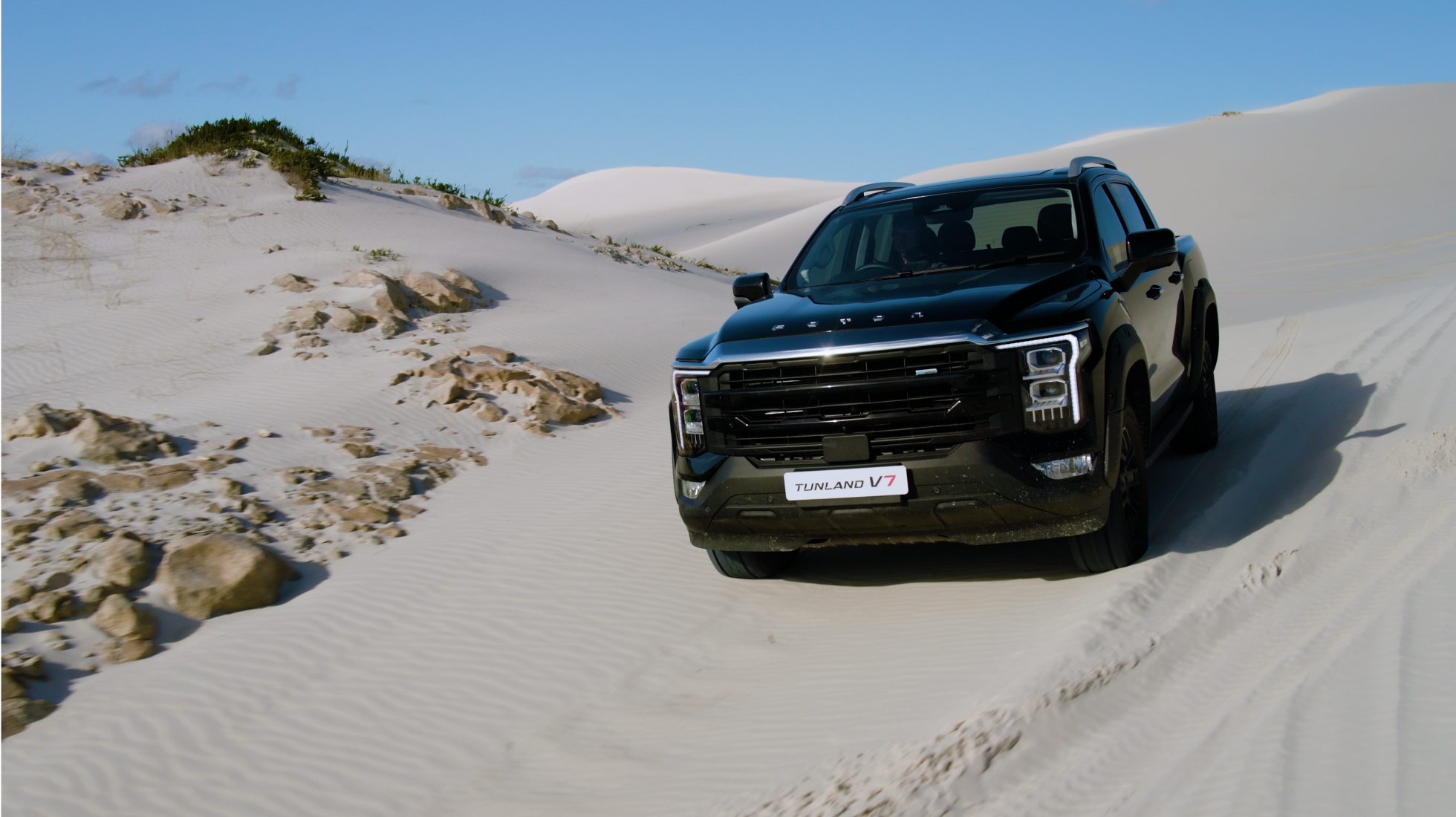
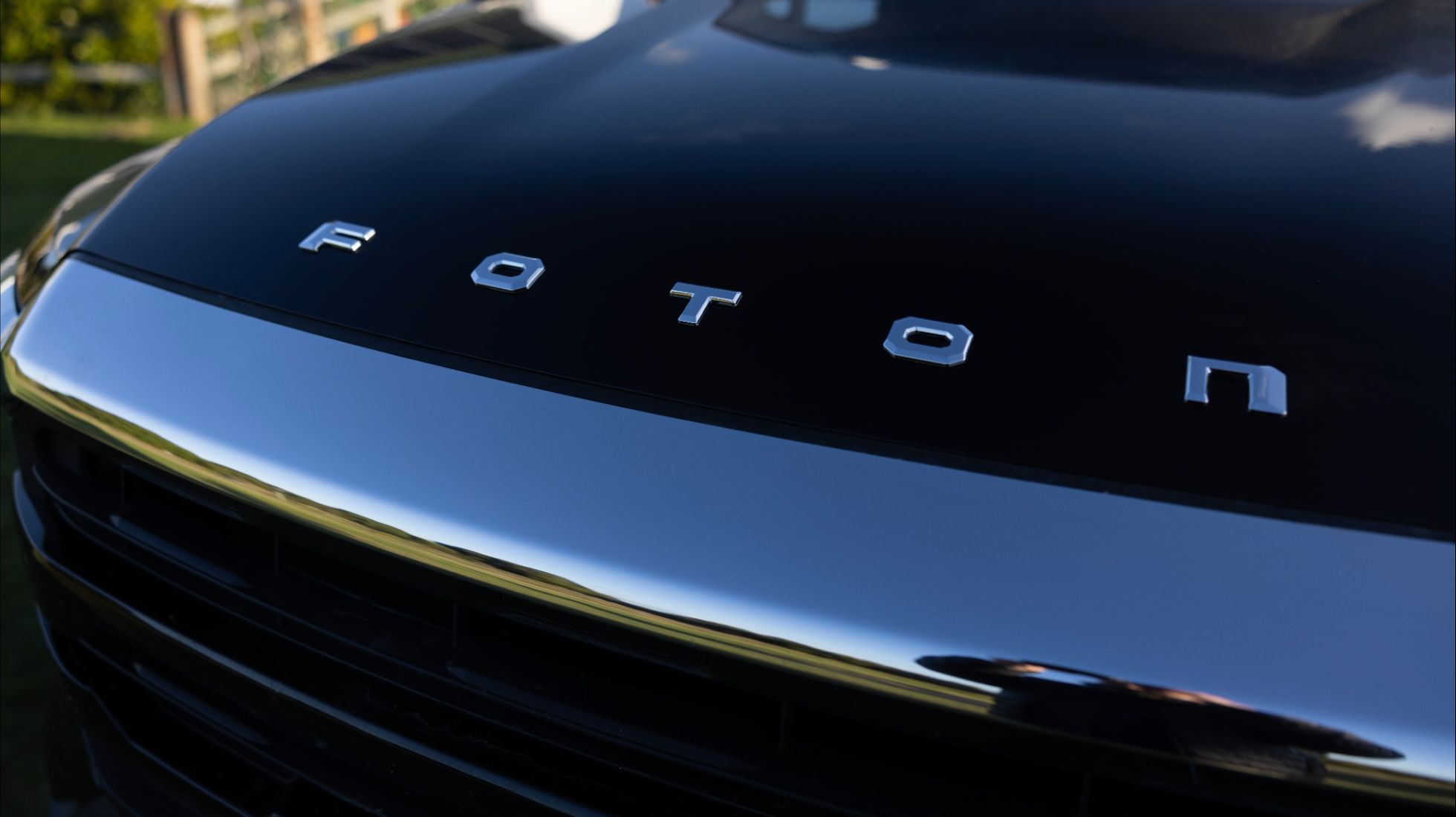
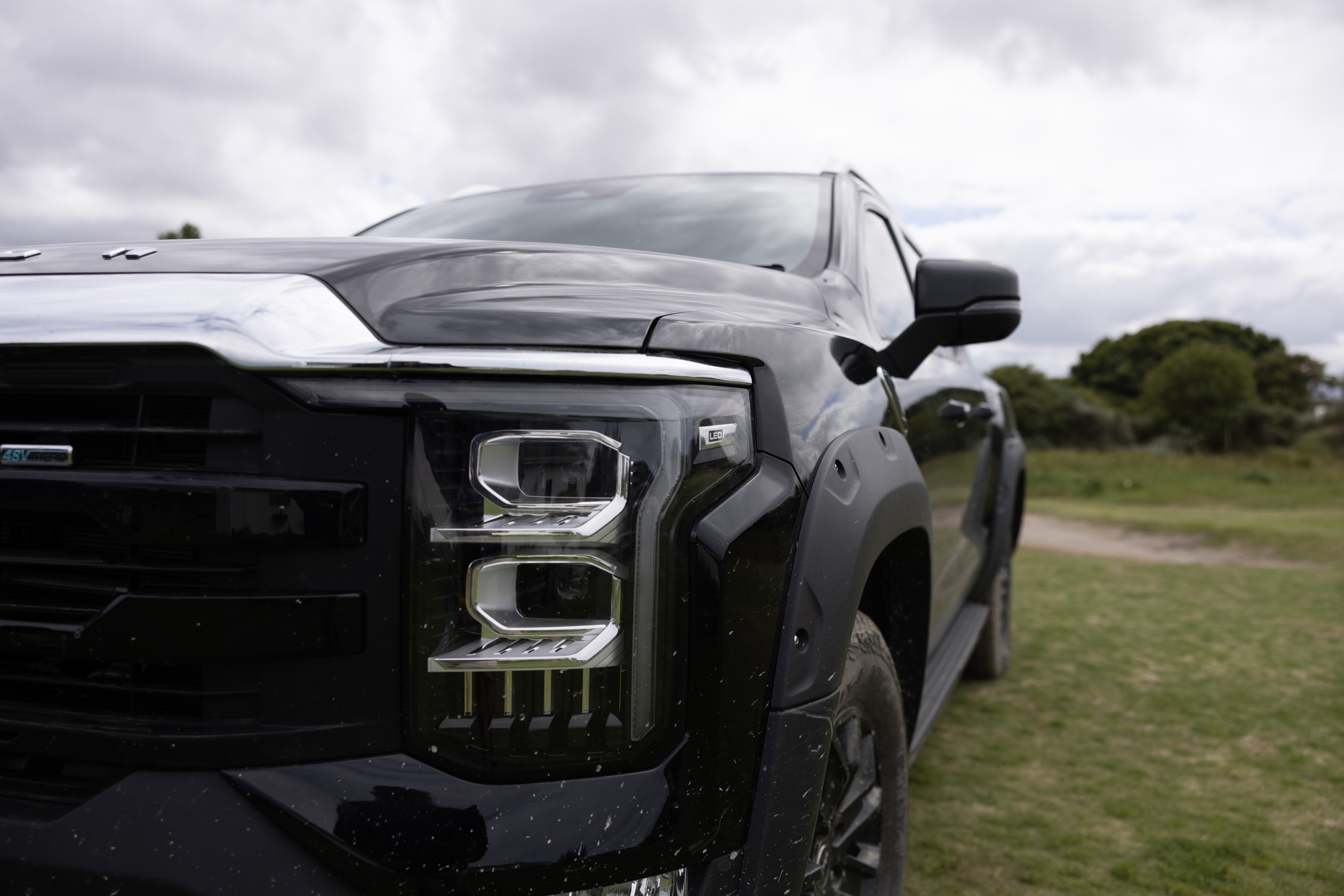
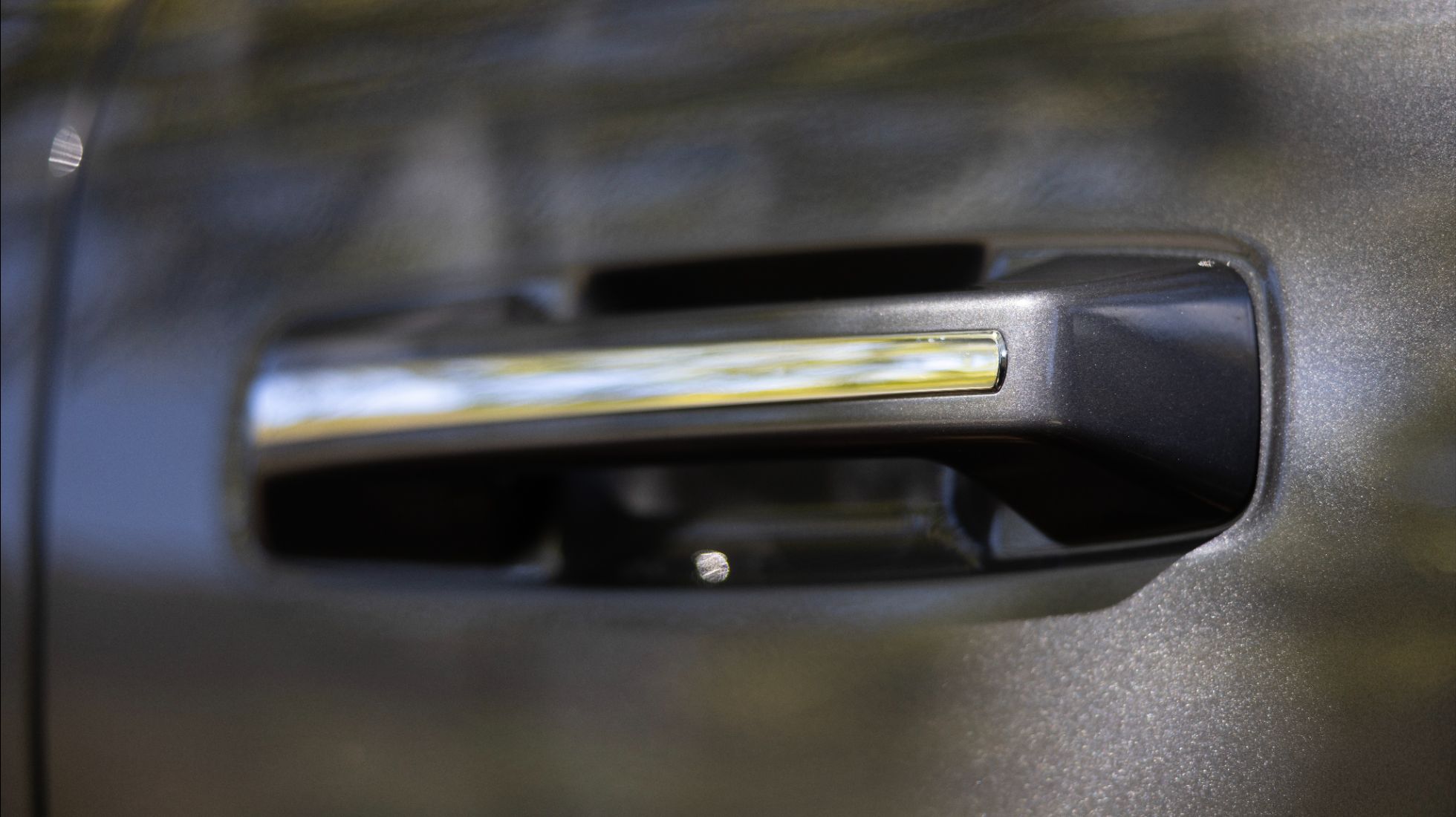


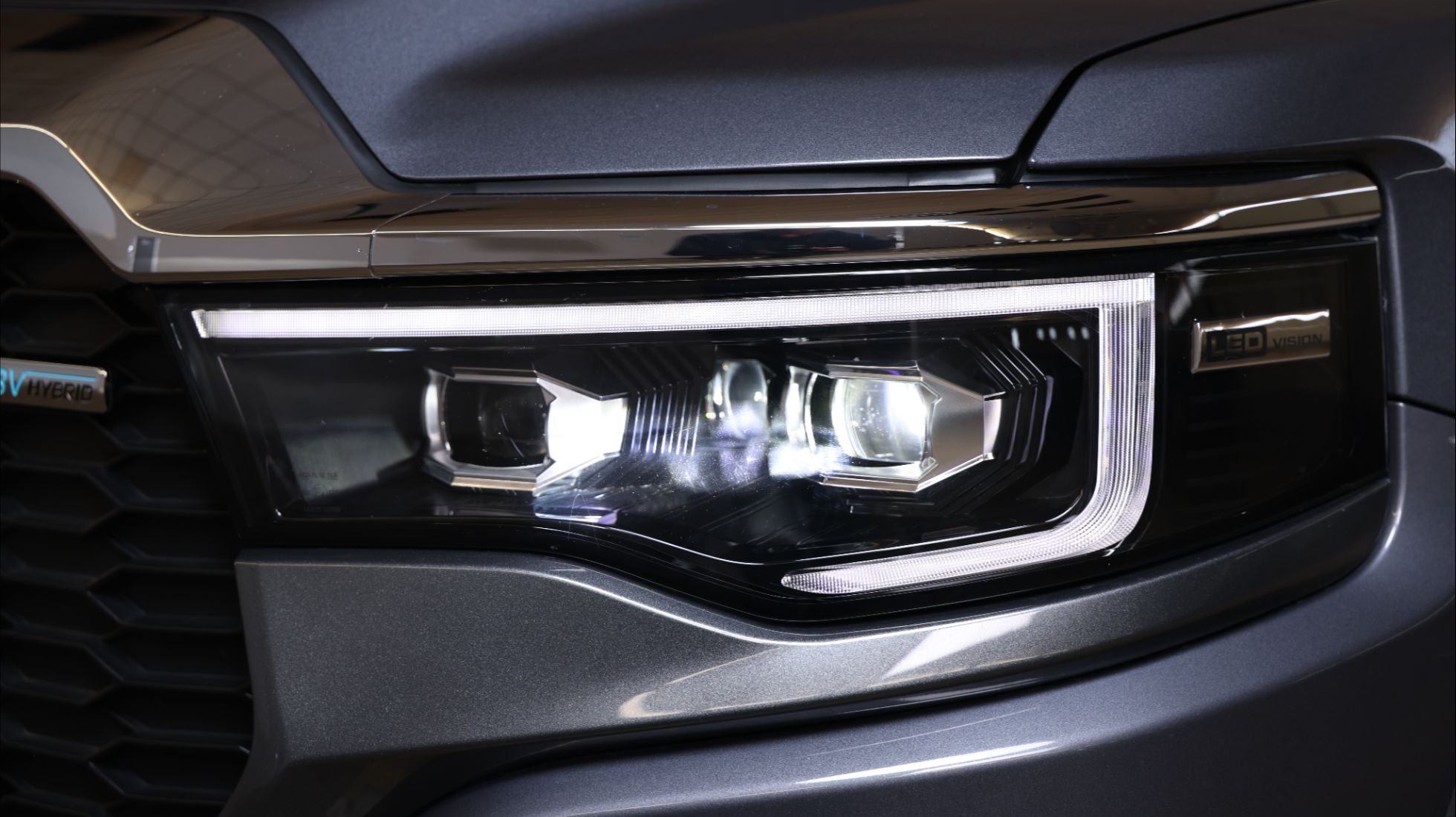

On looks alone, the Foton Tunland V-Series are stand out products. They’re massive, only ever so slightly shorter than the Ford Ranger Raptor. From the grille to the tail gate, there is no denying that Foton wants to command attention with this new duo, the V7 and V9. The two bakkies now add to the local LCV line-up, sitting above the Tunland G7, introduced with two derivatives of each, the 4×2 and 4×4 variants. The V7 presents as the slightly more work-focused of the two with leaf-spring rear suspension as the main differentiator under the skin. The V9 on the other hand, sports multi-link rear suspension as the main difference, but as you can see on these images here, there are a few aesthetic differences too most notably on the front grille treatment. The V9 is the more polished with a blacked out hexagonal grille mesh with more contemporary, slimmer headlight clusters. The V7 features a more rectangular pattern grille with striking square headlights housed with LED daytime running lights and smart auto high-beam on all models.


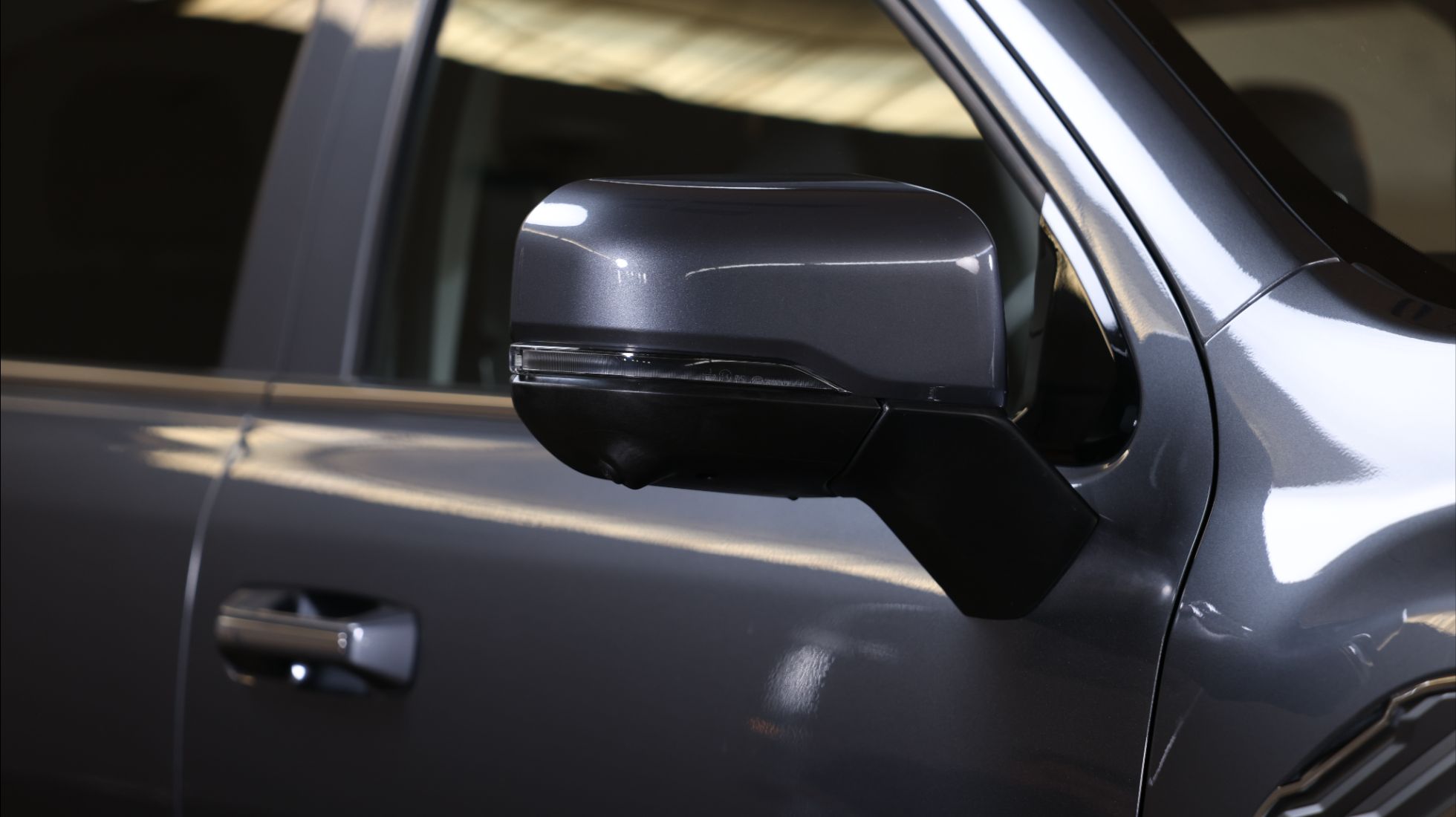
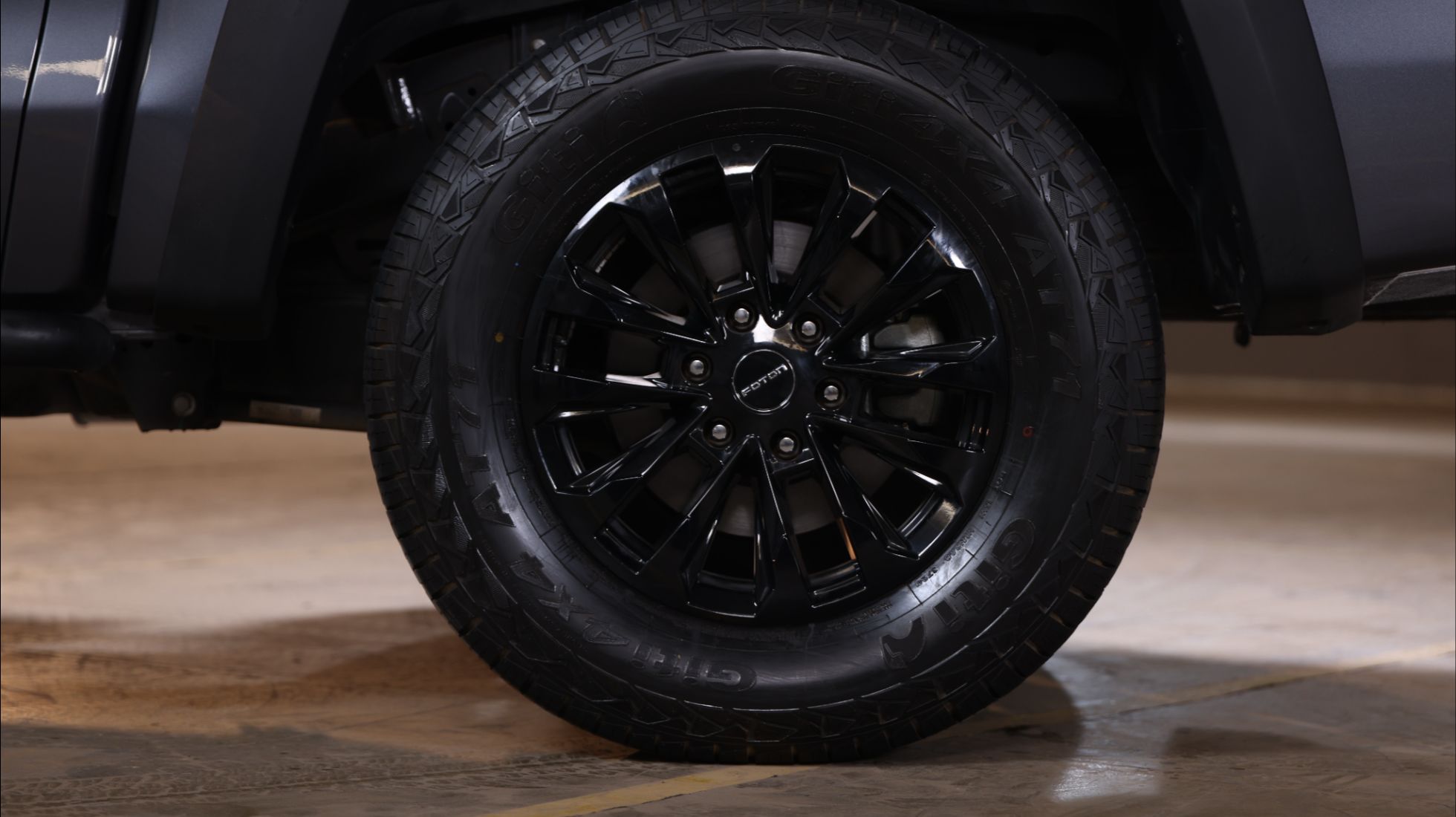
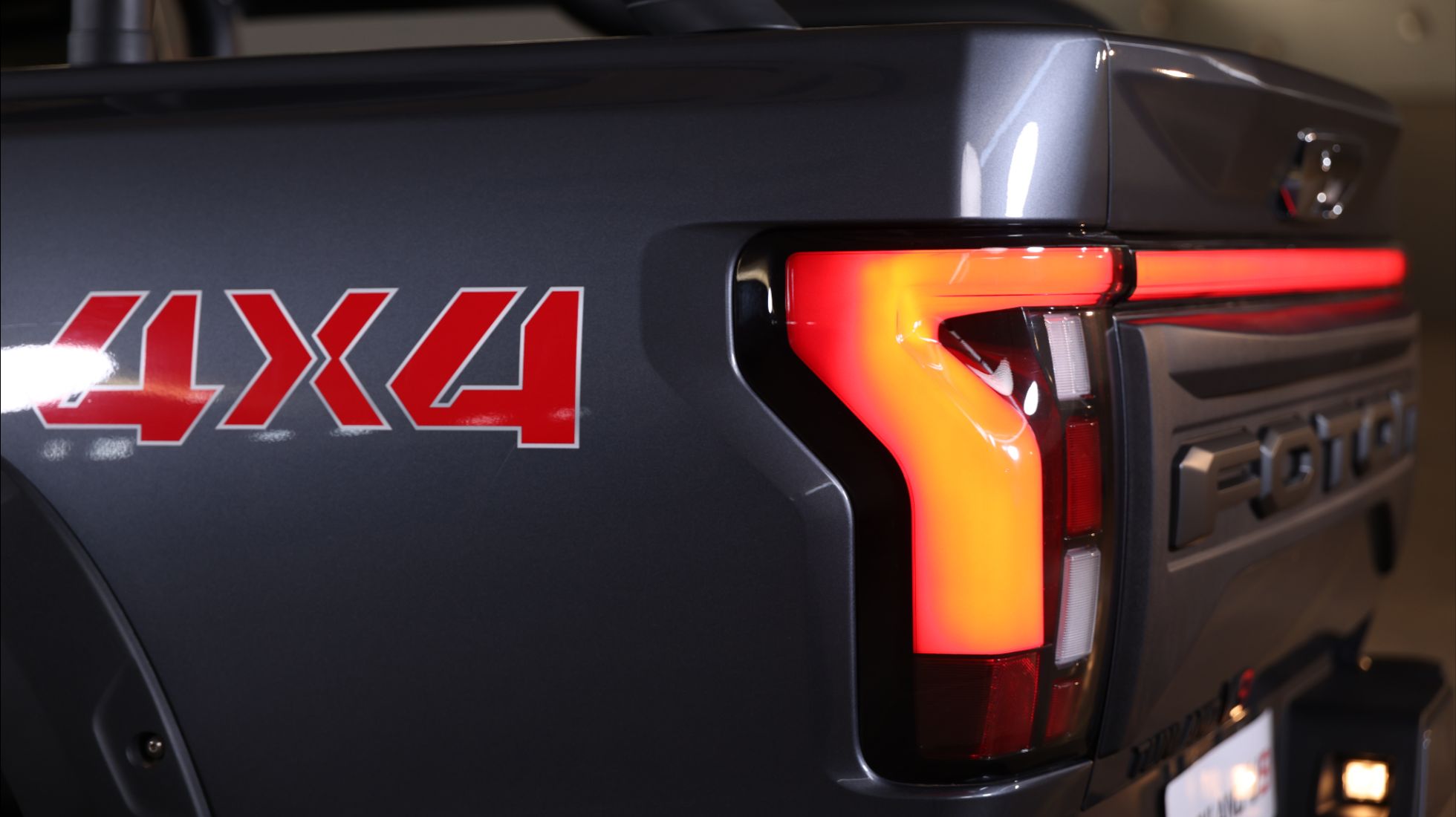
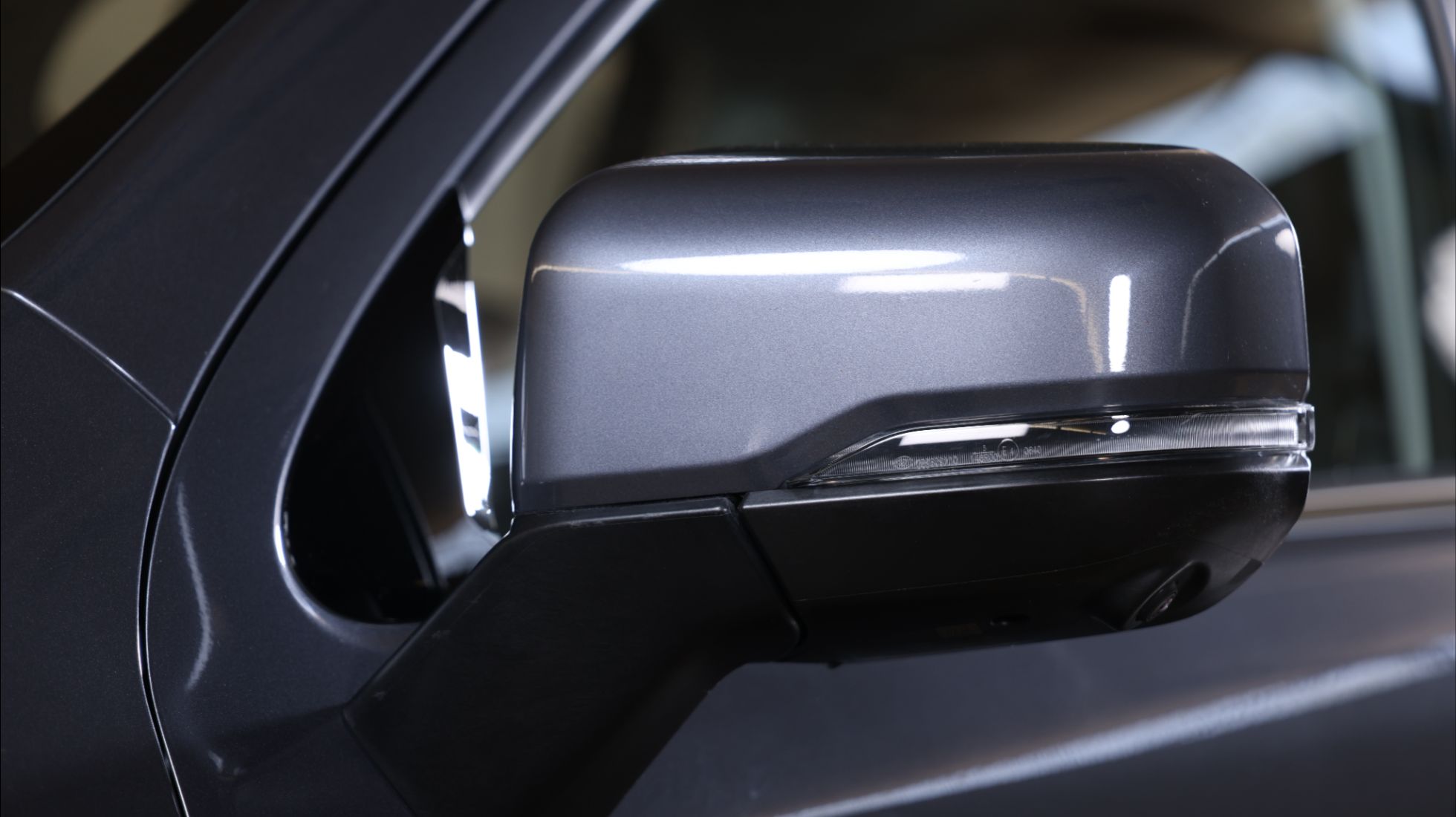
As you move to the rear, all vehicles sport running boards, wheel arch cladding and 18-inch, black alloy wheels that carry the vehicles 240mm of ground clearance and stance. 4×4 stickers adorn the flanks of the load bin that lead to a striking rear end. A light bar runs across the entire tail gate that is a mix of grey and body colour panels. This style of design is quite common with local Chinese models but it’s done best here in the V-series delicately housing the reversing camera that operates as part of the 360-view camera, a feature carried across all derivatives.
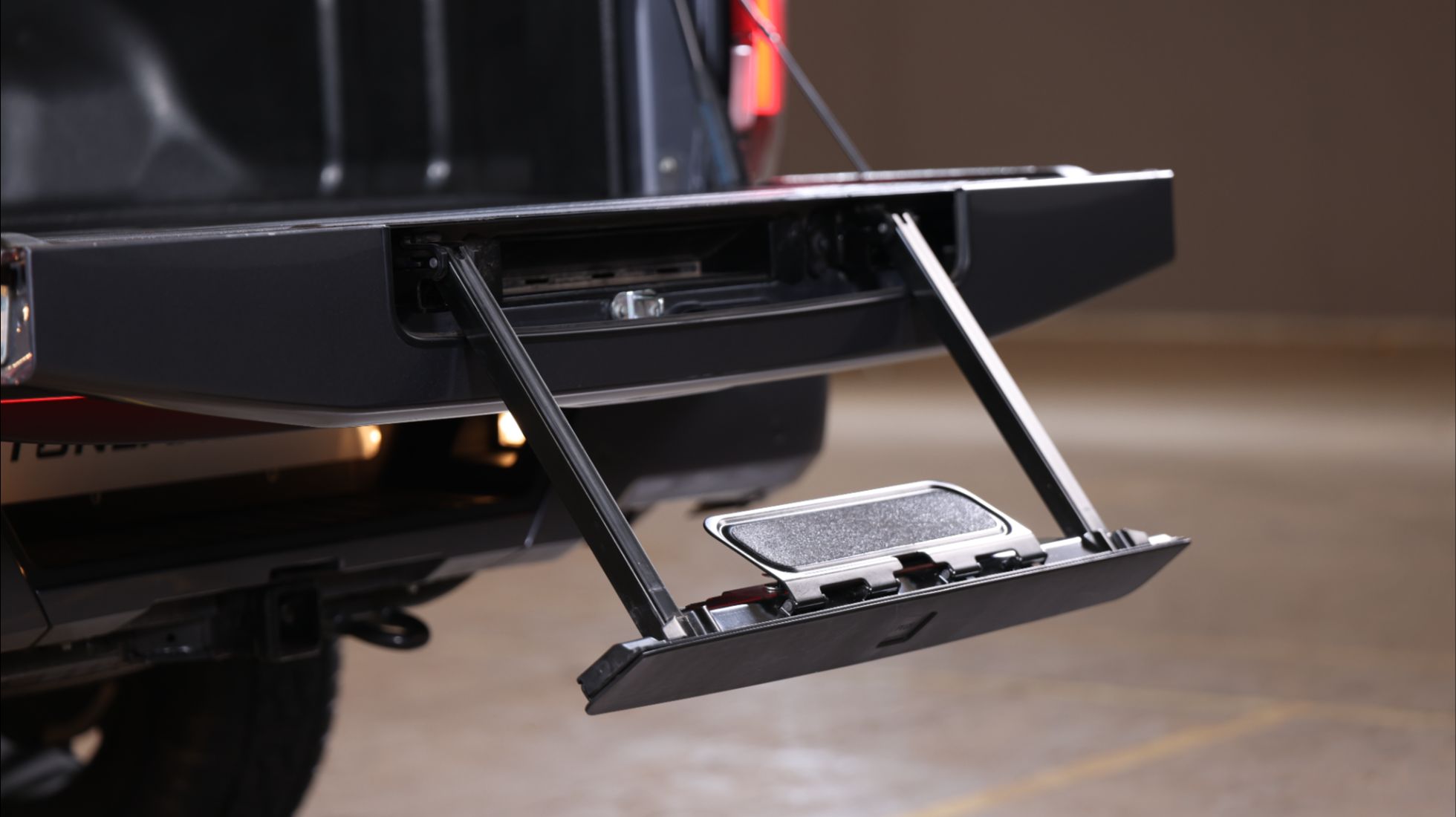
One key difference between these two models is a nifty step-ladder feature only available on the V9. Housed within the hydraulically-assisted tailgate, a small ladder is able to be extended to make ingress into the load bin much easier and safer. It’s better for those knees. As for the loadbin itself, it measures a cavernous 1577mm x 1650mm 530mm. By our calculations, that is the largest in the double-cab lifestyle segment.
On to the powertrains, and more mechanical details. The V7 and V9 are a combination of parts from high-end, reputable suppliers that merge to create what’s underneath the cab on these vehicles. An Aucan-built, 2.0-litre, turbodiesel engine is mated to a ZF, 8-speed automatic transmission. In between these two units, is an integrated starter generator unit with 48V that fills in extra torque and boosts the power at pull off. A Bosch ECU works the electronics, and on the 4×4 models, these include the two locking differentials as well. These diffs are built by EATON. Overall power output of 120kW and 450Nm is only slightly higher than the Foton Tunland G7, which dishes out 390Nm of torque. For a bakkie that weighs 2.2 – 2.3-tons, depending on the model, the 120kW unit is certainly ripe for an increase. But that’s not to say it’s powerless – not at all. The car drives with a commendable power, that 8-speed box making a big impression. You’ll hardly notice any mild-hybrid work taking place under the surface but our short launch drive was enough of an impression to leave us impressed. The ride quality is superb, the cabin well-insulated and most impressively, exceedingly appointed. Towing capacity? 3.5-tons. Adaptive cruise control is standard across the range but, Intelligent Cruise control that control steering as well, is only available on the LTD flagship V9. This one also boasts a fantastic panoramic sunroof, the largest we’ve seen on the double-cab yet.
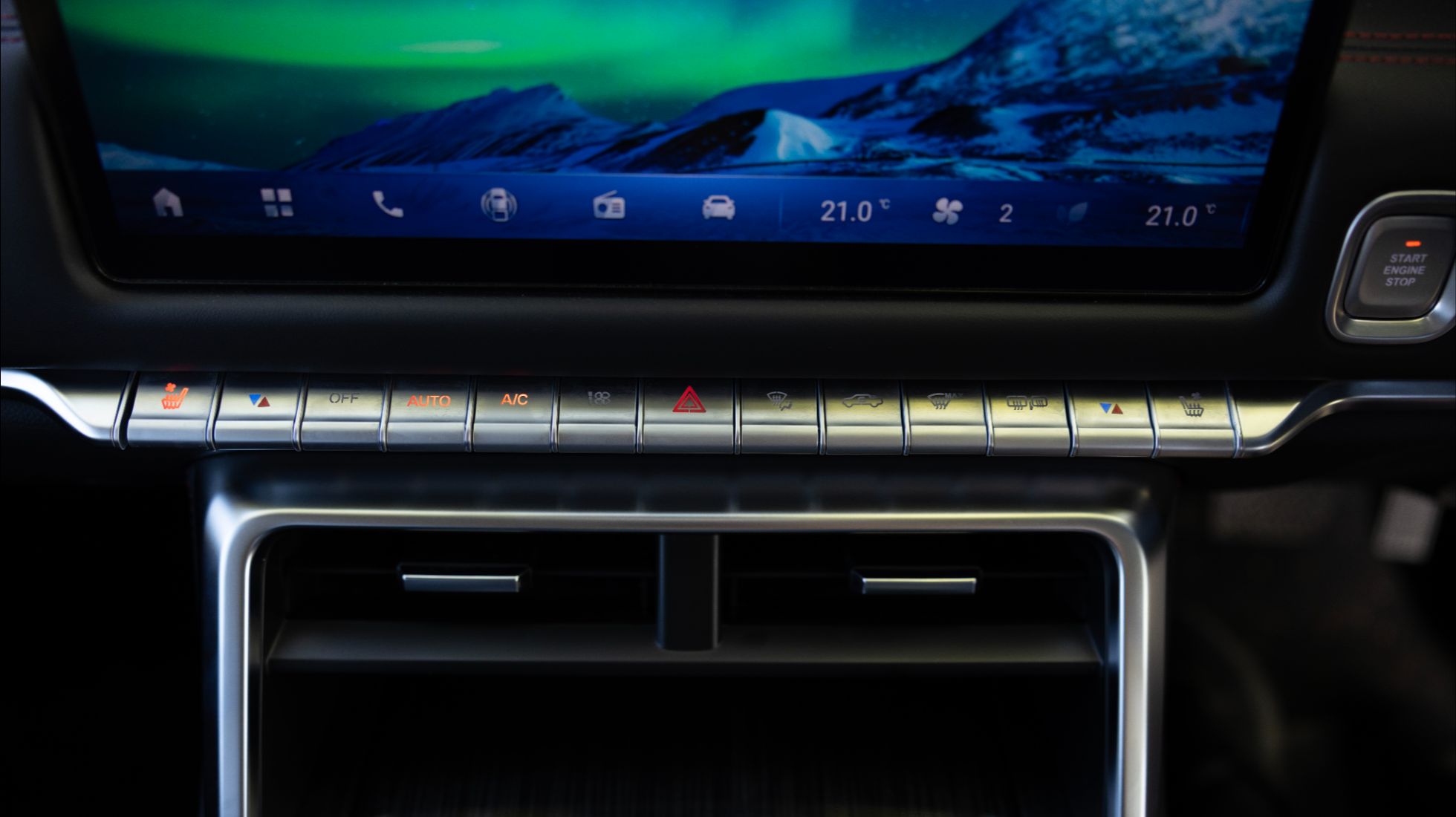
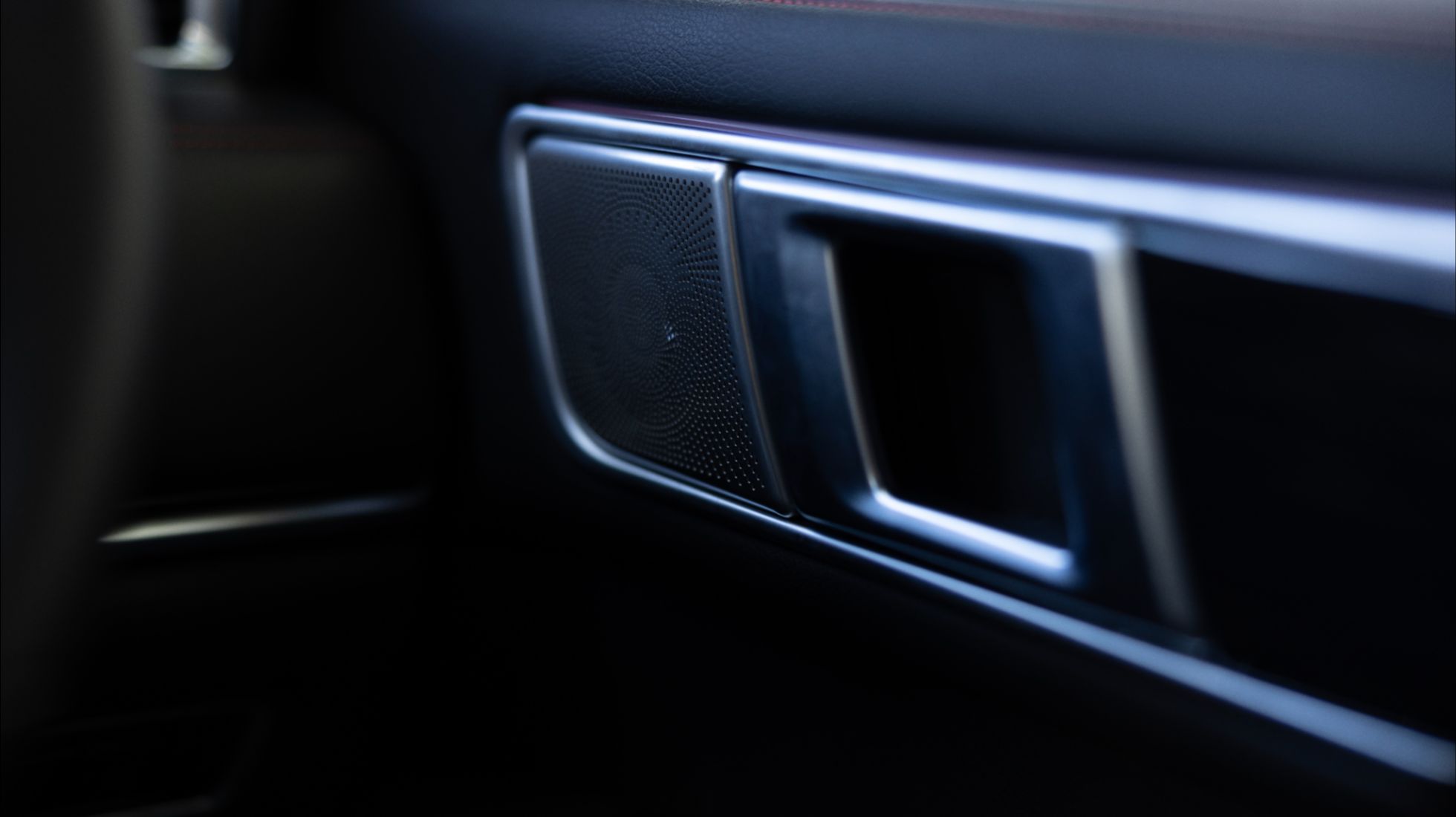
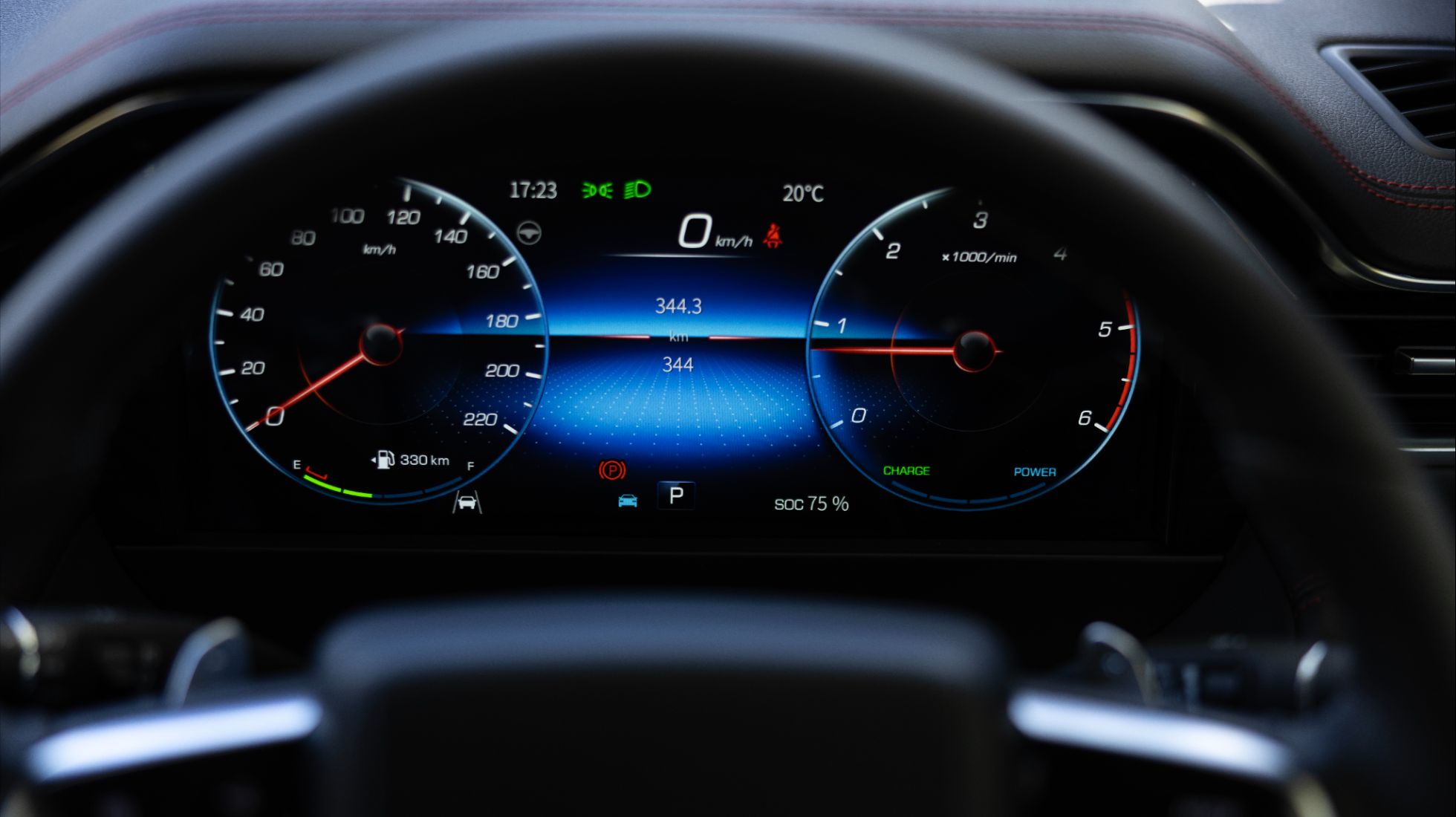
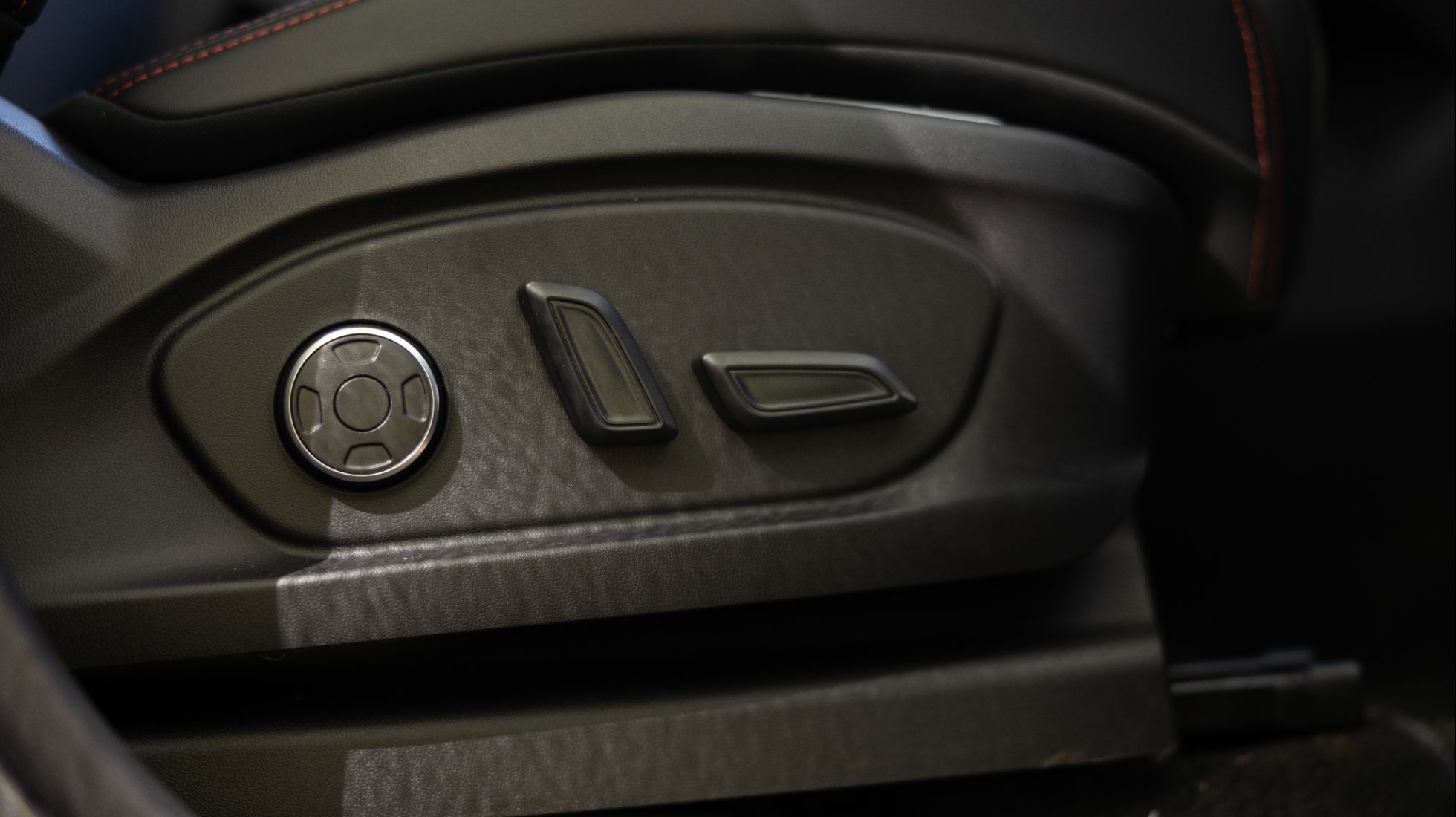
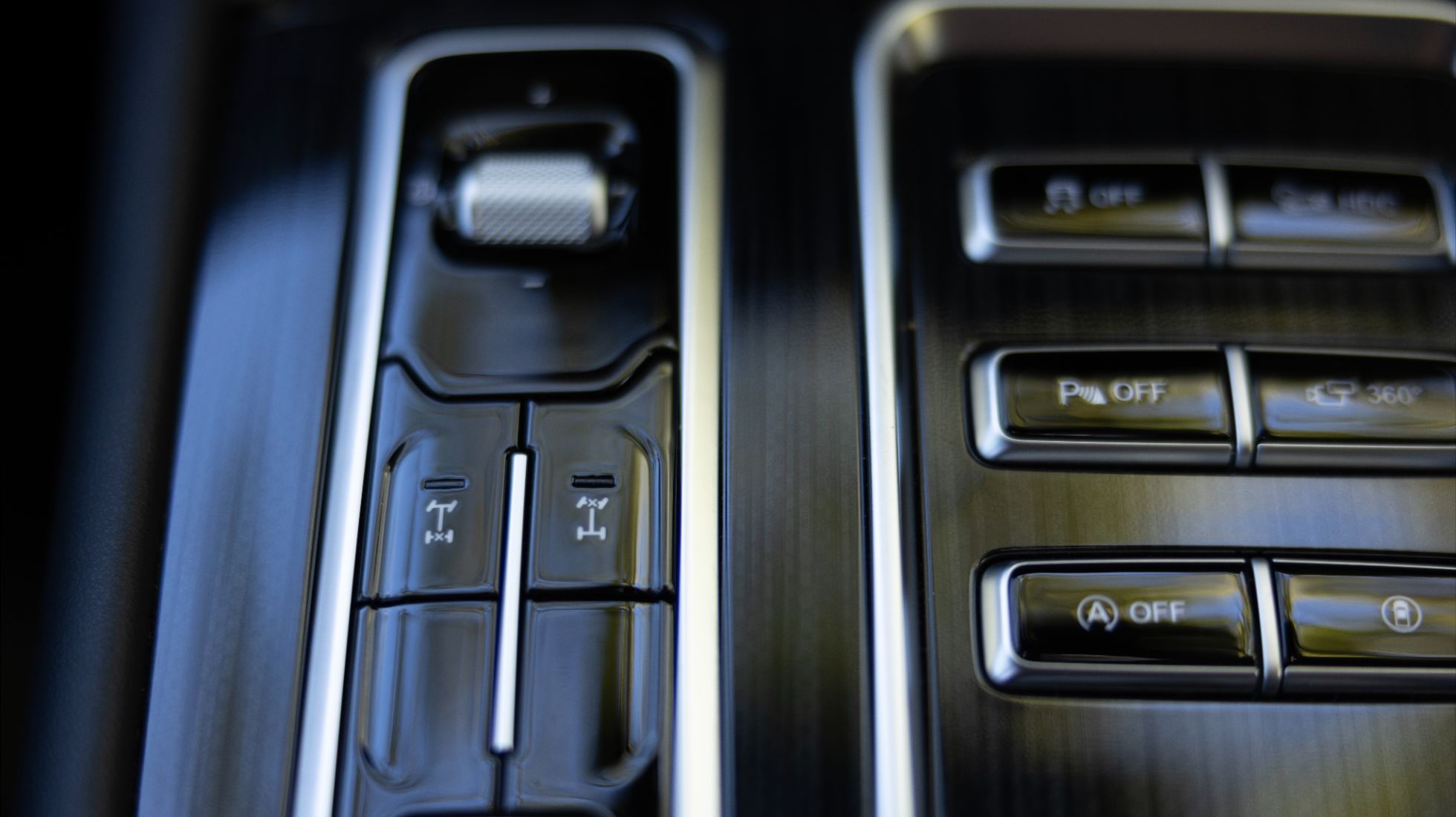
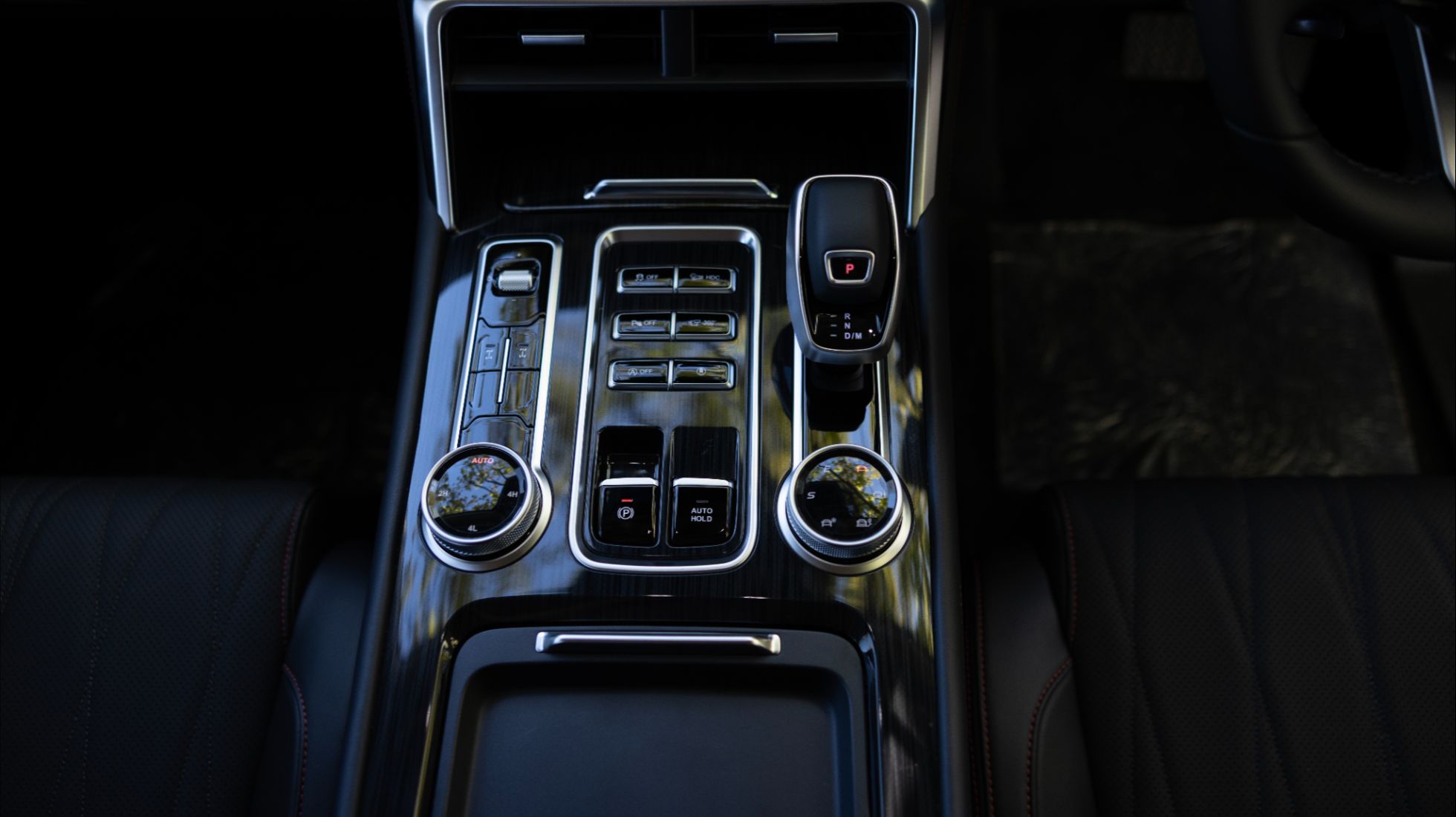
Branded, practical floor mats and boot covers are noticed. Every car comes with a 14.6-inch central infotainment screen and 12.3-inch driver’s display. Thankfully, the V7 and V9 come with Apple CarPlay and Android Auto built into the system and there are four USB-A ports throughout the cabin with a wireless charging cradle in the centre console too. A proper ergonomic layout of buttons and dials litters the centre console, making life so much easier with a number of functions. We commended the G7 for this before, and we continue to do the same for these newcomers. It’s a well-intentioned cabin. For a vehicle this size, one would expect that interior legroom and headroom would be good. That is not true. It’s really good. Rear seat passengers including a very tall gent, were very comfortable in the rear both in terms of legroom and headroom and even the knee height was good. With a 220V and 12V power sources as well as refrigerated centre storage bin, the V-Series’ are well appointed.
Any niggles? Typical Chinese vehicle complaints. There’s consistent beeps and warning chimes for things that don’t require it. These are quite distracting but we didn’t have the time to figure out what these were and how to turn them off or learn to work with them. When we have the vehicles on test, we will feedback in a more comprehensive TopGear SA car review.
For now, it’s clear that the Foton Tunland V7 and V9 bakkies are set to make in impression, irrespective of the price tag, but of course, in keeping with the G7, these are priced quite competitively.
Launch Pricing:
Foton Tunland V7 4×2 VLX R689 900
Foton Tunland V7 4×4 VLX R765 900
Foton Tunland V9 4×2 VLX R725 900
Foton Tunland V7 4×4 LTD R799 900
Foton is also launching these with locally-produced accessory packs for those that require a little more. Nudge bars, bull bars with integrated spot lights et al, are all available to kit out the cars slightly more.