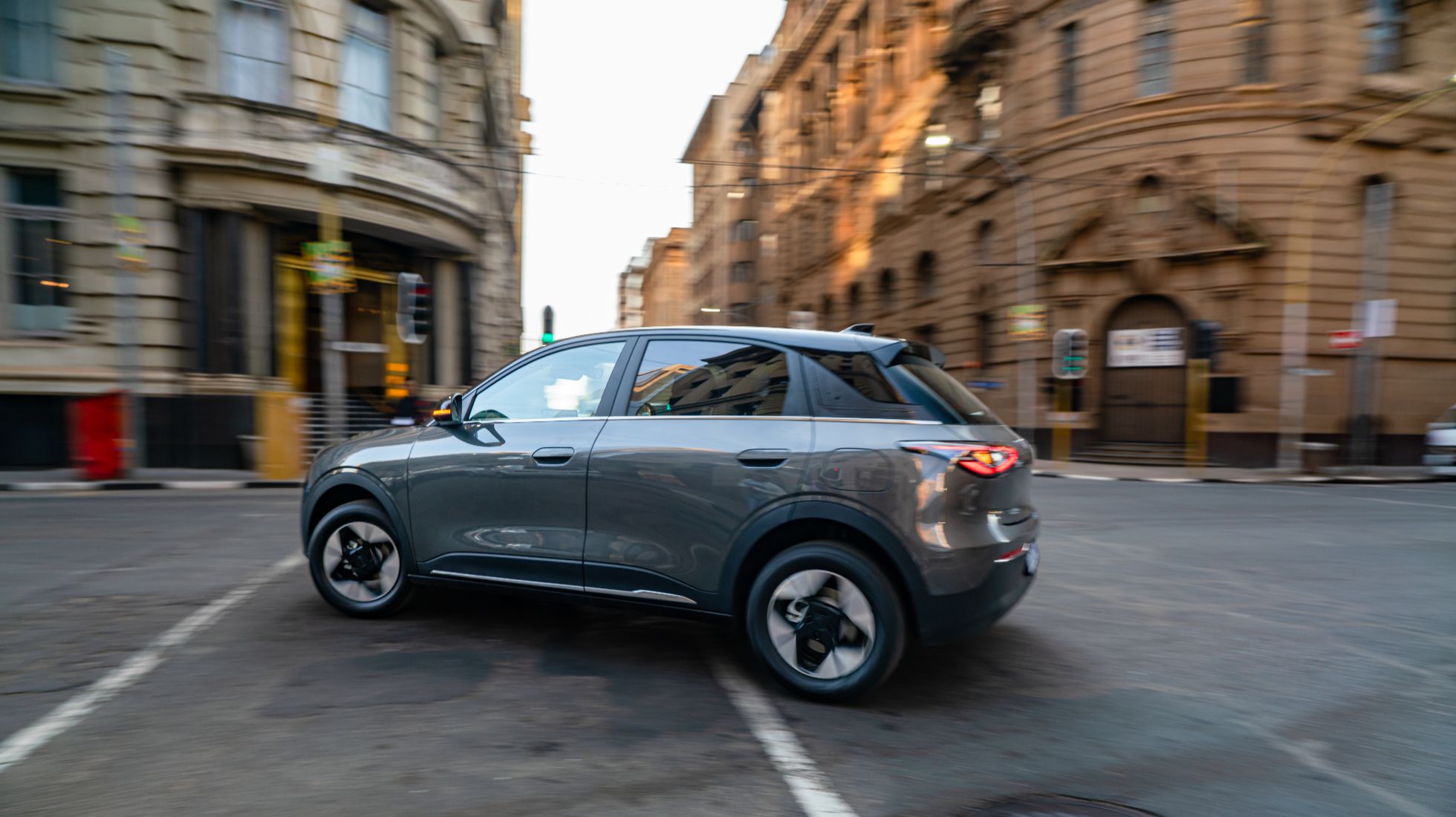
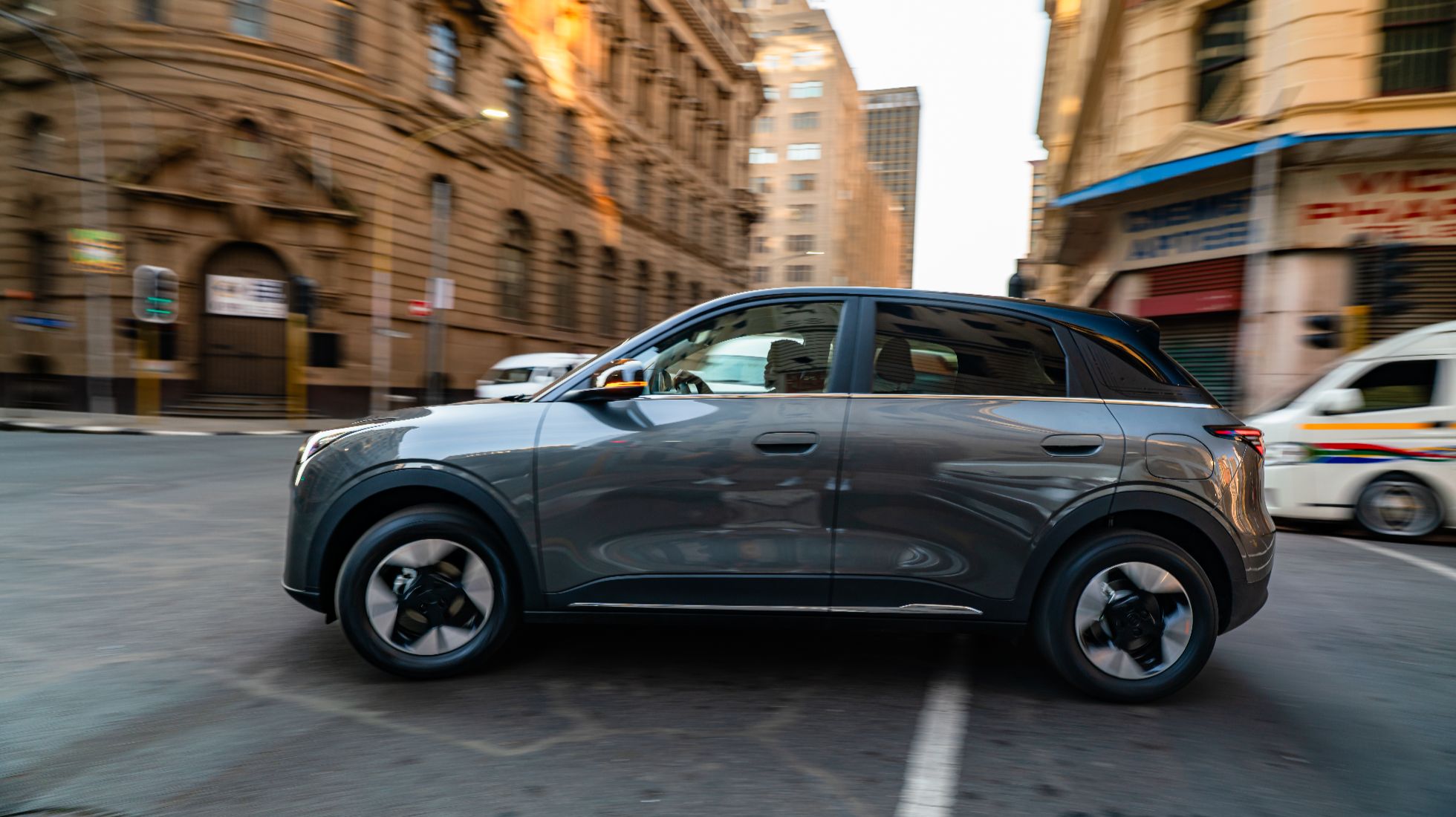
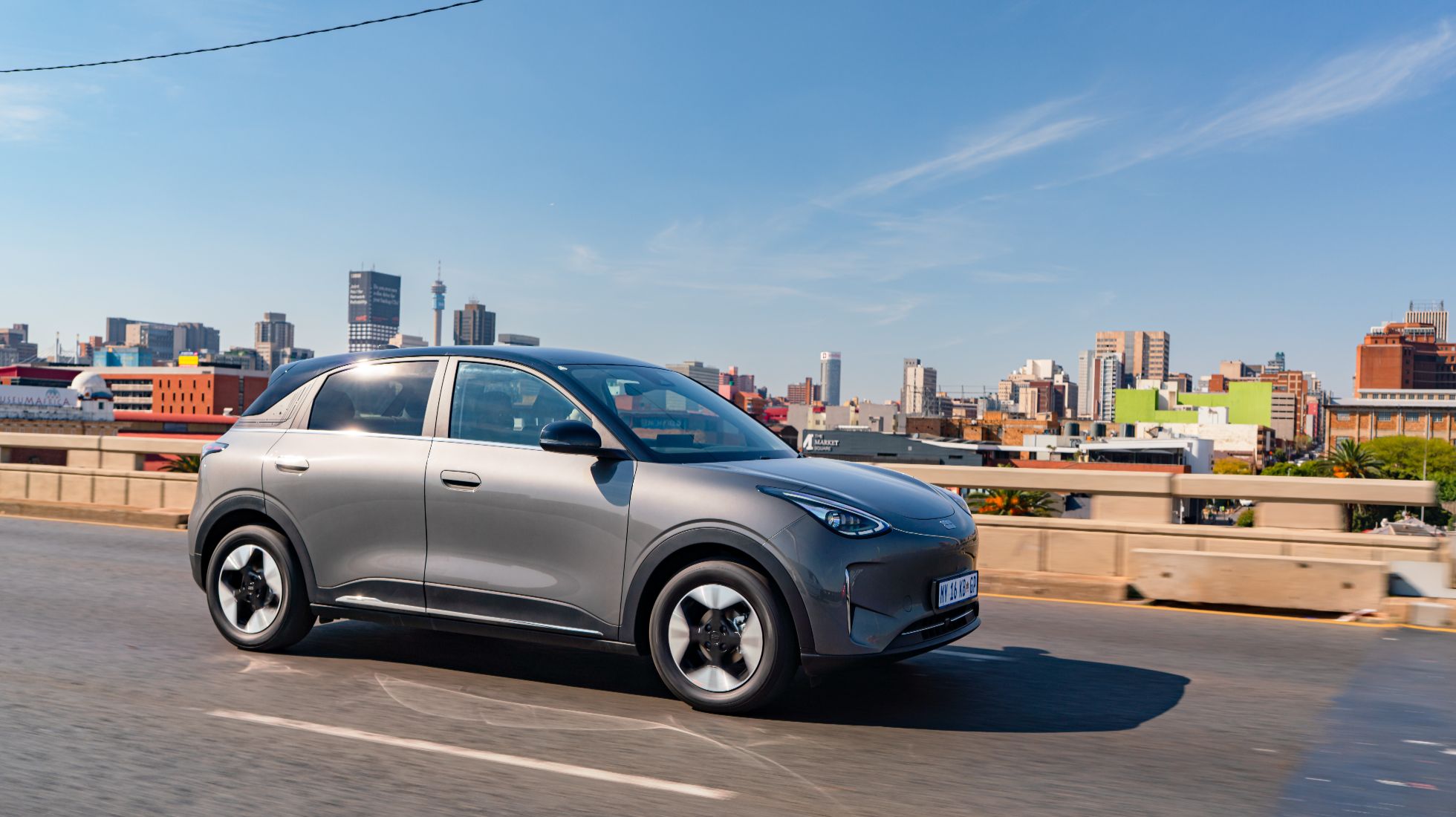
Here’s an interesting thought… this Geely E2 seen here (or Xingyuan as it’s known on its home turf) was China’s outright best-selling vehicle in 2025 by total volume. That’s something in the region of 600,000 vehicles… Think about that for a second.
In other news, it’s officially South Africa’s most affordable full-EV model that undercuts the BYD Dolphin Surf by a scant R2,000 when shopping in the lower-spec categories. You’d be forgiven then for thinking that some corners have been cut in the name of ‘cost-saving’, so I went looking for any rough edges on the streets of the West Rand.
Geely E2 specs and platform
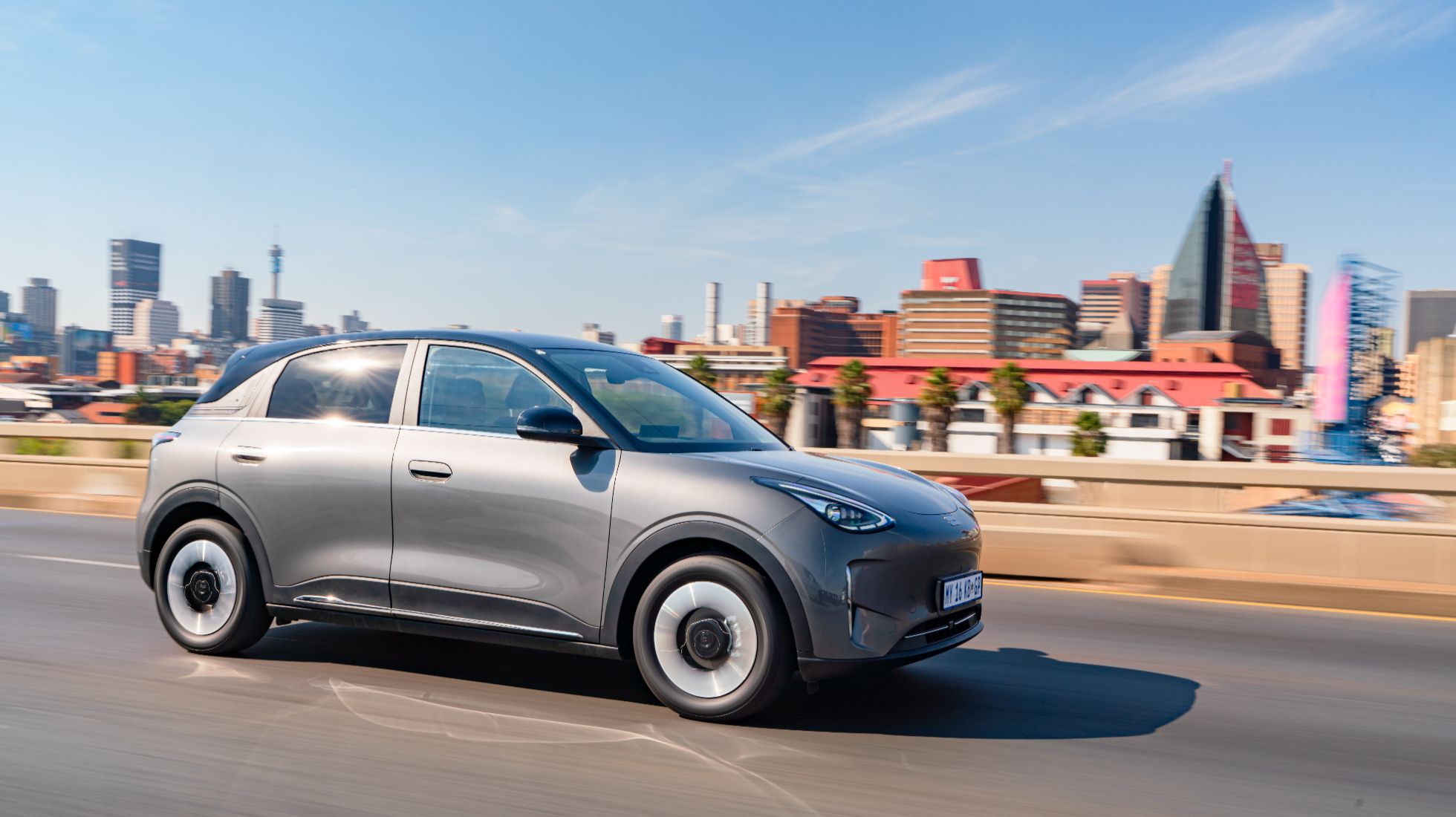
Simply put, it’s a compact 5-door hatchback that’s built on Geely’s GEA electric platform. That means it’s rear-wheel-drive, has multi-link rear suspension, and a single motor that produces 85kW and 150Nm. Compared to the BYD Dolphin Surf, that’s 30kW and 15Nm more motivation sent to the rear wheels by means of a 39.4kWh battery in both the entry-level Aspire and Apex models. Should that battery run out of charge at what Geely claims to be around 325 kilometres, it can be fast-charged at a DC station to the tune of 70kW, which should cover the 30-80% spread in around 25 minutes.
How does SA’s cheapest EV drive?
Surprisingly well. Sure, the on-paper power figure of 85kW and its 11.5-second claimed sprint time aren’t anything to get particularly excited about, considering that time is firmly planted in normal hatchback territory. But consider the deletion of the combustion-to-gearbox-to-wheels process and that immediate torque delivery, and the E2 is properly peppy in and around town. On the highway, it can keep up with traffic, but it needs some right-footed motivation to really get into its groove as the numbers climb and factors such as wind and rolling resistance come into play.
It’s also decently comfortable over what the Joburg municipality calls roads with negligible tyre and wind noise. Directional changes are drama-free, with the E2 doing a good job of hiding its 1,300kg kerb weight. AI helped Geely run virtual prototyping and simulations of chassis refinement parameters, which likely also contributed to the overall comfortable, well-composed driving manners. This also had a drastic effect on the development costs of a car…explains that competitive price tag.
Surely there’s a catch?
Well… Yes, depending on how you want to utilise the E2. Geely claims the top speed of its E2 to be 130km/h. While that’s enough to comfortably maintain the national speed limit, it may be somewhat limiting for overtaking on busy stretches of highway. I tested this claim on a quiet road during the test drive, with the E2 refusing to extend its digital dial past 141km/h, which registered as 137km/h on the satellite speed. I suspect it’s a range-optimisation limiter function, since the E2 was never intended to be a long-distance cruiser.
Living with a Geely E2
On the launch route, the consumption of Geely’s smallest car exceeded even its claims during a mixed stint of highway and city testing, constantly hovering between 12 and 14kWh/100km, despite the carmaker’s conservative 15.2kWh claim.
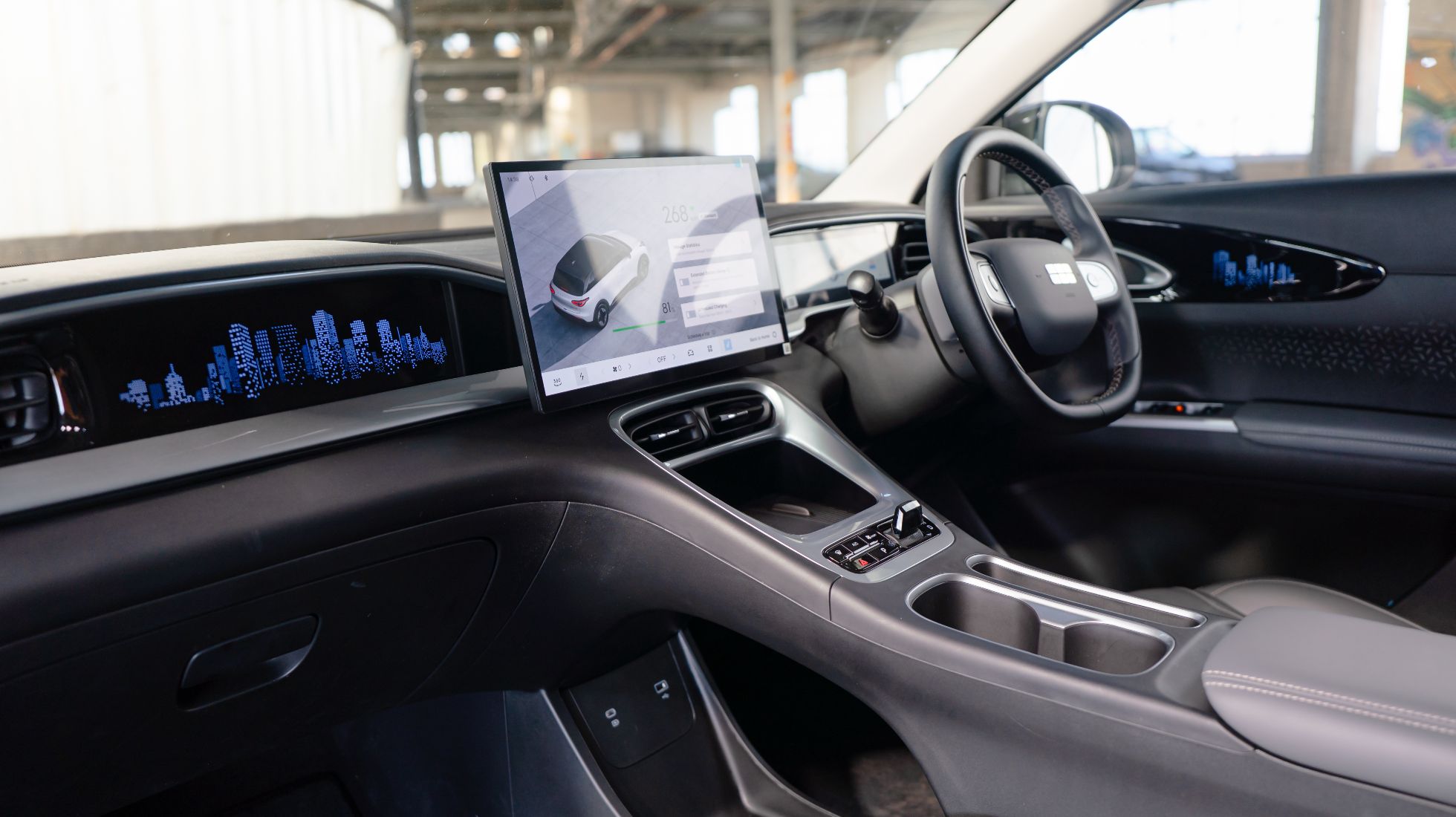
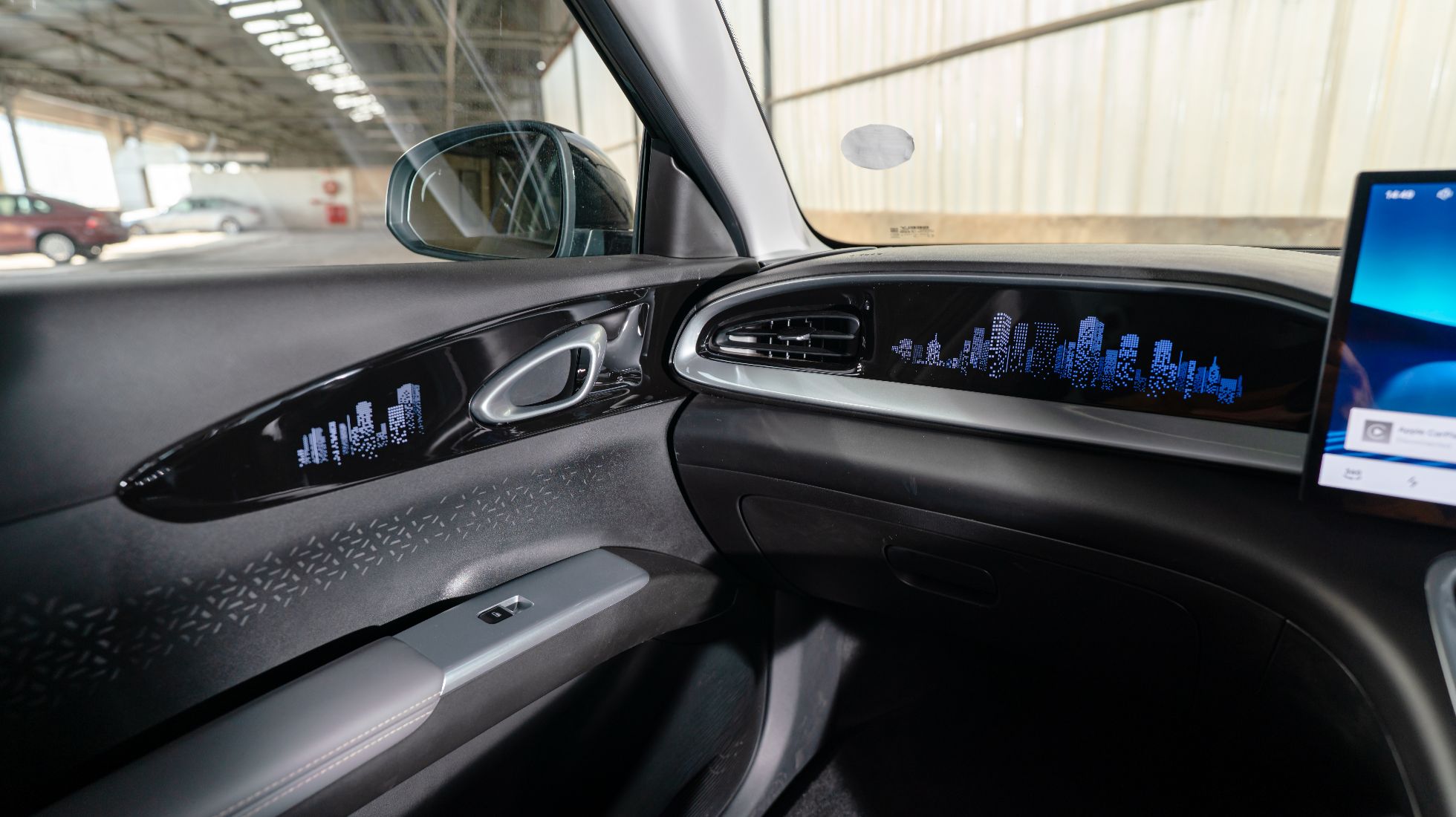
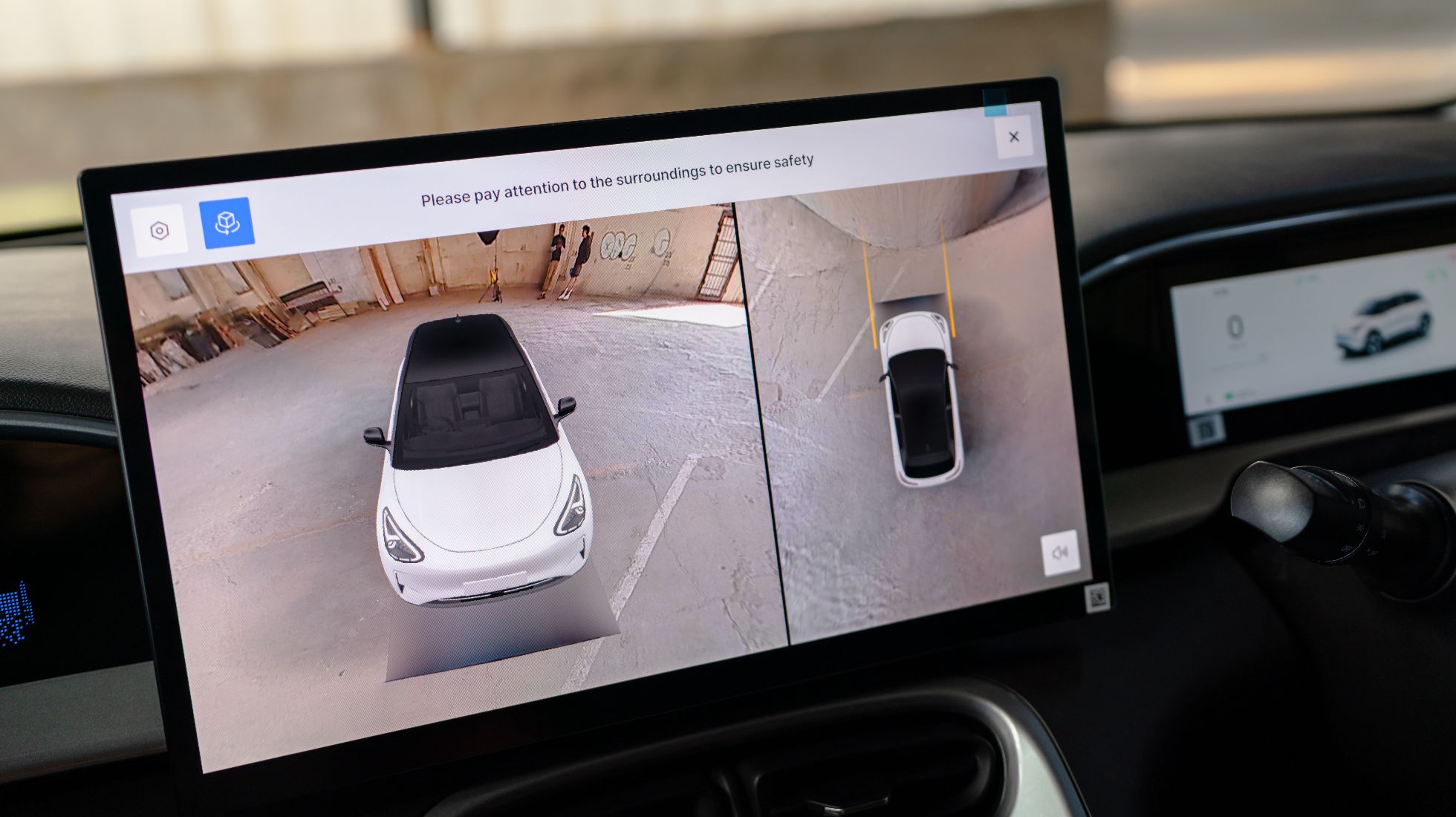
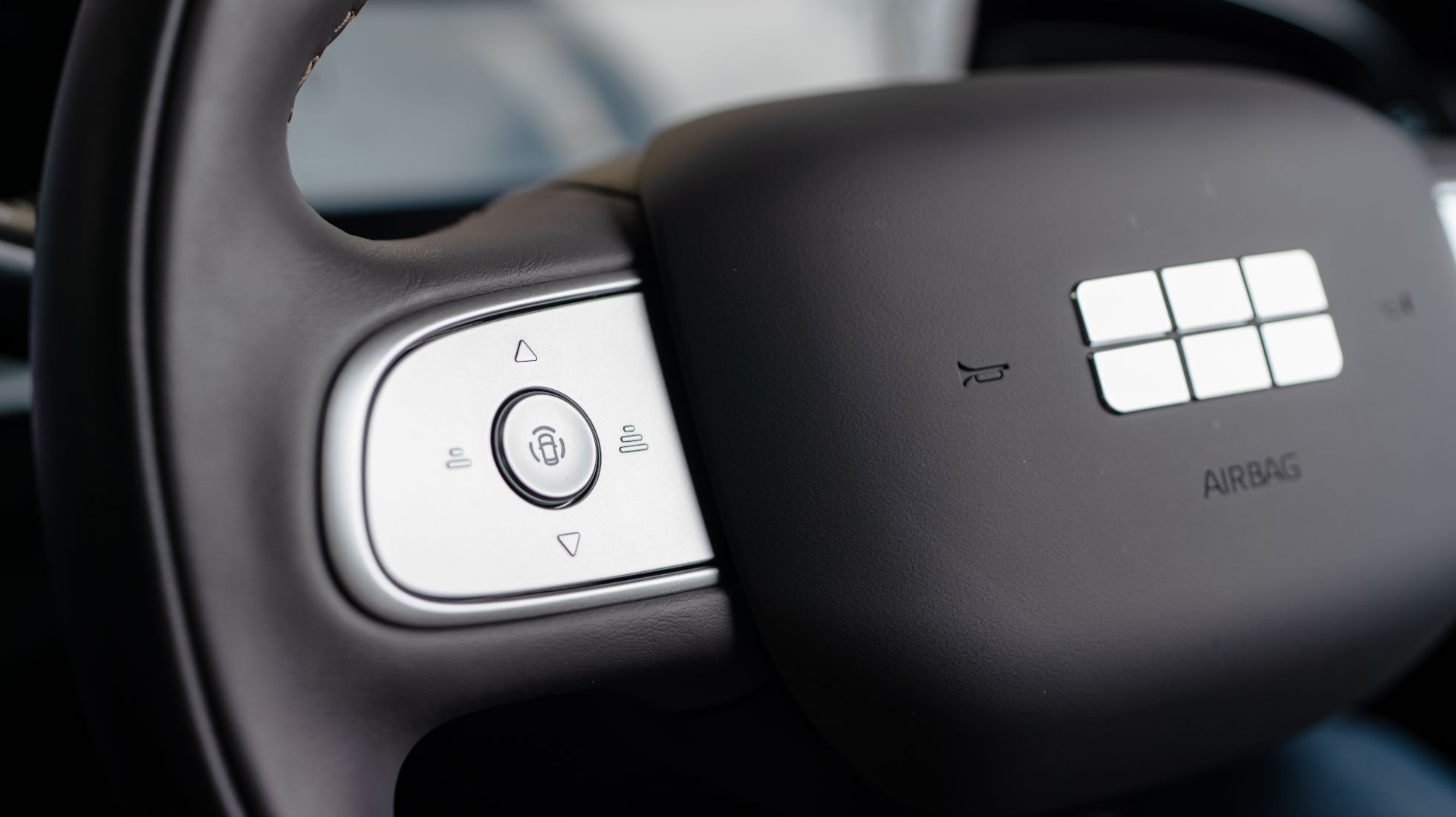
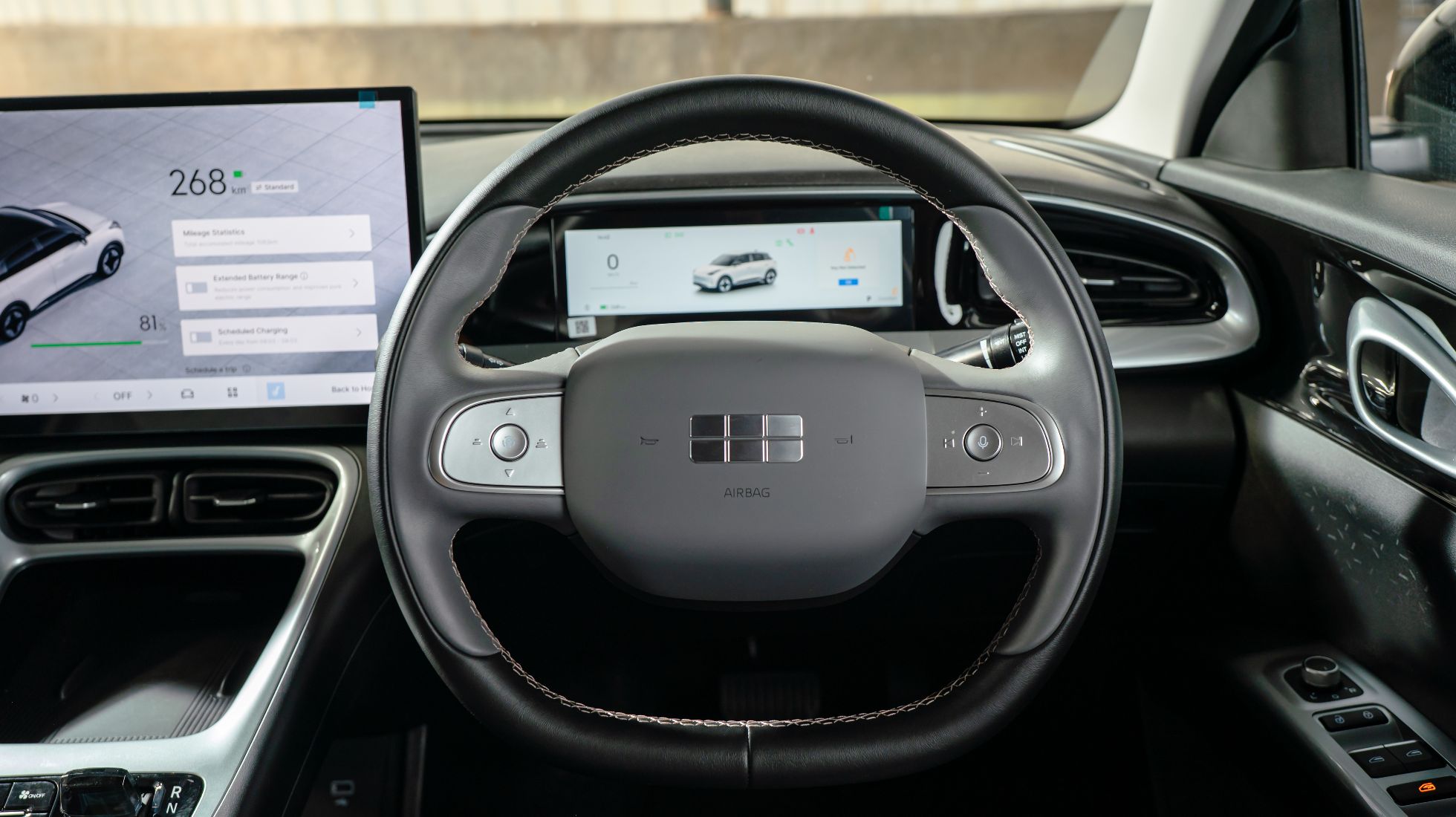
As for onboard niceties, a 14.6-inch infotainment screen running Geely’s Flyme system is the centrepiece of the dashboard, while an 8.8-inch driver display shows the basics. Geely also ditched the column-mounted drive selector in favour of a centre-tunnel toggle, which I personally prefer with cruise control mercifully located on the steering wheel instead of that aforementioned column shifter that’s increasingly performing double duties on other Chinese models.
Space is reasonable: 375 litres in the boot and 70 litres in the frunk. Fold the second row down, and the packing space increases to 1,320 litres. Is it exceedingly spacious? No, but packaging is well thought out with the car boasting 30 different storage compartments in which you can forget your house keys.
Should you buy one?
You may have to wait a bit since all launch units are spoken for. It’s also no wonder since the Geely E2’s price of R339,900 (Aspire) and R389,900 (Apex) is officially SA’s most affordable entry point into EV ownership, while offering more space, power and torque than BYD’s Dolphin Surf.
As for public charging infrastructure to support increasing EV adoption, Geely has no definite or immediate plans to build charging infrastructure, but it is offering a free wall box charger, an emergency charger, and a R7,500 charging voucher if you finance through its in-house financial offering which is a WesBank-backed suite of products. It is not enough to offset the now-normal waiting times at many public chargers, but it’s certainly a start.
All things considered, the maths here makes its own compelling case, especially given the cost of a weekly trip to the closest filling station. And with that asking price, it’s hard not to recommend it to buyers shopping in the EV space.