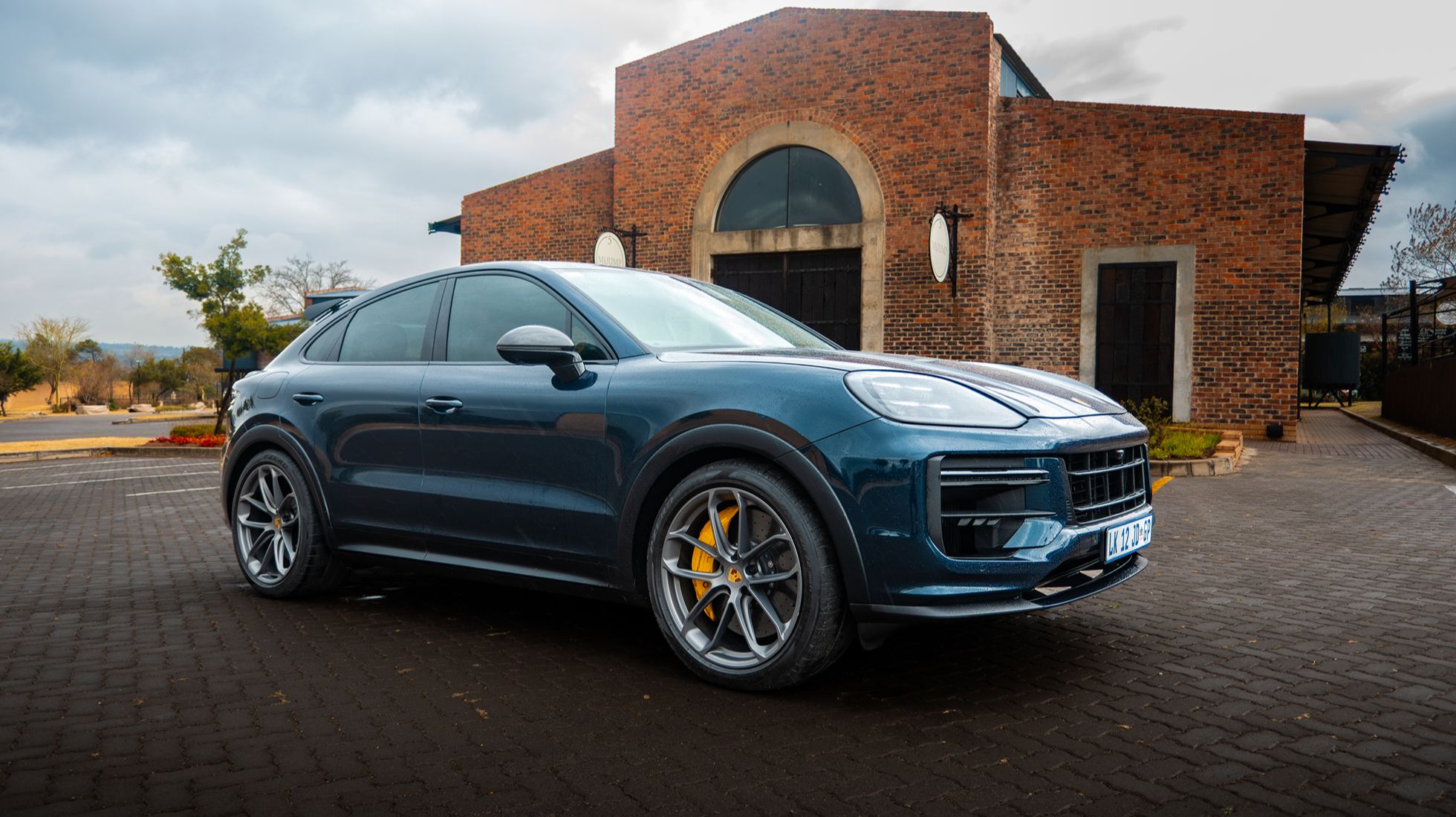
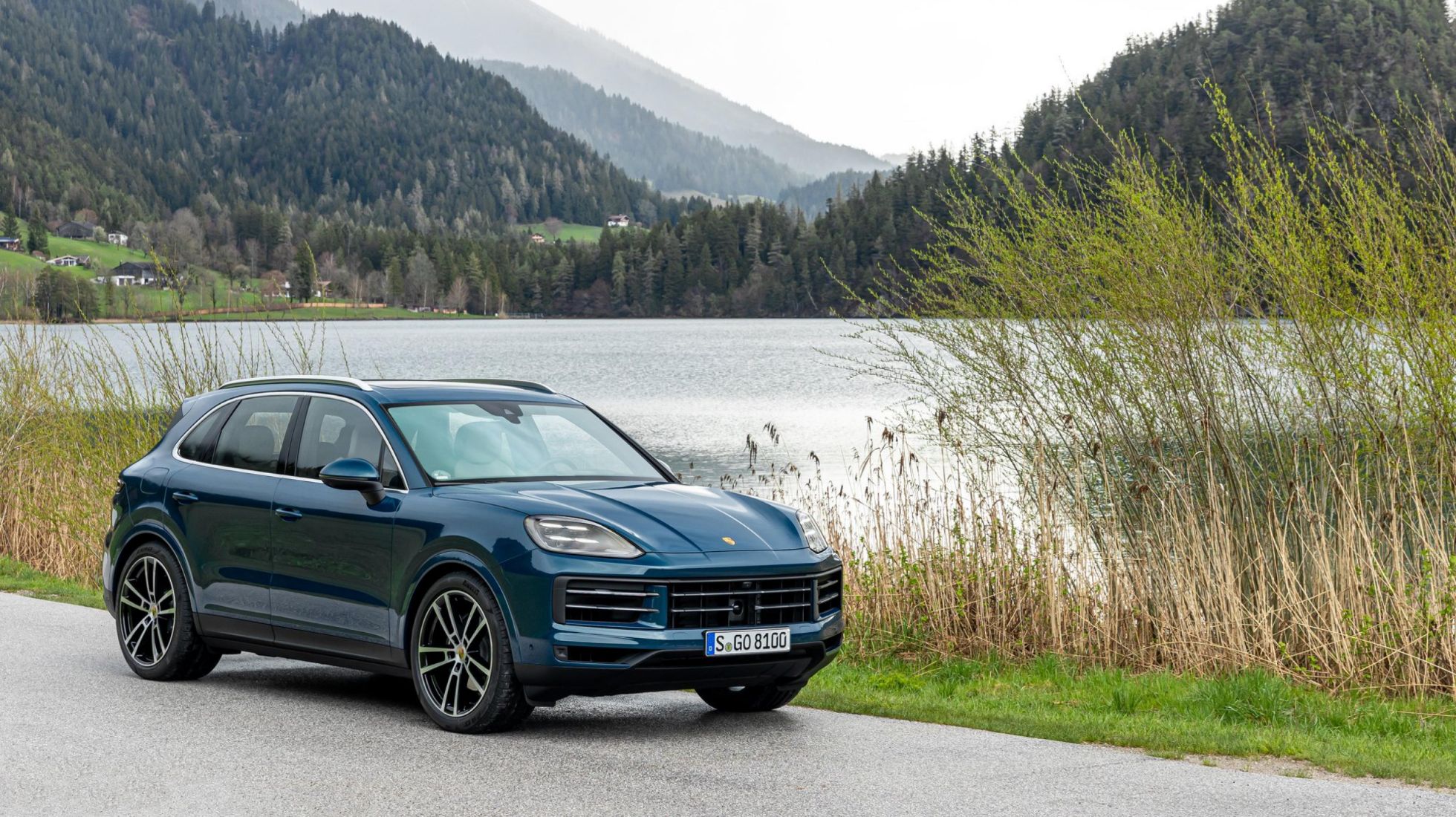
Is there a better time to take to the road than that small pre-dawn window, where all the sins of the previous day are expunged just before the new light of day brings us all a new start? The air is at its crispest. The roads are silent enough to enjoy the open road, and the metro cops havent quite settled into their revenue-collecting posts for the day. The coffee too is freshly brewed as I head for the border of South Africa-Eswatini, quite at home in the pew of a Gen-3 Porsche Cayenne SUV.
Its a journey to ponder the legacy of this mightily successful Porsche nameplate, the car that arguably catapulted Porsche into long-term business resilience, sealing some volume into the sportscar brands sales. Theres a noted Ferry Porsche quote that foresaw this. If we build an off-road model according to our standards of quality and it has a Porsche crest on the front, people will buy it. He may not have foreseen the significant demand it would garner over the three decades since its launch. Cayenne is one of Porsches greatest success stories. Just this year, over 54,000 Cayennes have been sold and delivered to owners, making up the lions share of model sales at 16%. The question is, “How?” How does the Cayenne continue to carve out success despite the heavily saturated segment in which it competes?
For a start, the worlds fixation on SUVs certainly plays its part in Cayennes success. SUVs inherently allow for greater versatility than many other body types, and I’ve chosen to explore one of Africa’s most authentic gems in a way that most other Porsche products couldn’t. Theres a wild side to Eswatini that is best explored in something with some ground clearance and all-wheel drive, but the approach into the border belies this fact if youre visiting for the first time. As you cross the grated cattle grid into the Kingdom, the border facility at Ngwenya stands in stark contrast to the South African setup. Its immediately apparent that those grids are needed, as youre greeted by a country of further contrasts. The cattle graze by the roadside next to a set of fuel stations that offer a welcome top-up of cheaper petrol. Sim cards are sold from the roadside too, by a trio of friendly young people, one of whom is dressed in traditional wear while the others don the type of professional wear youd find at any office in Joburg. They exist in harmony, foretelling the story of one of the world’s only countries with a ruling monarch and a rich, practiced traditional culture.

Tanks brimmed, we make our way onto a pristine highway, headed for our overnight stop at Maguga Dam. The highway snakes its way towards the capital city, Mbabane, flanked by stunning vistas of rolling grassland hills. The road highlights Cayennes sportscar ability as we carve through the corners with ease and enjoyment. The Cayenne is planted, sharp, and comfortably dynamic. Im driving Porsches entry into the Cayenne range, a 3.0-litre, mono-turbo petrol V6 unit that dishes out 250kW and 450Nm of torque. Paired with an 8-speed Tiptronic transmission, it’s quite competent left to its own devices, but through a series of mountain passes, I opt to slip the shifter into manual mode, switch the car into Sport mode, and make use of the paddles behind the wheel. All of this enhances the driving experience on beautiful roads, except for the unexpected encounters with cow and goat herds that occasionally appear in the middle of the road. These encounters make for constant brake tests and heightened levels of awareness. Cayenne is at home, though. Conspicuous on this quiet ribbon of tarmac and fading light, every person we pass seems to notice.
The Maguga Dam is a must-see landmark in Eswatini. The dam, a joint project with South Africa, opened in 2002, boasting a capacity of 332 million cubic meters of water and a 115-meter-high dam wall. Beautiful viewpoints surround the dam, and we use some of these to photograph the Cayenne against such a vast and beautiful landscape of concrete, light, water, and vegetation. Maguga is a stunning end to the day, and we hit the overnight lodge with the hope of catching the sunrise over the water the next morning.

The next day is a stark contrast to our expectations. Its a miserably wet day, with heavy rain forecast for the next two days. The skies are grey as far as the eye can see, and theres a feeling among the team that we should just stay put in our rooms and catch up on admin. It seems quite a sensible consideration, right? Wrong. Theres much to see in Eswatini, so we opt to continue as planned. This thought reminds me of the Cayennes genesis, the first-generation Porsche SUV that emerged as a slightly odd design. Many werent too complimentary of what this new 4×4 Porsche looked like or represented, until they got behind the wheel and realised that the car was as competent as that Porsche crest promised and more capable than anybody expected.
Thankfully, the Cayenne we’re driving is equipped with ventilated and heated seats, the latter of which we immediately switch on as we head out in the cold rain from Maguga towards another part of the Highveld. Eswatinis famed views are what were chasing, and the days itinerary sees us head to a part of the world that is deeply sentimental to me. The Usutu Forest remains one of the largest man-made forests in the world, and its an area where I spent most of my formative childhood years doing primary school in this mountainous, forested wonder. Once again, the roads that take us there are a series of beautiful mountain passes, but we veer off towards a view point named Meikles Mount, which sees us venture into twisty gravelled roads under a forest-framed awning. Through the dappled light, we emerge into a stunning vista with extensive views in every direction. You can tell that by now, the rain has been left behind, and while the sky is still a little cloudy, the visibility is good enough. Cayennes trek to the top of Meikles Mount has been quite uneventful, such is the cars suspension set up and ride height. Despite the car’s 21-inch 911 Turbo Design wheels, no rocky climbs or muddy switchbacks have proven too difficult in Off-Road Mode.
We’ve booked an appointment at the Mantenga Nature Reserve and Cultural Village in the country’s tourism capital, Ezulwini (Heaven in Swati). To get there, we have to travel on the infamous Malagwane Pass, a stretch of road that connects the two main cities, Manzini and Mbabane. The Malagwane is etched into the memories of many Swati people as the road on which the Malagwane Ghost resided. The legends all speak of a lady who would hike along this road and, once picked up, would spend a few minutes of the drive in the car before disappearing from the back seat, only to be seen in ghostly flashes further along the drive. She only emerged at night, of course, and she remains there to this day So the legend goes. In my adult mind, the Malagwane is more famed for its hill climb layout, the perfect 7-kilometre patch of challenging corners with varied cambers. Its a true test of vehicle stability, braking, and directional changes. Its perhaps the best place to test the Cayennes dynamic prowess, all within the confines of the speed limits, of course. As entry-level premium SUVs go, this Cayenne remains worthy of some respect. Theres an ease to driving the car with some conviction, but we arrive at Mantenga in time for a real educational experience.
Mantenga is a protected nature reserve, home to incredible rivers, vegetation, mountain ranges, animals, and traditional Swati families who allow us into their homestead with warmth and character. Weve been allowed to drive into the reserve, a special arrangement that most dont get, and we take the opportunity to drive the trails to the start of the Mantenga Falls hiking trail. Were on sacred and royal ground here, so its not lost on me how privileged we are or how exceptionally beautiful this part of the world is. After some fun at the falls, we end our excursion inside the traditional homestead. Weve been invited to park the Cayenne inside the yard, and were later told that thats the first time a Porsche has entered the gates. The family welcomes us, totally engaged with the white Cayenne. Im totally fascinated with the rich contrast of the picture in front of meâa family of traditional Swati in awe of a sporty SUV built on the other side of the world. As I ponder the moment, Im struck by the Nyonyane Mountain peak in the distance beyond us. Its another place of legend. Tales about this place, where Bushmen once resided and royalty were buried, tell of a mountain where criminals were forced off the edge to their deaths. People still refer to it as Execution Rock.

We close our day off with a visit to the largest city in Eswatini, Manzini. Its a bustling place. If you want to see a busy part of the country, Manzini at the end of a business day is it. Were aiming to catch the final trades at the Manzini market, a place where youll find almost anything you may be looking for. From traditional spears to emajobo (traditional loinskins made from leopard hide) to colourful trinkets and ornaments, the Manzini market has a vibe. Weve even found a lady selling an interesting selection of underwear and a man who offers gifts with personalised messages on them. While we go mad at the market stalls, theres a small crowd gathered outside admiring a white Cayenne parked there.
Our final morning in Eswatini is reserved to visit another special place. Once again, getting to this destination involves two mountain passes that carve through mountainous landscapes. There’s a real need for SUVs here, though you wouldn’t say it based on the litany of small Japanese hatches that litter the streets. Eswatini is home to plenty of grey import vehicles that have granted access to mobility at a far cheaper cost to the consumer, but with more long-term negative consequences, but thats a story for another day. Nonetheless, the Cayenne remains the right choice to get to Sibebe Rock. Sibebe is, arguably, Eswatinis most impressive landmark. It is the worlds largest granite dome, a volcanic slab of rock that is the second largest rock in the world, only pipped by Ayers Rock / Uluru in Australia. Sibebe is a sight to behold as we make our way closer and closer. Its flanked at its foot by a narrow, tarred road that can give you a variety of views and access to a few hiking trails that will lead you to the top, where youll discover beautiful vegetation, natural pools, and caves. Its a truly magnificent place, a place of immense grounding, and a realisation of how small we really are in the grand tapestry of this planet. Id encourage you to visit this wild yet sacred rock.

Weve only seen a small portion of Eswatini over three days, but the journey has somehow filled our souls. Theres soul in this placeâsomething deeply mystifying yet also deeply satisfying. There’s a peace that we’ve experienced, as well as joy from the people and the landscape that we’re taking back with us. The country is a series of contrasts, most of which will leave you smiling or, at the very least, thoughtfully curious. Its a beautiful place. Alluring. Wonderful. Intriguing. Colourful.
The Cayenne as a nameplate is at something of a crossroads. This particular version has given way to an upgraded, facelifted version that was, in essence, a revision to allow the introduction of a new electric Cayenne alongside the ICE/hybrid-powered versions. These will be introduced in 2025. Cayenne is a car with a large breadth of ability. It can live in the city life of Johannesburg, going from restaurants and nightclubs to school car parks without any fuss. It can be driven with joy and ease by anyone and still find its way to the Tsitsikamma or to the forests in Eswatini, loaded with luggage and large adults. Oh, and wait, it will still march from 0 to 100km/h in under six seconds and wear its sportscar name with pride up or down a gorgeous mountain pass. Even the Malagwane ghosts would want a lift.