

UNASKED. ANSWERED.
Words: Avon Middleton
Images: Porsche AG
| Engine | Power & Torque | Transmission | 0 – 100km/h | Top Speed | Fuel Consumption | CO2 Emissions |
4.0-litre, NA, Flat Six |
375kW |
6-speed MT |
3.9 secs |
313km/h |
15,2l/100km |
347g/km |
A Porsche 911 GT3 is the car enthusiast’s holy grail, built specifically to be the sharpest, most engaging and emotive driving experience this side of a race car. It’s the coming of age through which you realise the absolute nirvana of driving. Porsche has decided to produce a cabrio version and as I sit in the plane to a heatwave-ravaged Europe, I’m very anxious… not for the heatwave, but about the car. It’s the first time I’ve felt this way prior to a Porsche launch. A convertible GT car? It’s the epitome of the automotive paradox.
The Porsche GT department is dedicated to purist driving. Andreas Preuninger, the head of this hallowed division, is the master of building cars that, at their very core, are soul-stirring driver’s cars. The engineering rationale says that any car with a hardshell structure, i.e. a roof, is better. It is structurally sound, more rigid and, therefore, sharper and more competent as a sportscar. Remove the roof from a 911, which is available across the 911 range either in Cabrio or Targa form, and you can feel the difference almost from the first moment you find a corner. Porsche has been doing this on 911s for decades, and there’s a customer and a lifestyle that enjoys that sort of thing. All fair and well. But to do this on a GT? That’s going totally off script. It’s why I’m so anxious.
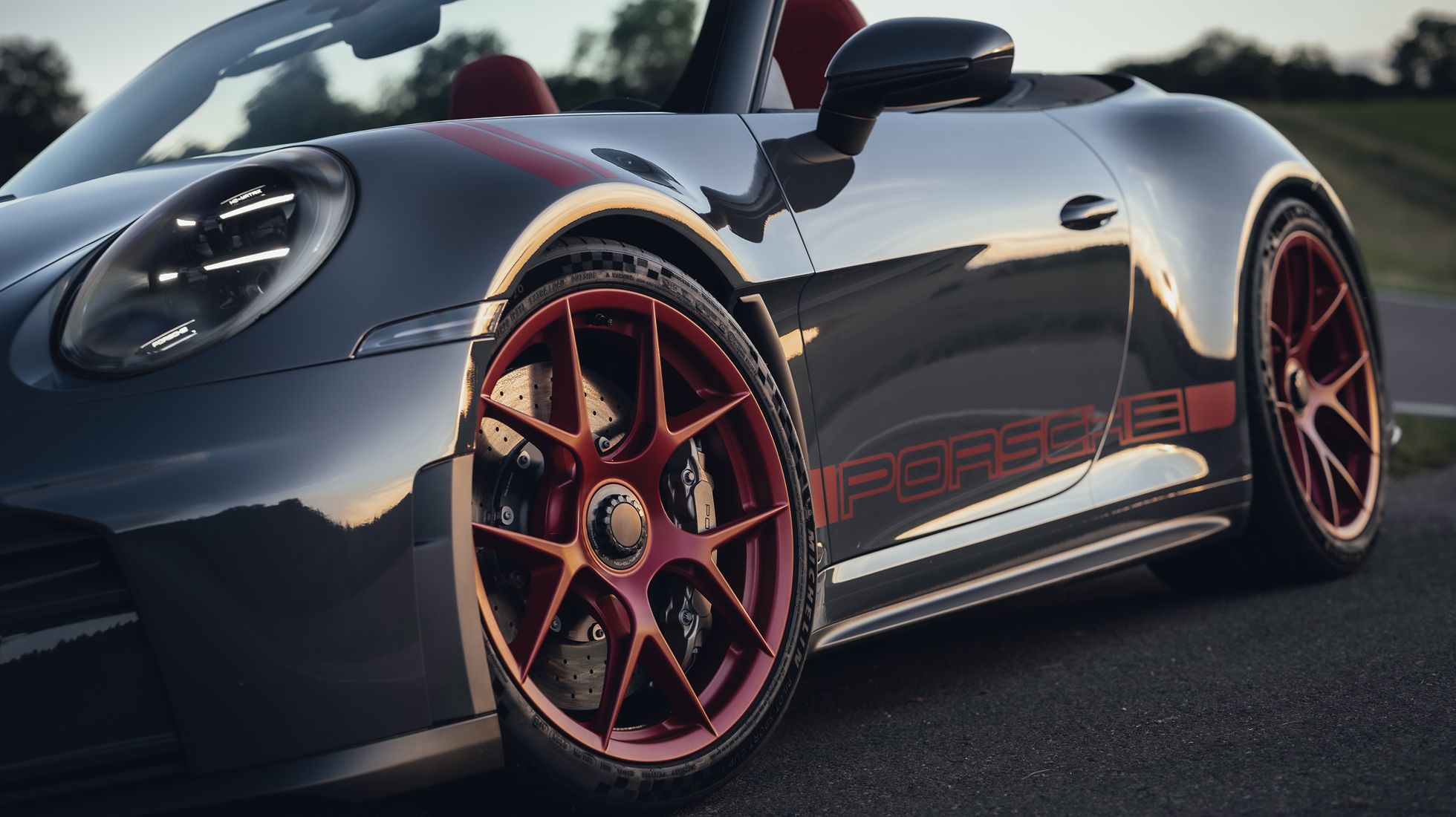
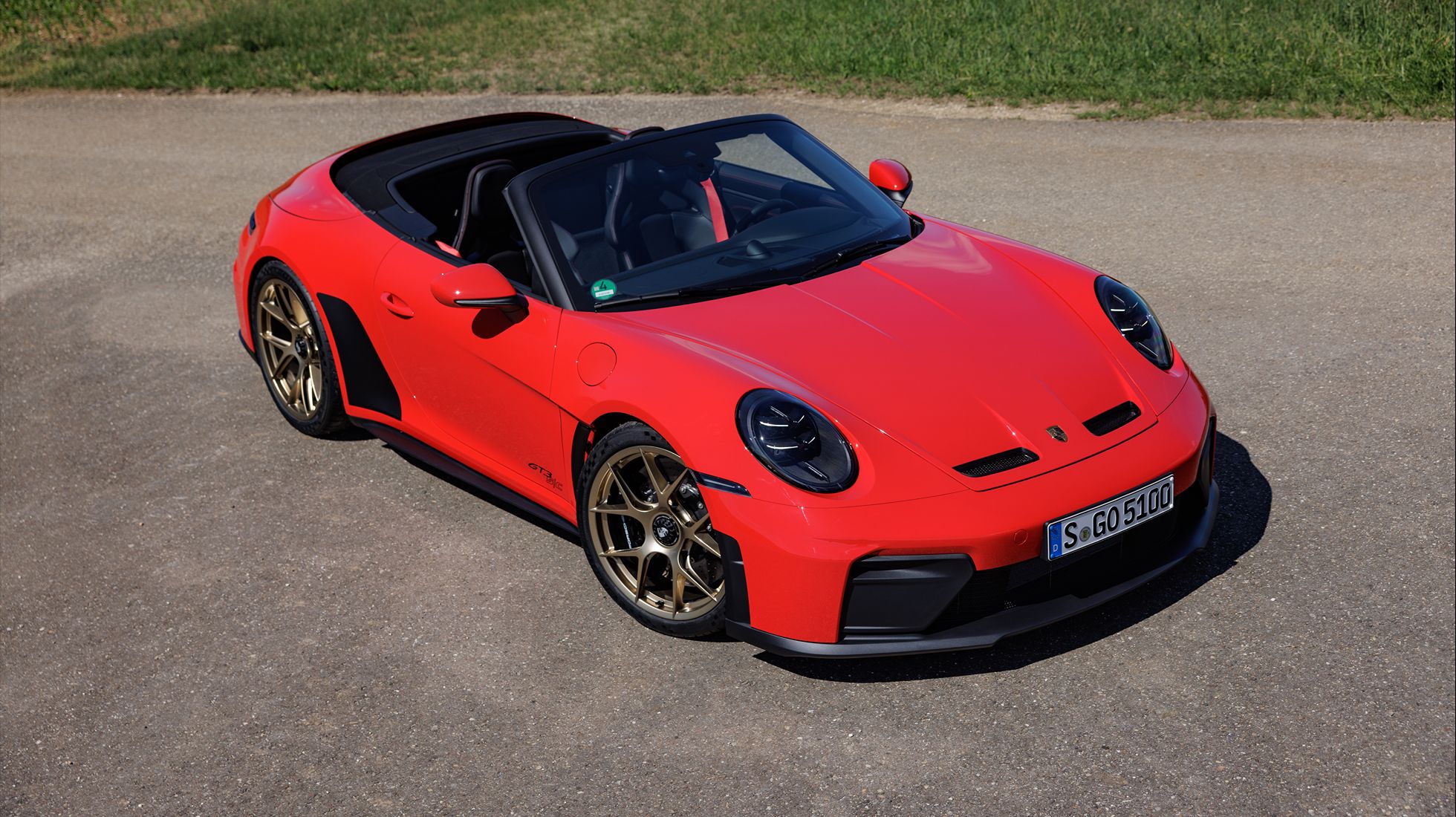
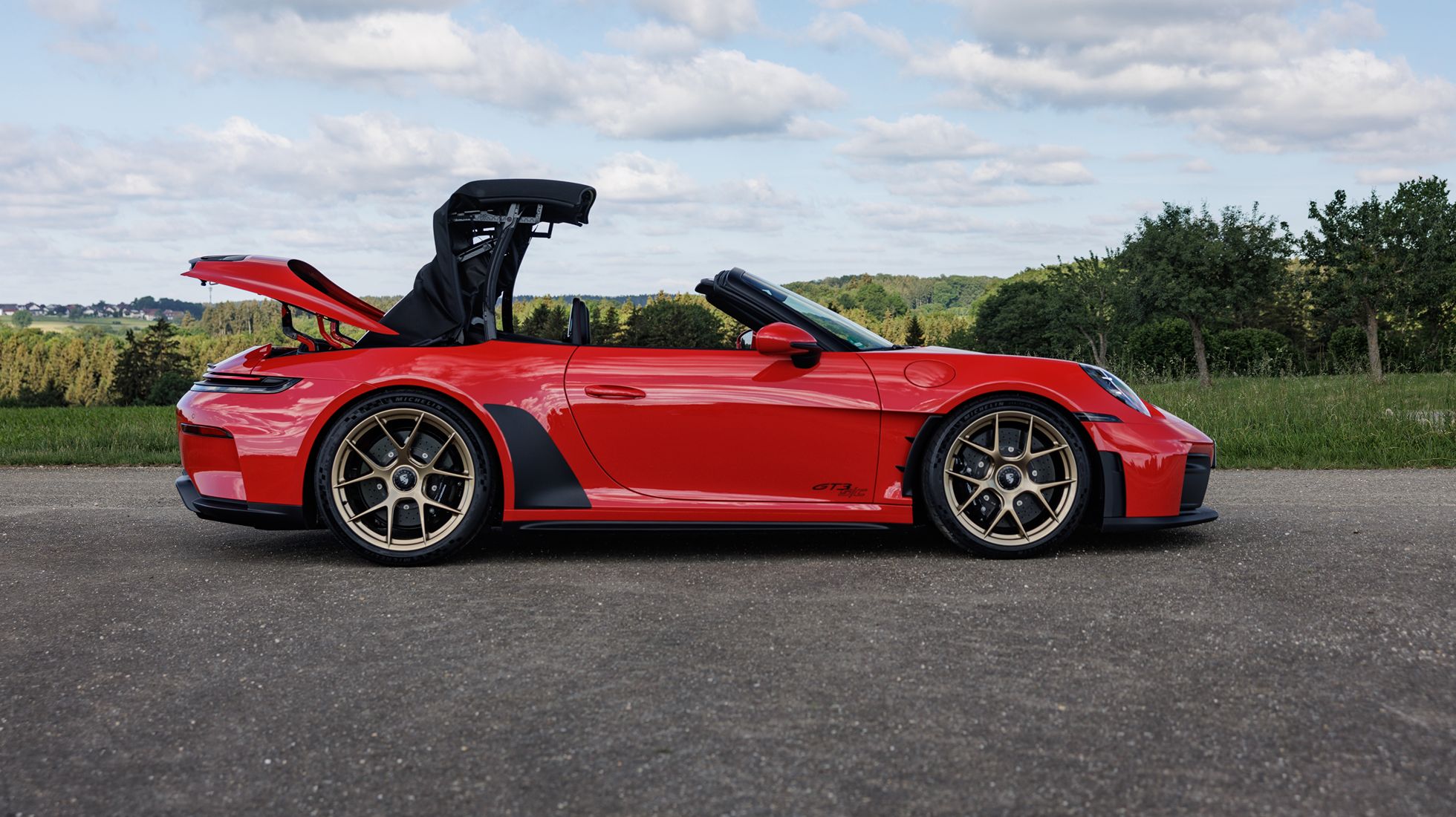
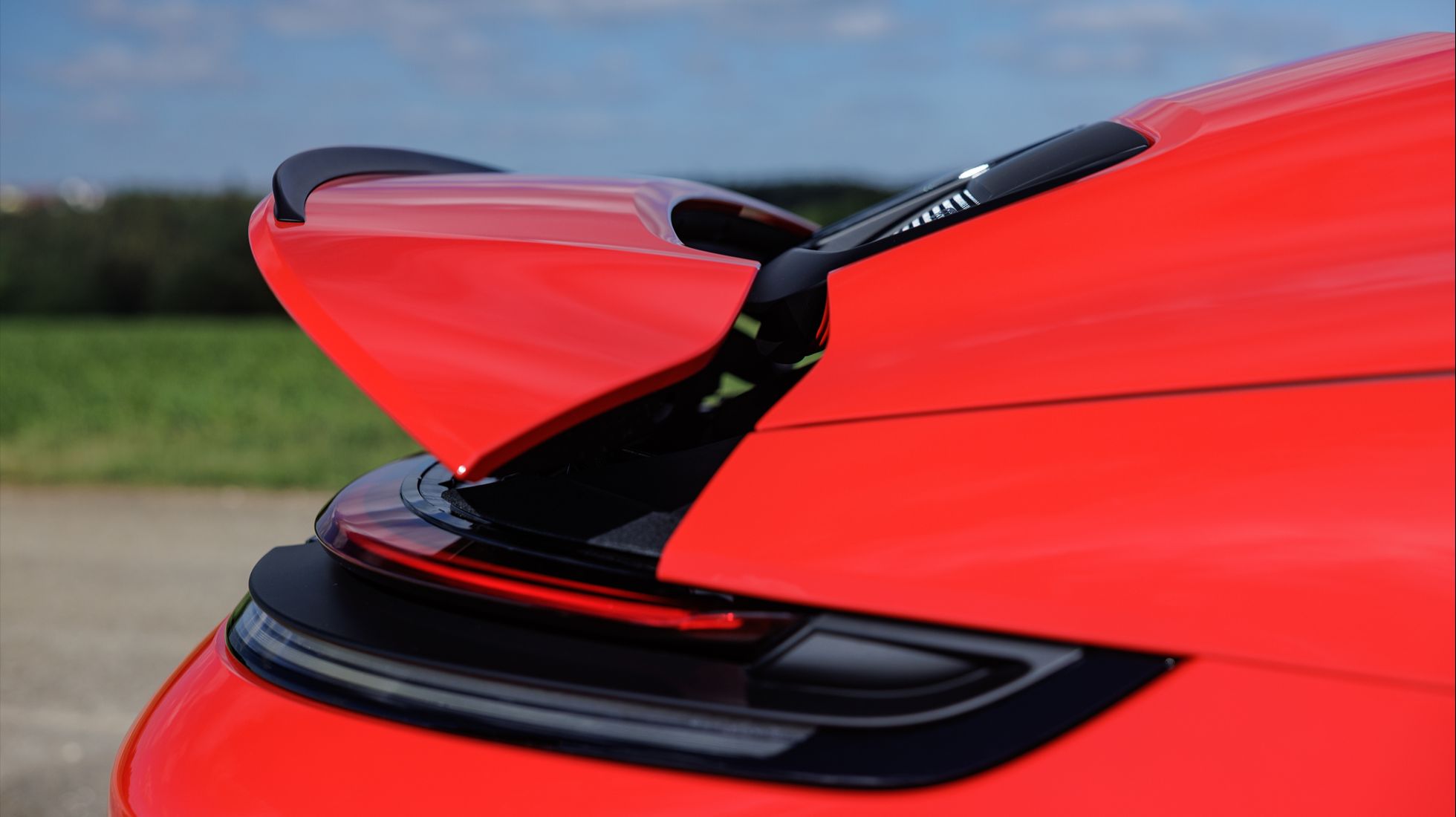
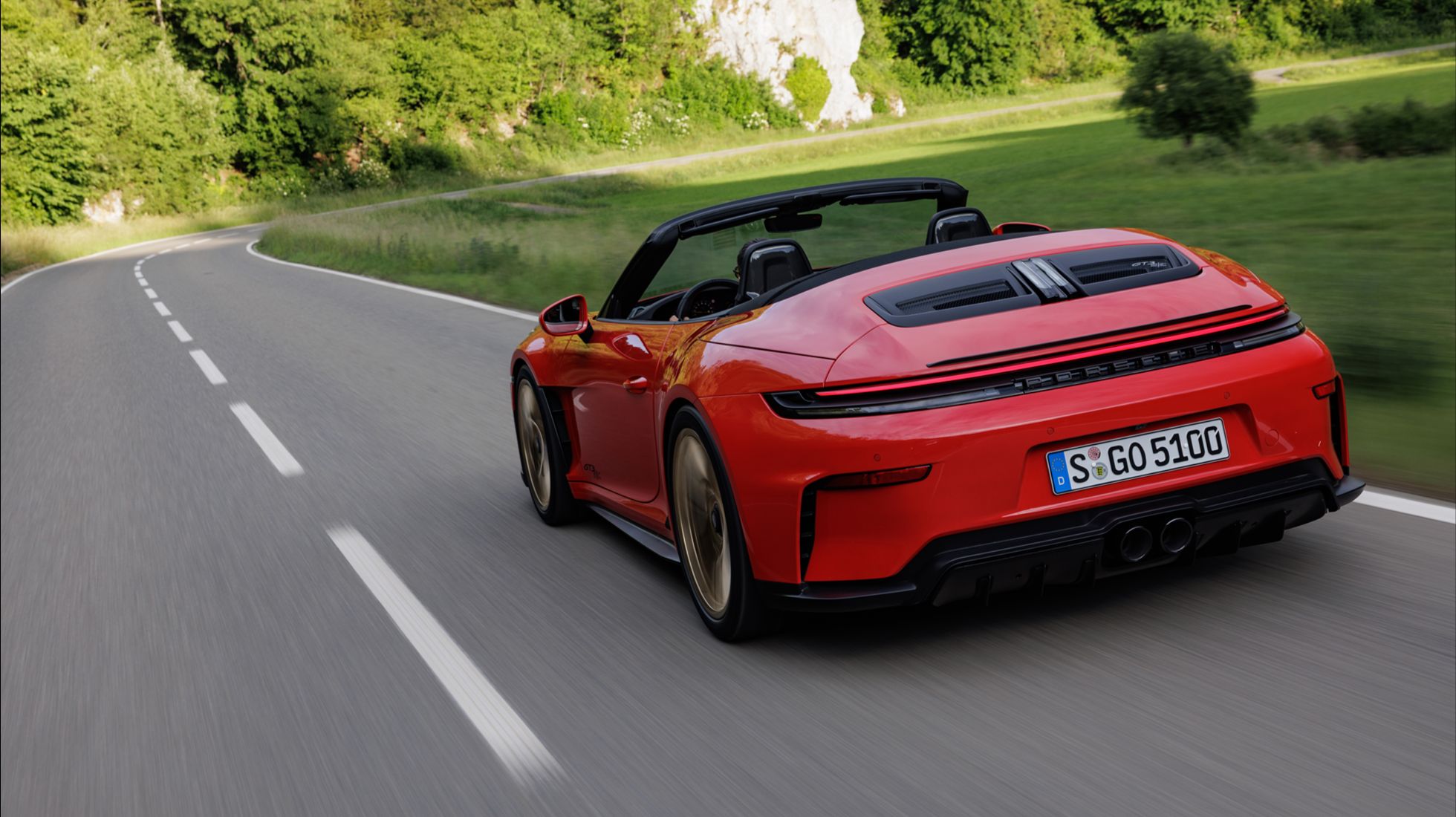
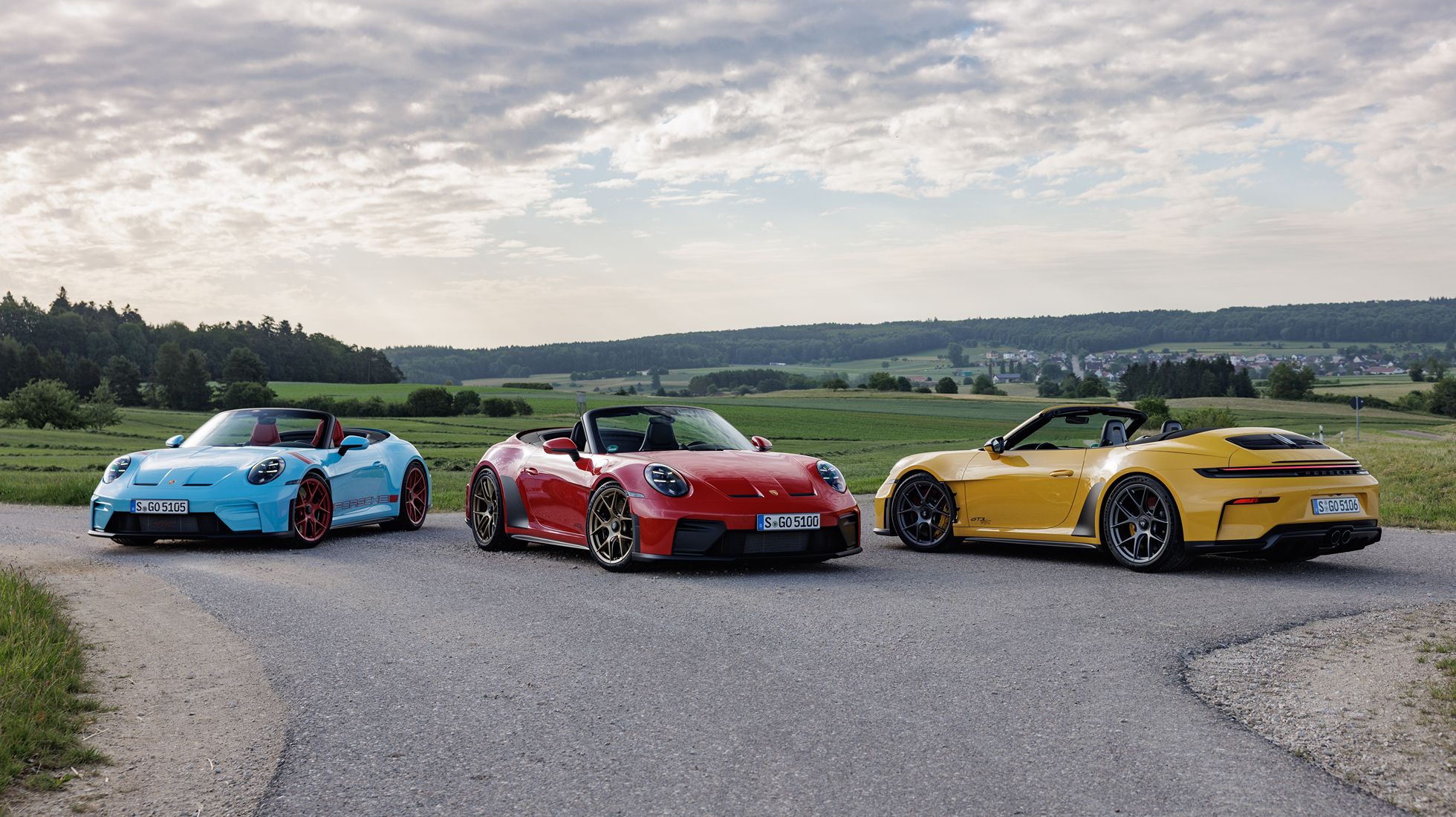
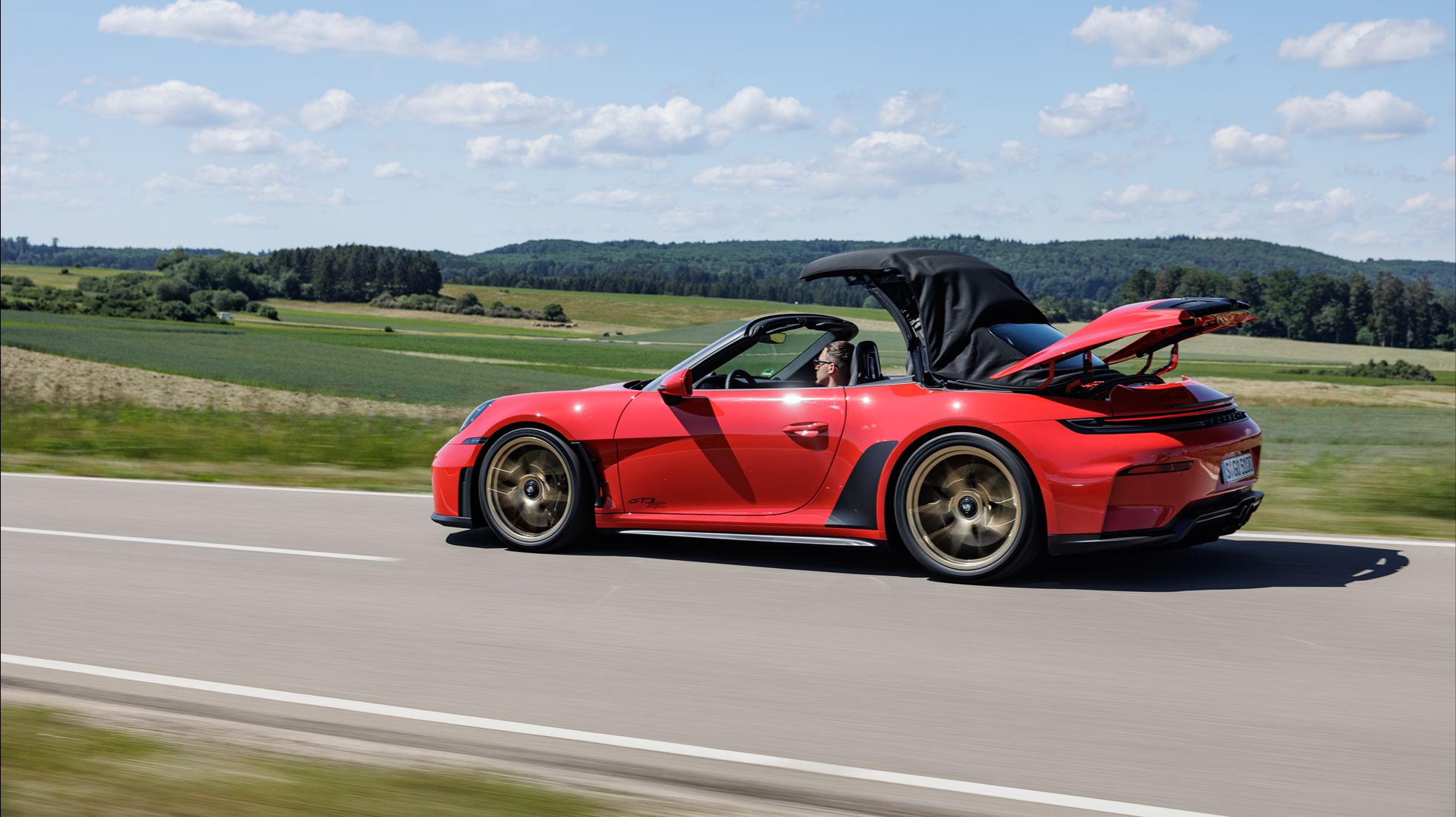
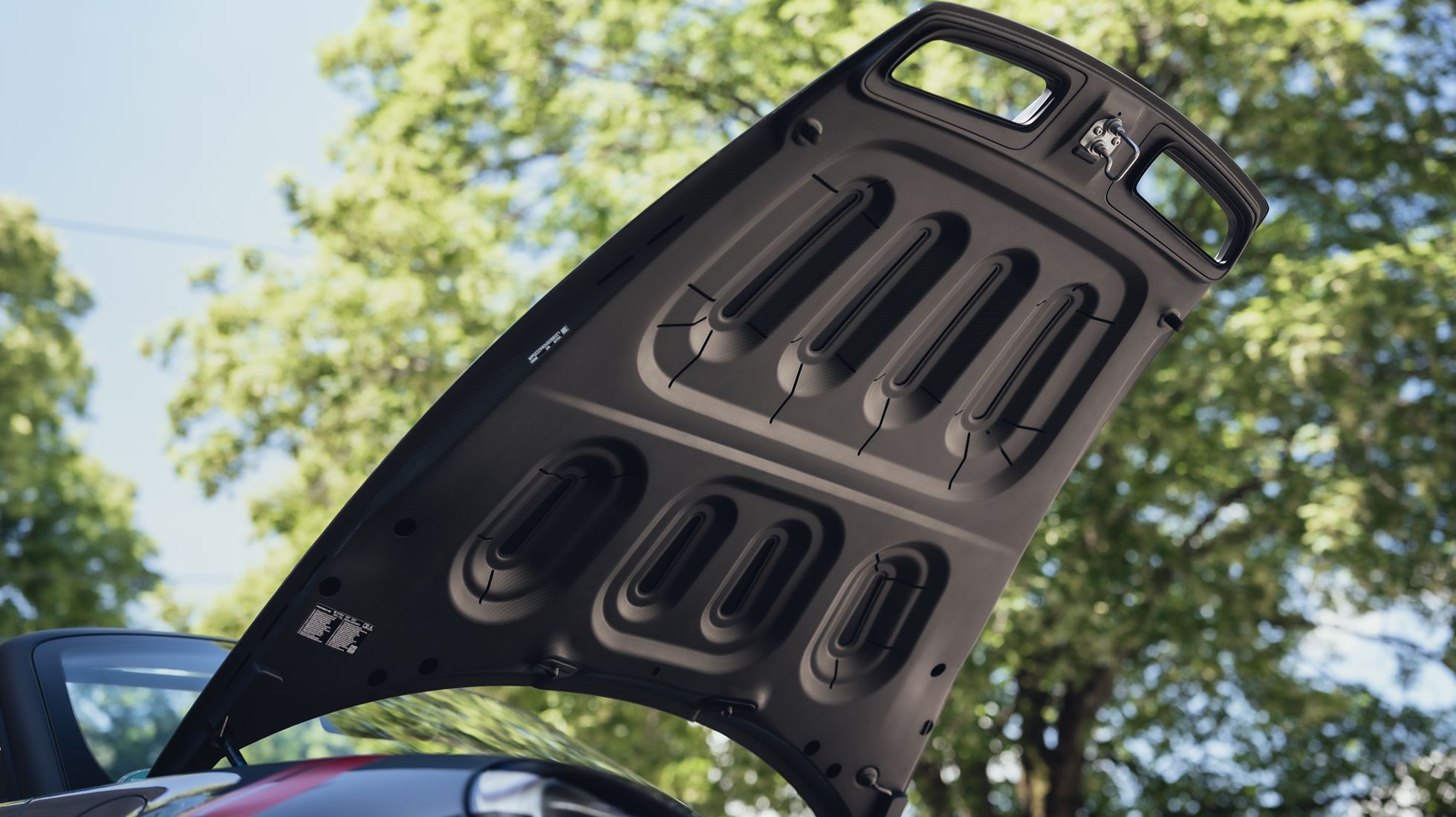
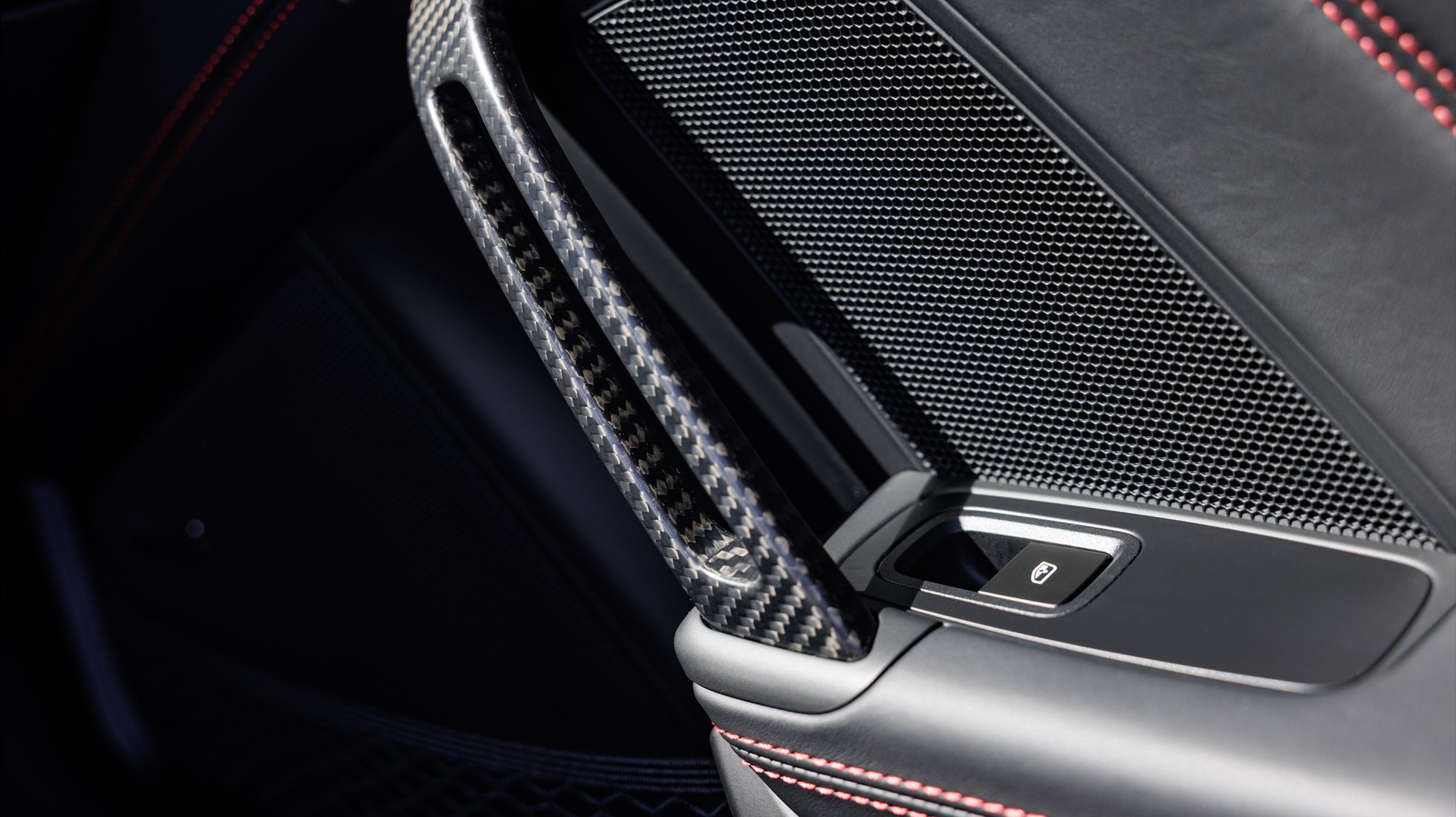
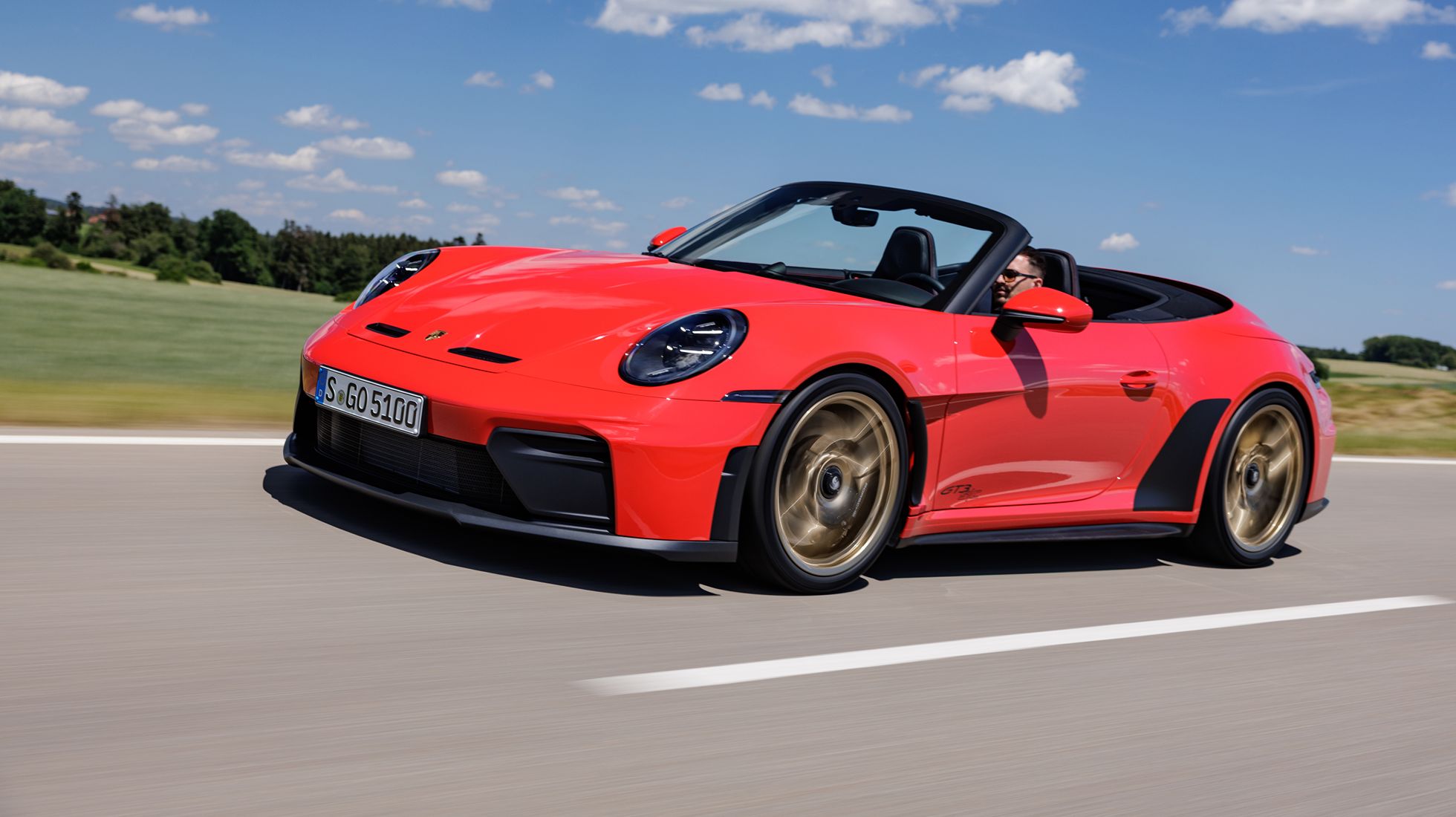
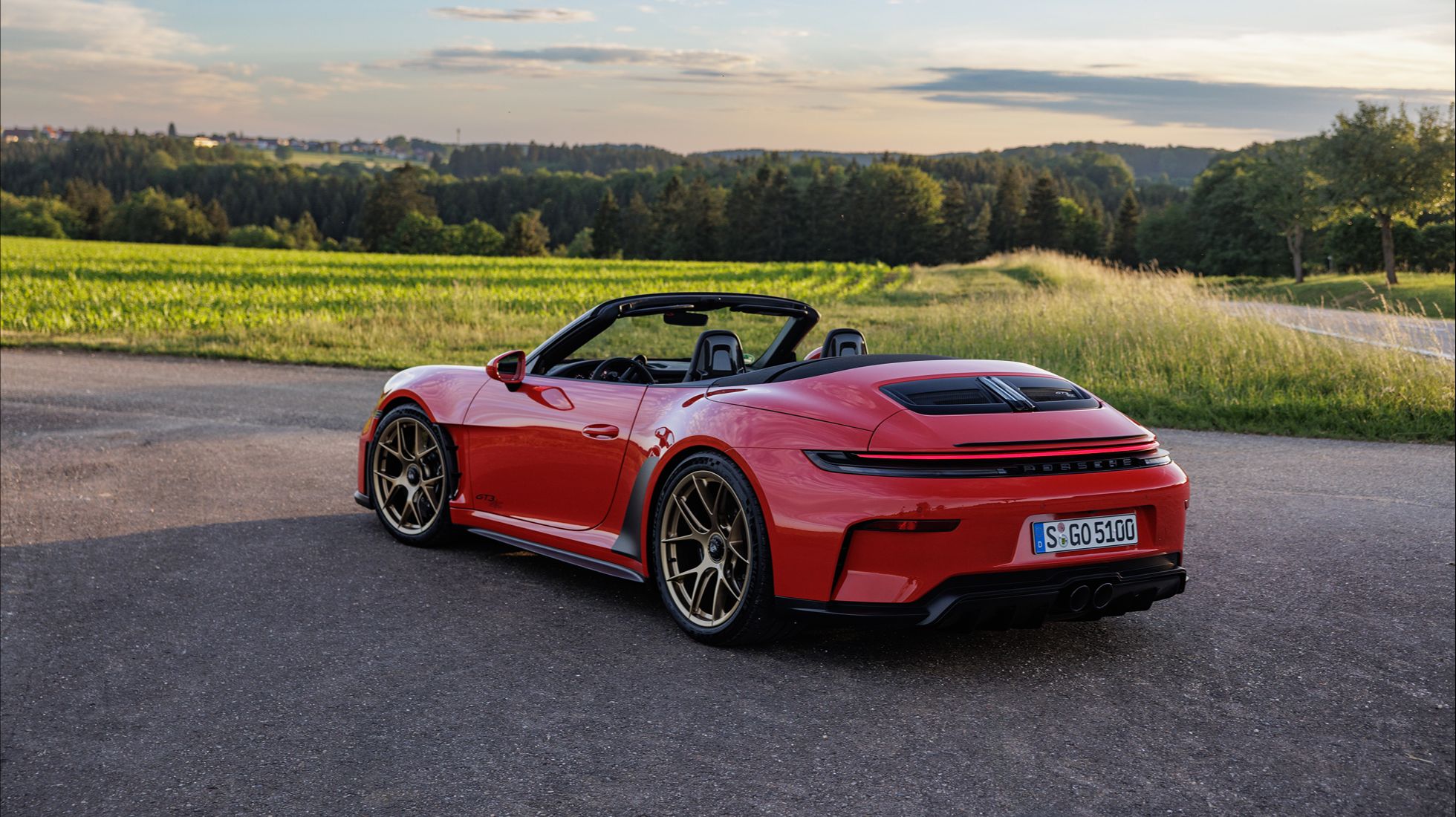
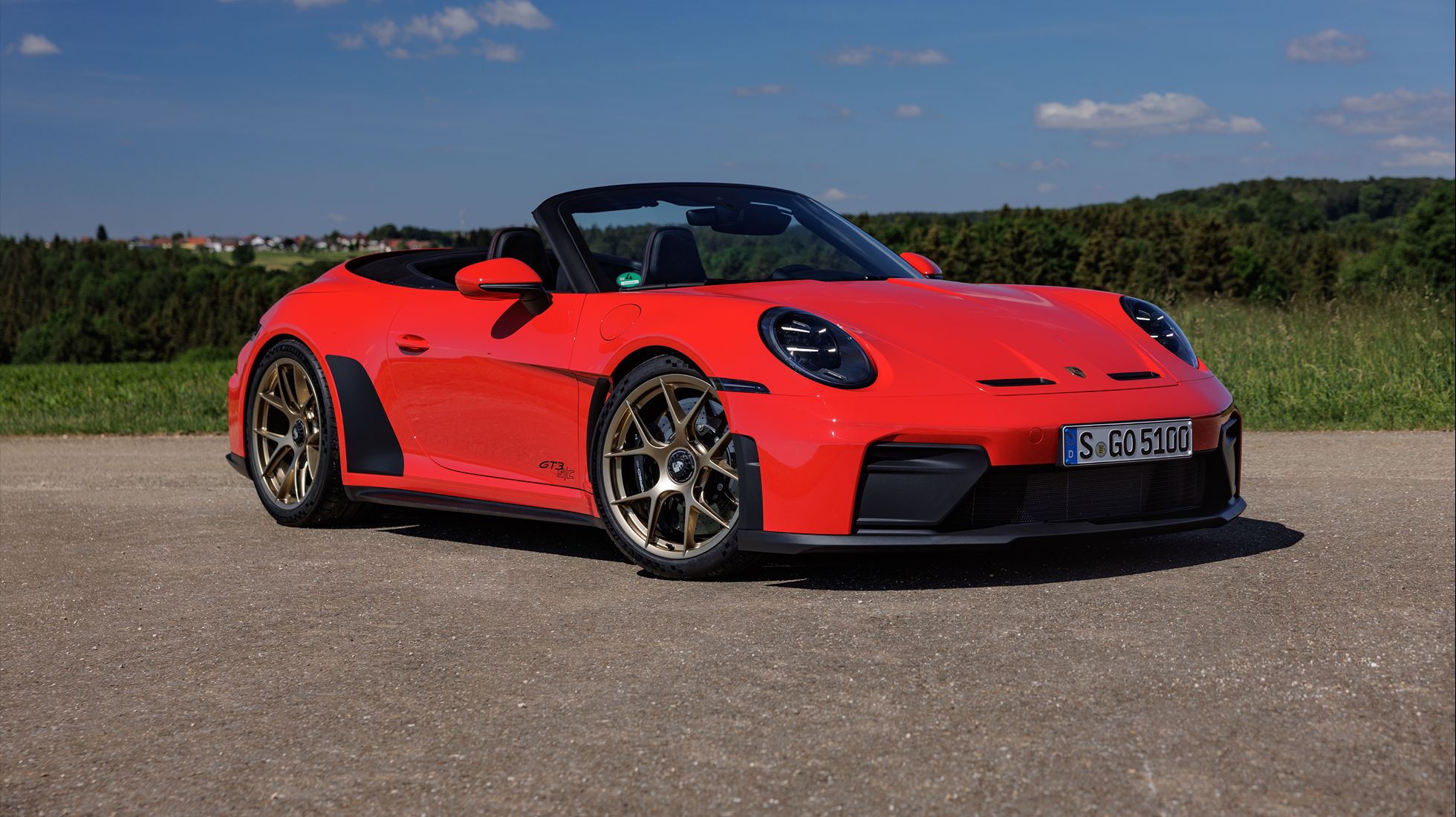
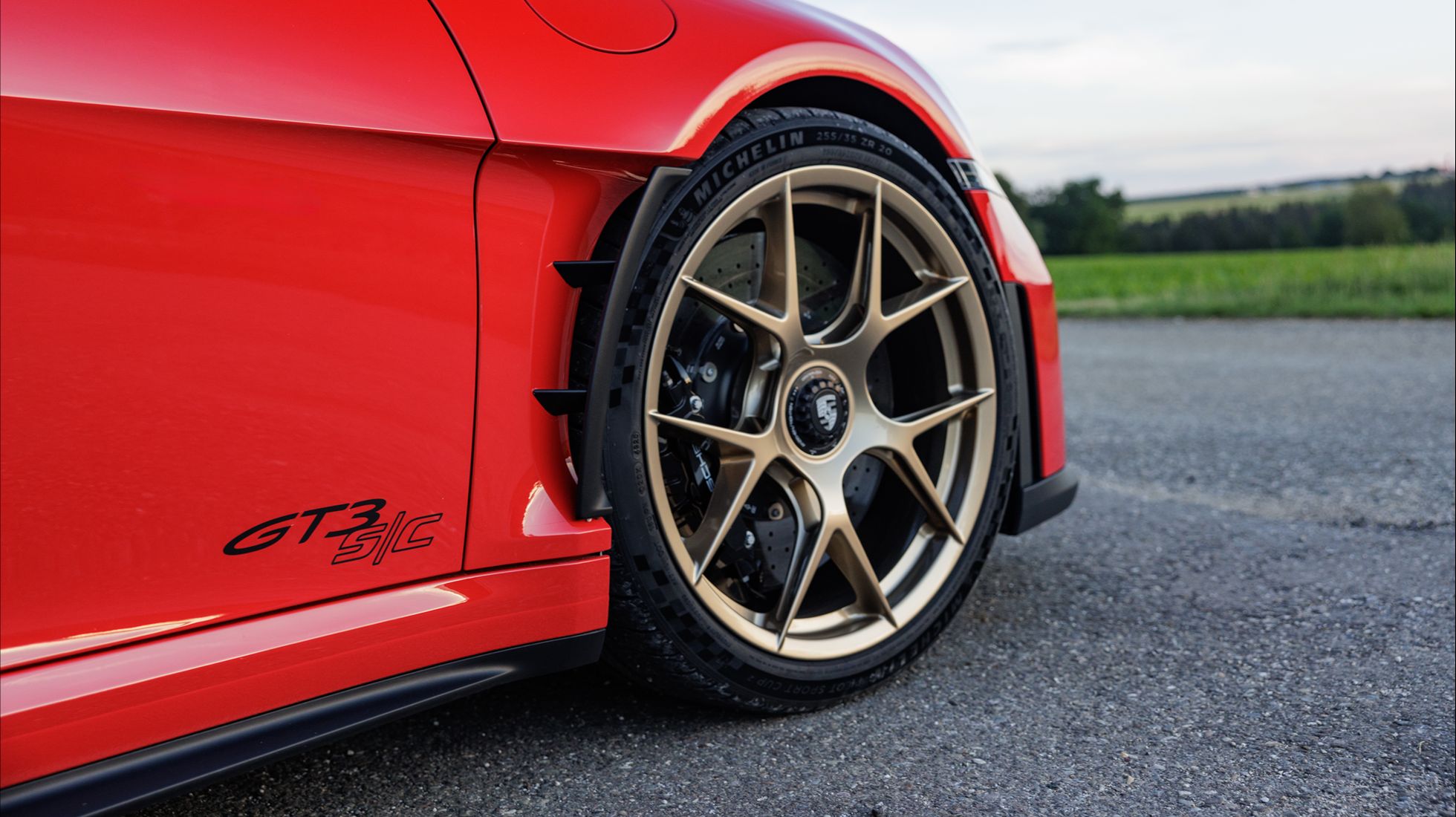
Welcome to Porsche’s latest act of madness, then: the new 911 GT3 S/C (Sport/Cabriolet). It’s certainly a new set of rules, something that hasn’t quite offended me as I approach it for the first time. It’s a GT3 from most angles. Those lightweight twin-tip stainless steel sports exhausts are a familiar and exciting sight. For all its novelty, not much on the new GT3 S/C is new. Most of the parts on this car are lifted from somewhere in Porsche’s 911 and GT arsenal, but the conceptual brief for this car was to focus on building the lightest cabriolet they could. Shedding weight was everything. The entire front end – bonnet, fenders and doors – is carbon fibre, lifted wholesale from the 911 S/T and GT3 Touring. The bulbous rear under which the cabrio mechanics sit is made of aluminium. The actual cabrio roof structure materials are made from titanium. At all four corners, titanium wheels in a new California Gold are standard fare. You can opt for black or silver as a no-cost option, but why would you? These gold wheels are magnificent, but more importantly, they are lightweight, about 9kg each. The Porsche Carbon Ceramic Braking system is standard on the S/C, and all together, the wheel and braking components reduce weight by over 40kg. Beneath all of the bodywork, this is the first 911 with a double wishbone front suspension, some of the components of which are also made of titanium. Porsche has taken this weight reduction seriously to deliver a car that is 1,497kg. To give some perspective, a 911 Turbo S Cabriolet weighs 300kg more and a GT3 Touring weighs just 60kg less. It’s a significant achievement to build a car with an electronically foldable roof that weighs very close to the hardtop version… All of which leads to one obvious question: has Porsche built an extraordinary piece of engineering… or simply compromised the GT3?
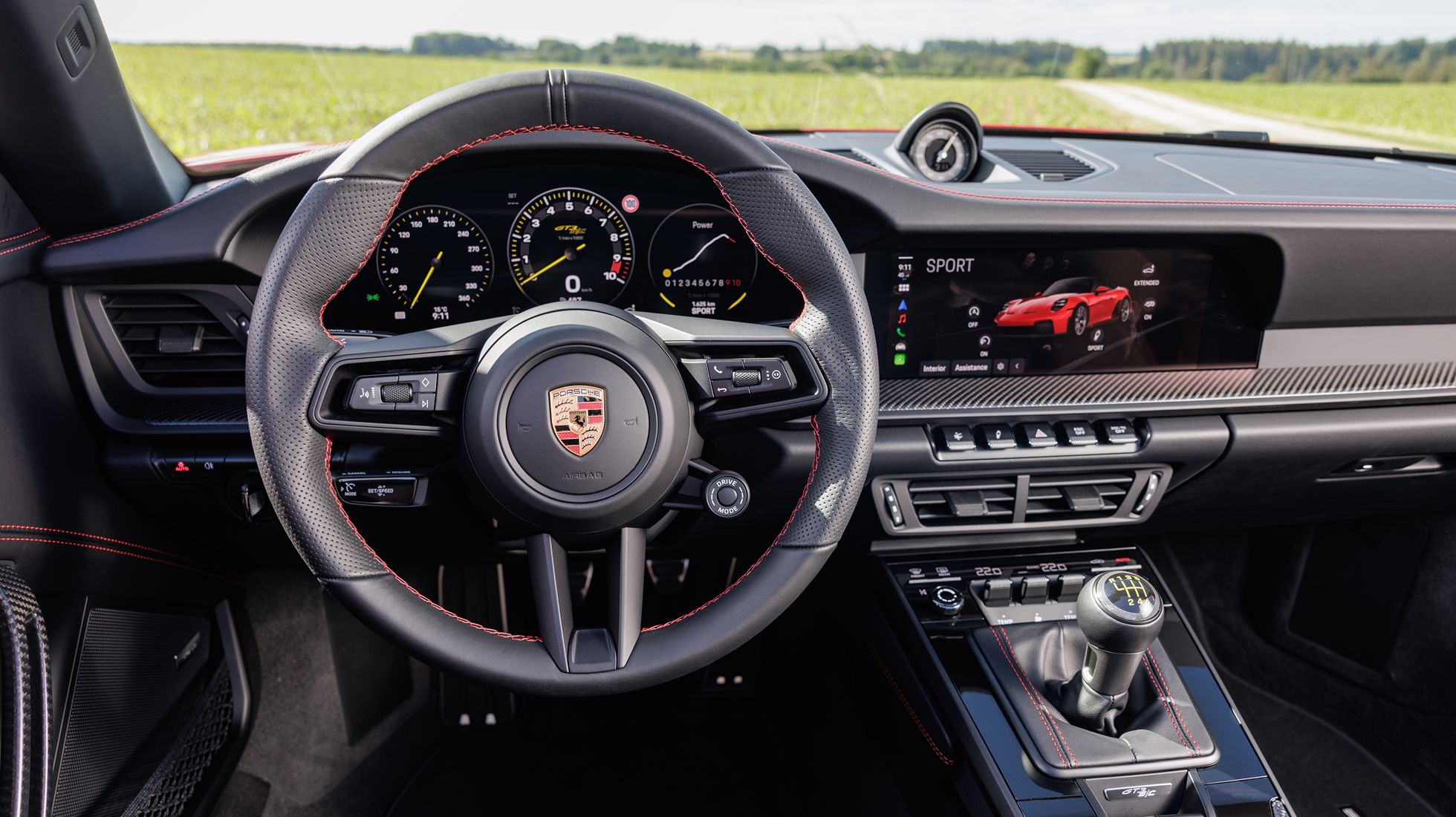
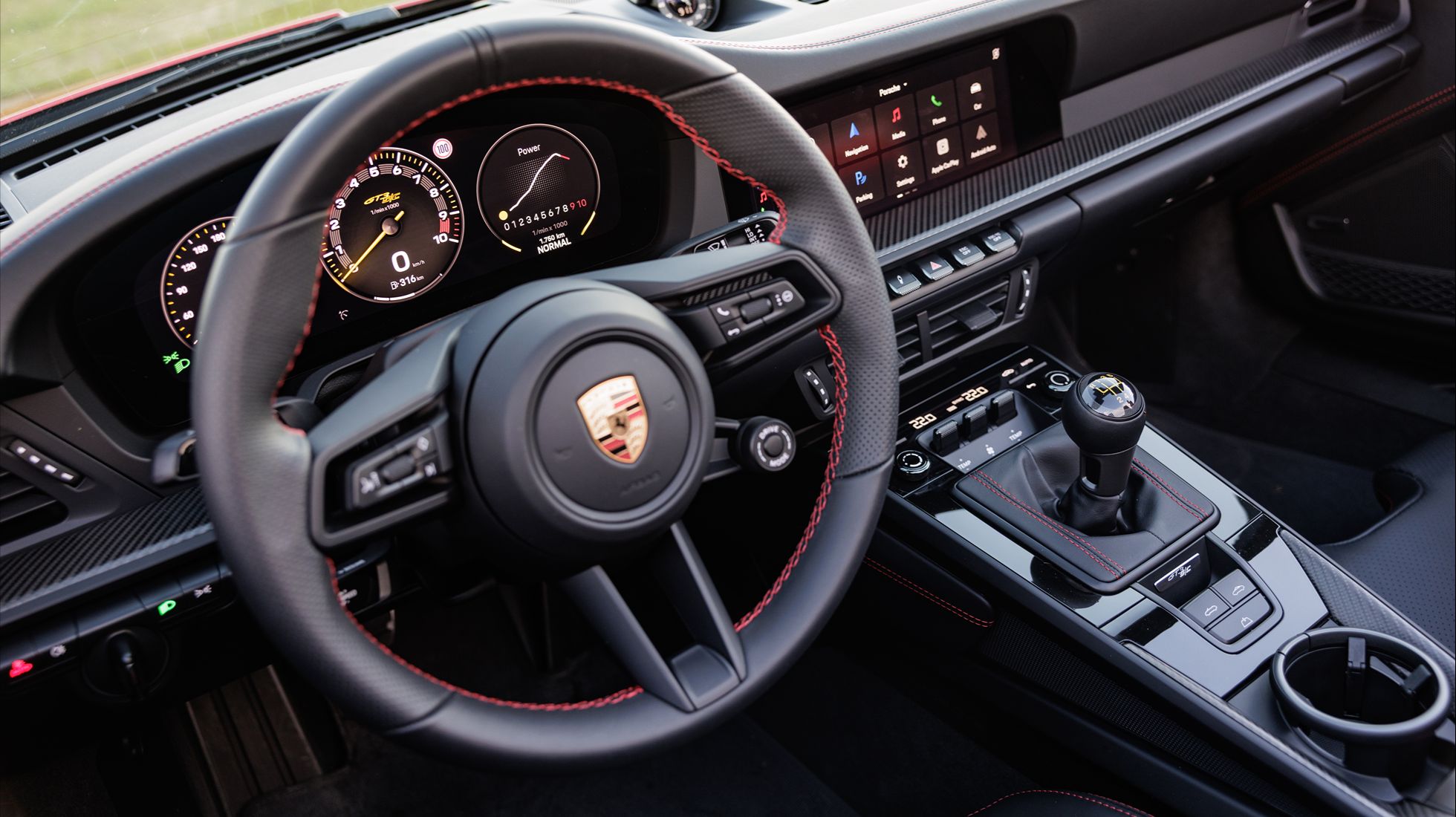
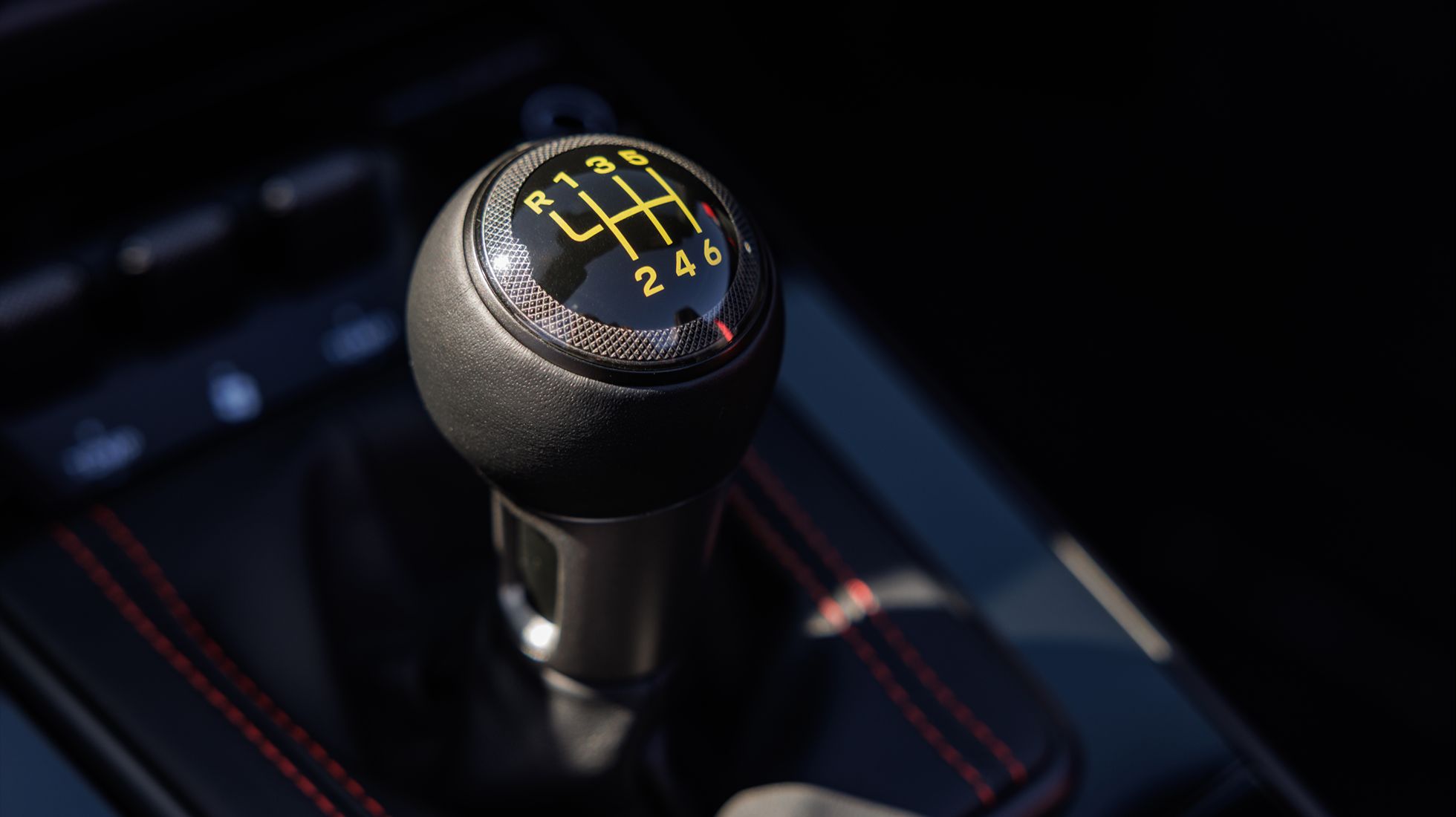
To understand this, you first have to know what, from the outset, Porsche refused to compromise on. For a start, the S/C only comes with a 6-speed manual gearbox, not simply because it’s lighter than a PDK but because it is a key ingredient in the GT3 experience. Every shift, every perfectly weighted clutch engagement and every snick through the short-throw shifter reminds you that this is first and foremost a driver’s car before it’s anything else… a cabrio in this instance. Bolted to that manual is Porsche’s glorious 4.0-litre naturally aspirated flat-6, the same race-bred masterpiece that has become the defining heartbeat of a GT3. It revs to an unbelievable 9,000r/min through long ratios and delivers its power with a linear urgency that turbocharging can never replicate. It remains one of the last great naturally aspirated performance engines of our time, and if rumours are to be believed, its days are numbered, which somehow makes this car feel even more significant.
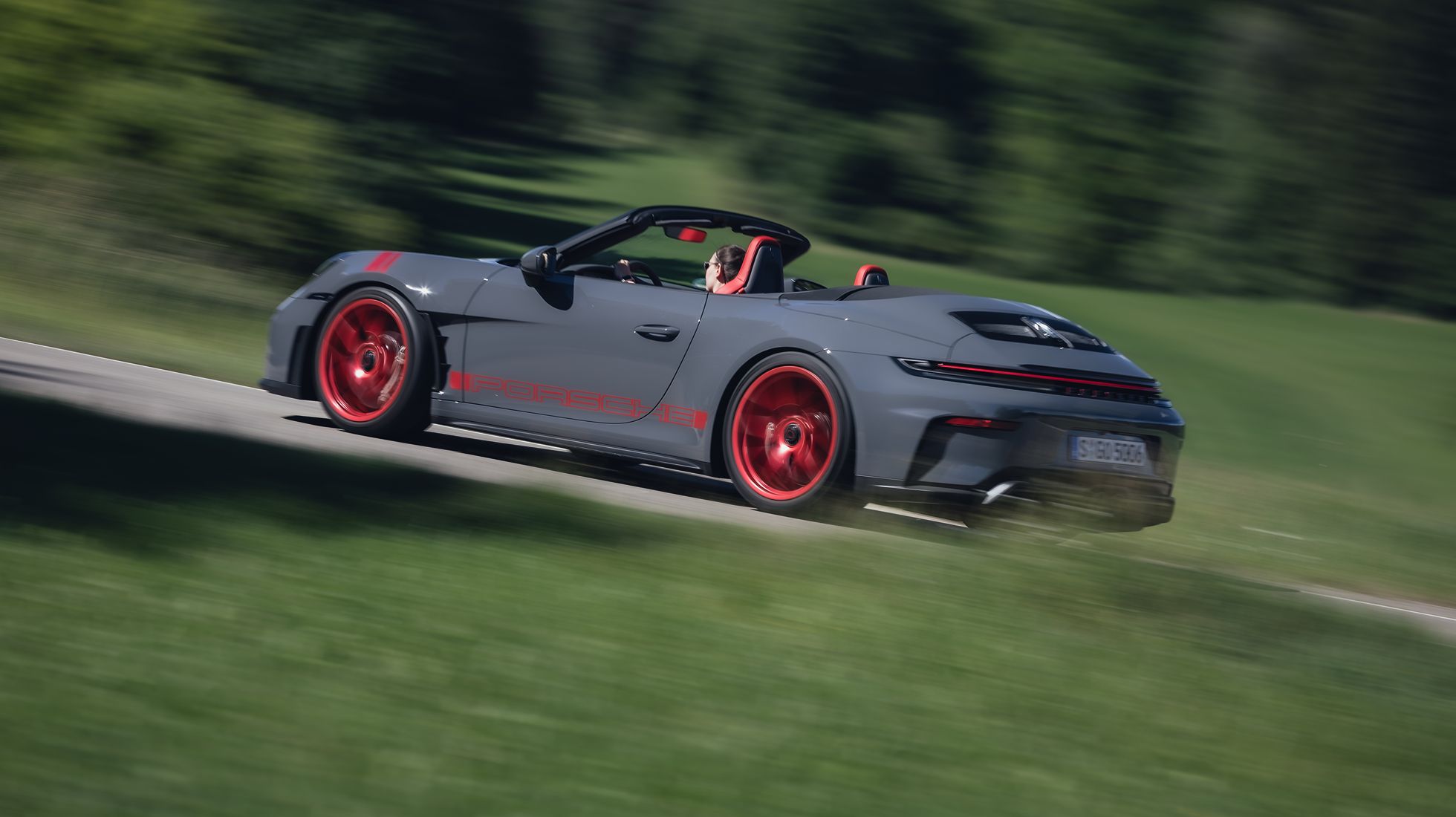
It seemed fitting that Porsche chose the middle of a German summer to introduce the GT3 S/C, although the weather gods had other ideas. Temperatures climbed to a sweltering 36 degrees Celsius before lunch, making this one of the hottest days Germany has ever recorded. Naturally, we dropped the roof…but that didn’t last long. It was long enough to understand exactly what Porsche was aiming for.
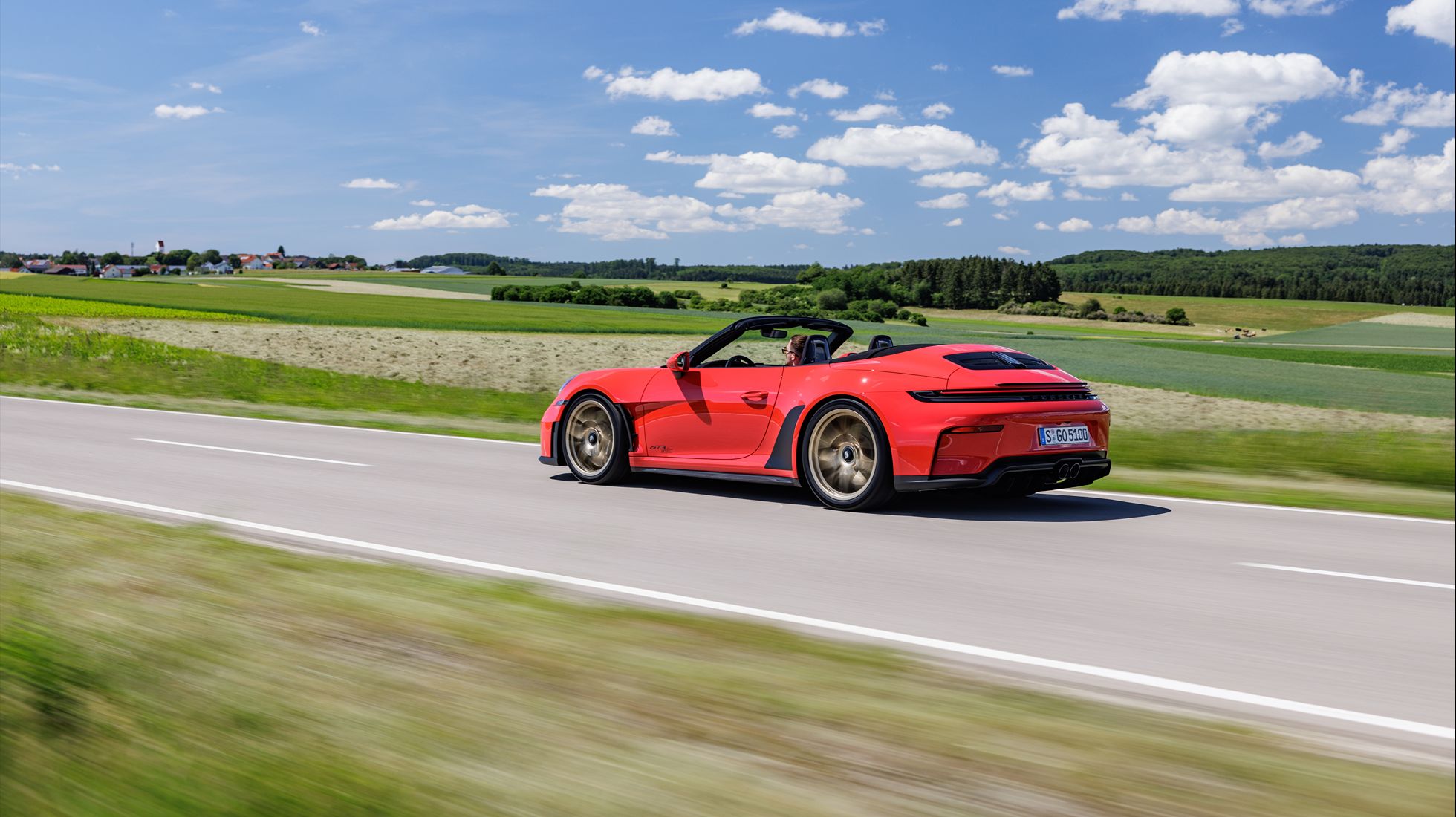
A GT3 has always been an intensely visceral machine. The S/C simply adds another dimension to that experience. With nothing between you and the outside world, the mechanical soundtrack becomes richer and more layered. As the engine screams towards 9,000r/min, you hear the induction behind your shoulders, the metallic bark of the exhausts, the click of the gearbox and the subtle mechanical chatter that is normally masked beneath a roof. Every upshift arrives with an added sense of occasion, every downshift feels that little bit more theatrically auto-blipped. It’s intoxicating. It’s intimate. More surprising to me, though, are the things you don’t notice.
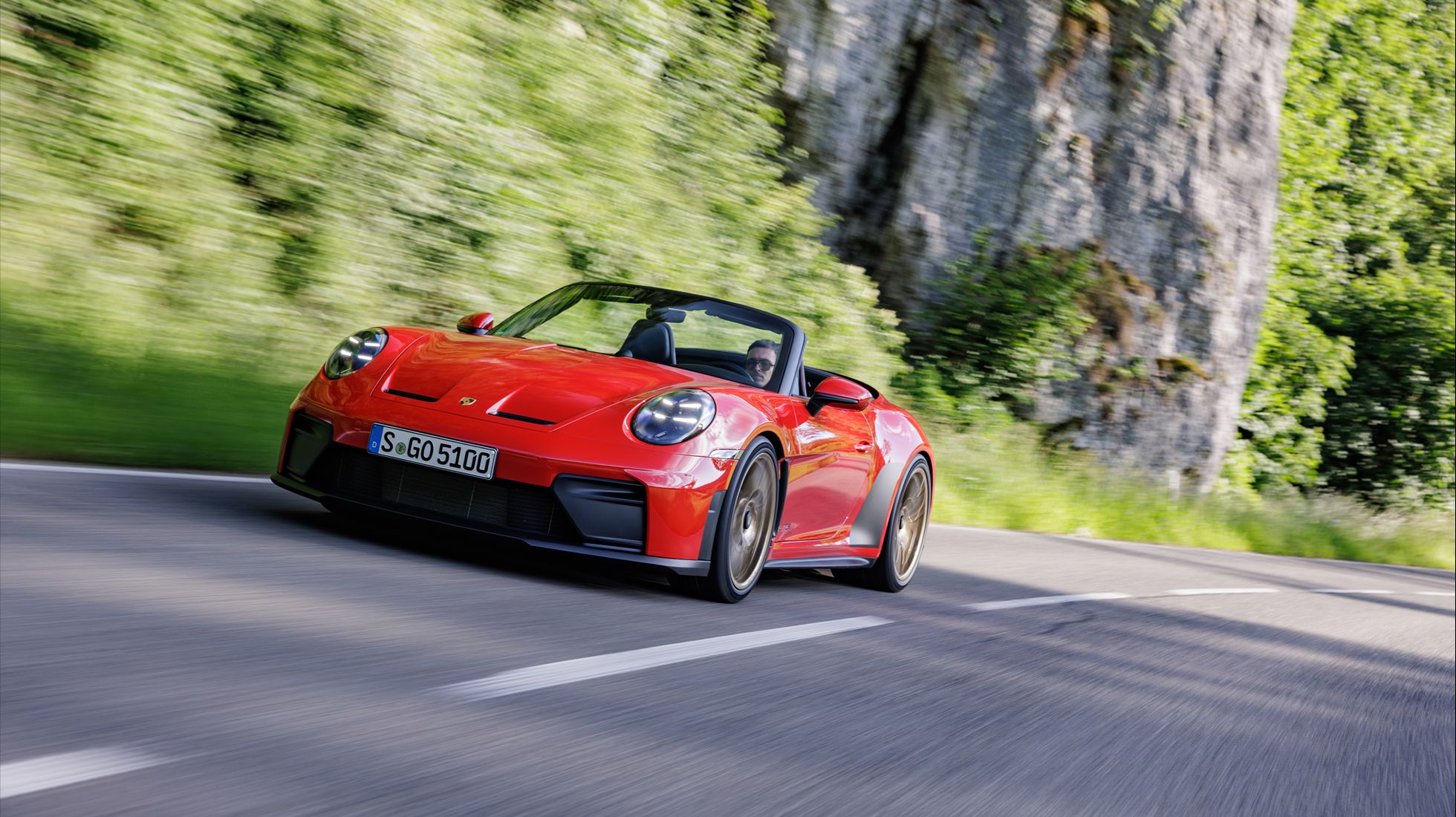
I’m threading the GT3 S/C through the sweeping roads of the Swabian Alps, surrounded by dense forests and beautifully surfaced mountain passes, waiting for the compromise to reveal itself. Surely it has to be there. This is, after all, a convertible version of one of the purest driver’s cars ever built. Yet kilometre after kilometre, corner after corner, that hint of compromise simply never arrives. The steering is every bit as alive and communicative as you’d expect from a GT3. The front axle bites with absolute conviction, the brake pedal remains beautifully firm and progressive, and the chassis carries the same playful adjustability and character that has made the GT3 the benchmark for driver engagement. It turns in with the same eagerness, puts its power down through the rear tyres with the same confidence and encourages you to drive it harder with every passing corner. If there is a dynamic penalty, you’d need to be chasing tenths around Kyalami with a stopwatch to find it, and even then, I’m not sure you would. Not you or me. Maybe someone with the experience and ability of Lars Kern or Kevin Estre, but mere mortals like us?
According to Porsche’s Suspension and Dynamics Project Manager, Björn Racky, that’s entirely down to the obsessive weight-saving programme. Rather than engineer around the additional mass of a folding roof, Porsche removed weight almost everywhere else. The GT3 S/C never feels like a compromised GT car trying to masquerade as the real thing. It simply feels like a GT3 that just happens to lower its roof in 12 seconds.
Performance figures almost become irrelevant in that context. Yes, it’ll dispatch 0–100km/h in 3.9 seconds and continue to 313km/h, but those numbers don’t begin to explain why this car is so captivating. The real joy lies in chasing those final thousand revs in third, feeling the car come alive beneath you and soaking in every sensation that accompanies it. Few modern performance cars ask so much of their driver, and even fewer reward them so generously. I genuinely arrived in Germany convinced that a GT3 cabriolet was a contradiction. I left wondering why my trust was misplaced.
And that really is the GT3 S/C’s genius. It’s extended the usability and lifestyle of a GT3 in a way that simply doesn’t compromise. It’s a convertible ‘for the okes’, the one you really can take to a track day and mix it with the purist crowd or to a stunning mountain pass… or to cruise the streets from Camps Bay to Llandudno with the wind in your hair and that flat-6 noise through your ears.
I’m still left asking one question: why? Who was asking for a GT3 cabriolet? Surely the GT3 formula was already complete. Someone at Porsche argued otherwise, and here the S/C lives. According to the company, around half of all GT3 customers choose the Touring rather than the fixed-wing car, and the overwhelming majority of those owners never see the tarmac of a race circuit. The GT3 S/C simply extends that thinking. It isn’t trying to replace the GT3 or the Touring; it’s offering the same depth of engineering and driver involvement to people who value the experience of open-air motoring just as highly.
Of course, none of this comes cheaply. A GT3 Touring starts at R4,795,000 here in South Africa – but very few leave the configurator anywhere near that figure. Add some special bits from Porsche’s options list, and six million rand arrives surprisingly quickly. The GT3 S/C starts at R6,138,000, reflecting the lightweight components that are effectively standard equipment now, and a generously specified example comfortably ventures into 7-million-rand territory. Is it expensive? Undoubtedly. Is it worth choosing over a GT3 Touring? That’s a far more difficult question and one I genuinely can’t answer even after a week of pondering the thought. A week ago, it wouldn’t even have been a debate.
After all my anxiety before this launch, I should have known better. Porsche doesn’t stumble into ideas like this, certainly not under the watchful eye of Andreas Preuninger. The GT3 S/C isn’t the GT3 I expected Porsche to build, but my word, I’m so glad I was wrong.
Digital Evolution
The latest Porsche Driver Experience makes its GT debut – but don’t worry, the driver still comes first.
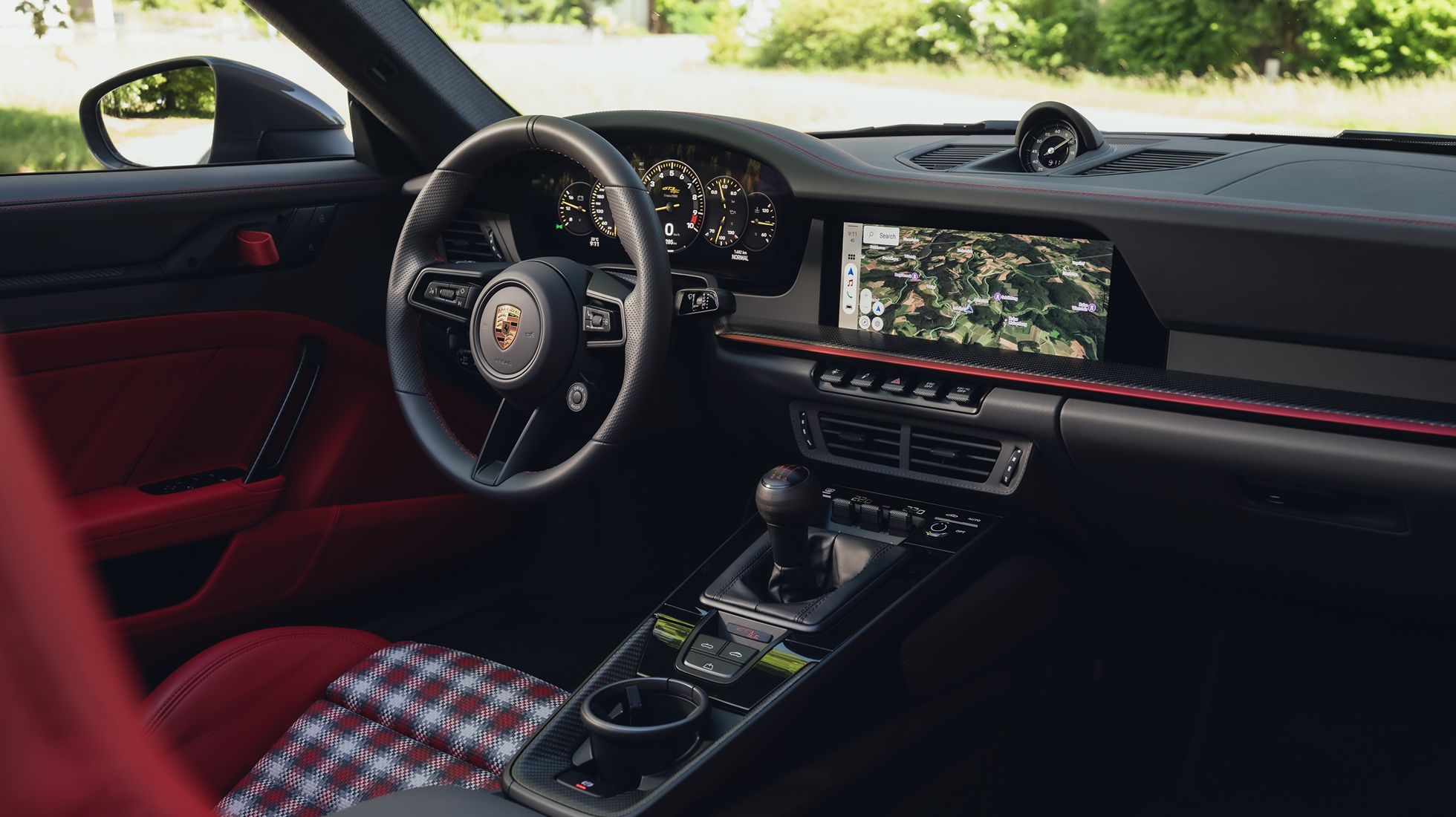
The GT3 S/C is the first GT model to receive Porsche’s latest Porsche Driver Experience, introducing a revised PCM infotainment system and digital driver display. New graphics, cloud-based navigation and more natural voice control make the system quicker and easier to use, while retaining the focused simplicity expected of a GT car. Importantly, Porsche hasn’t used the opportunity to overload the GT3 S/C with driver assistance systems. There’s still no lane-keeping assist or intrusive ADAS features here. The technology exists to support the driving experience, not distract from it. This new wave of digitalisation will roll out across the rest of the 911 range over the course of the next few months.
Street Style Package: Turning Up the Volume
Porsche Exclusive Manufaktur gives the GT3 S/C a decidedly more extroverted personality.
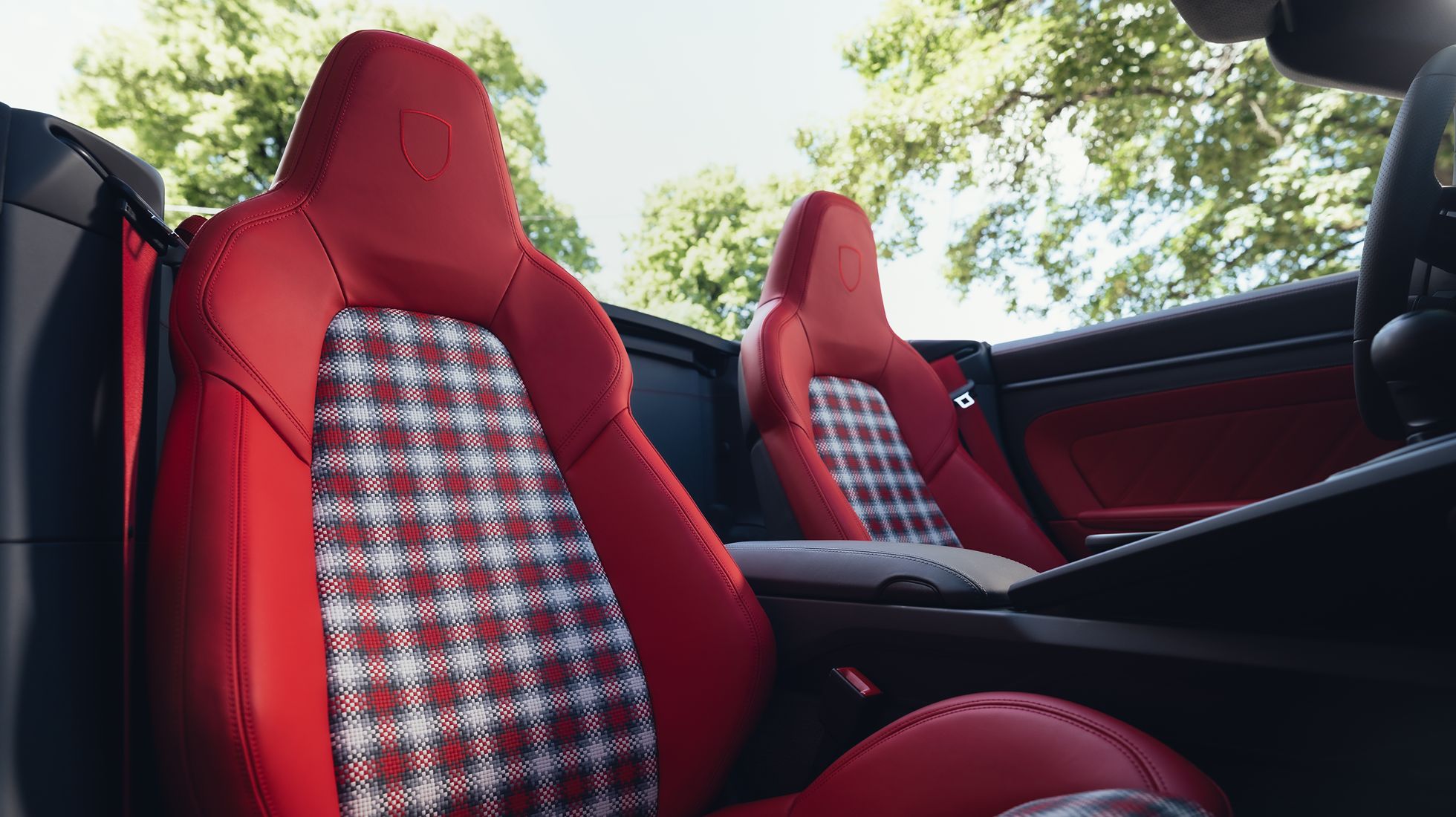
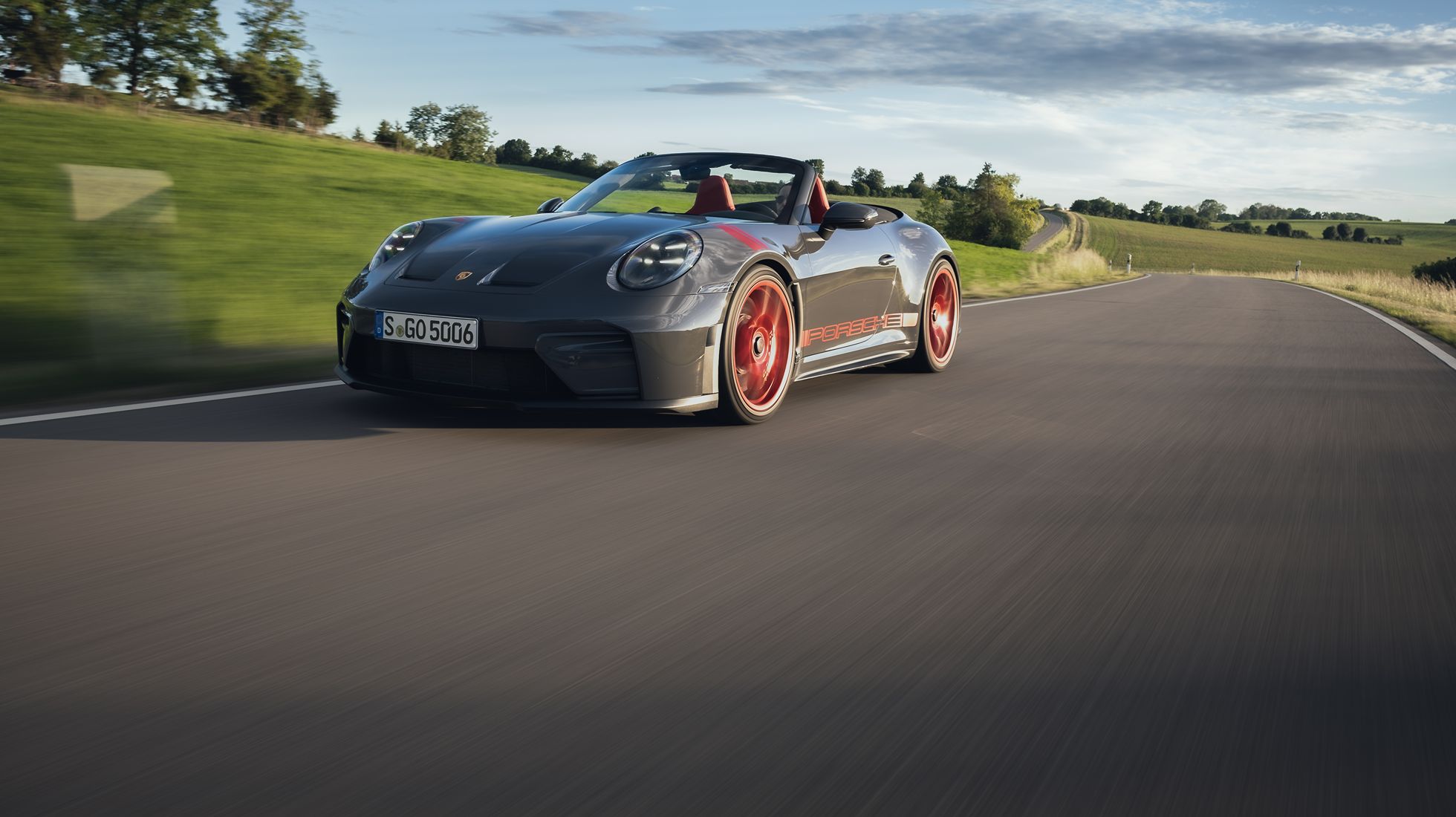
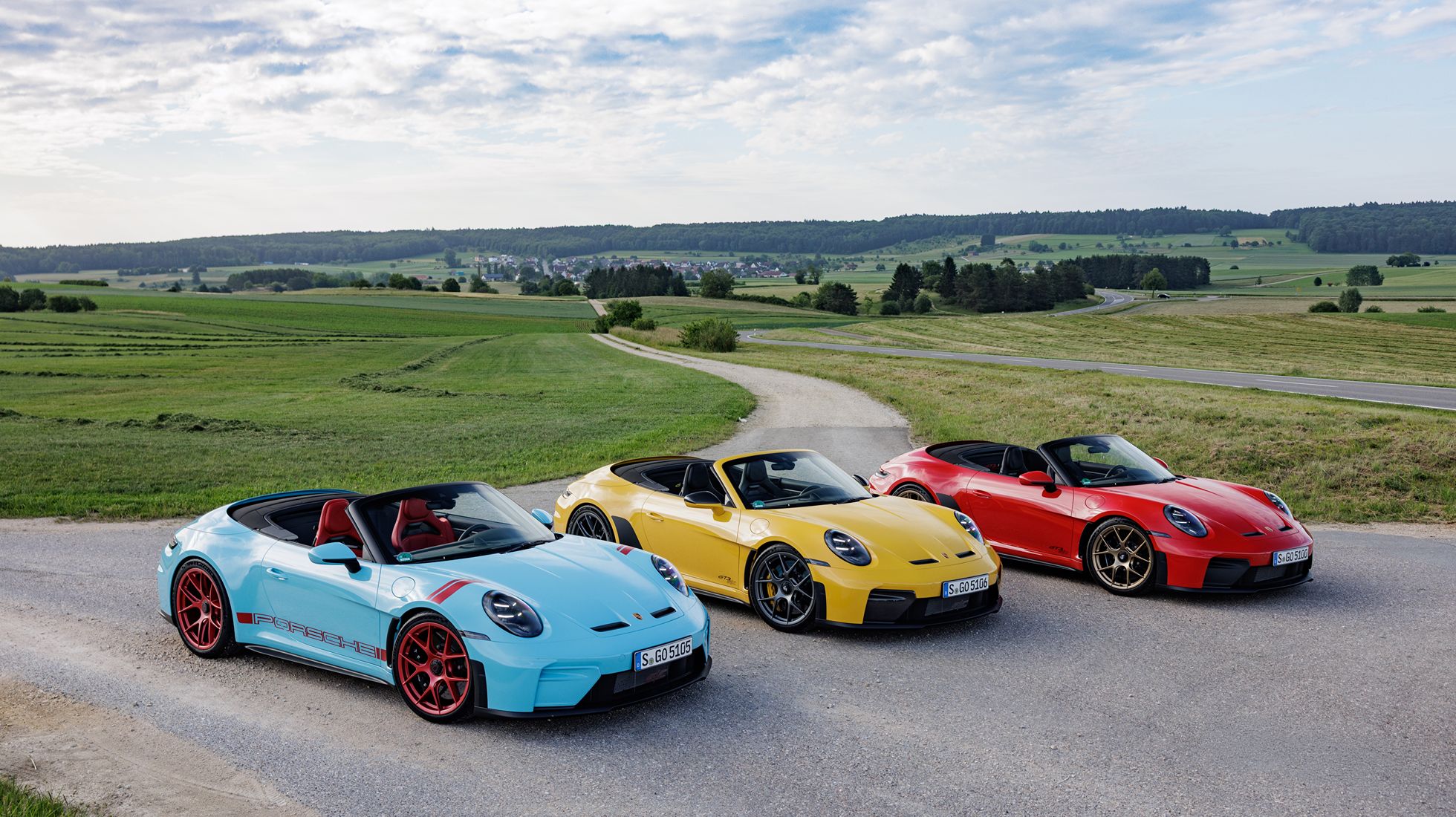
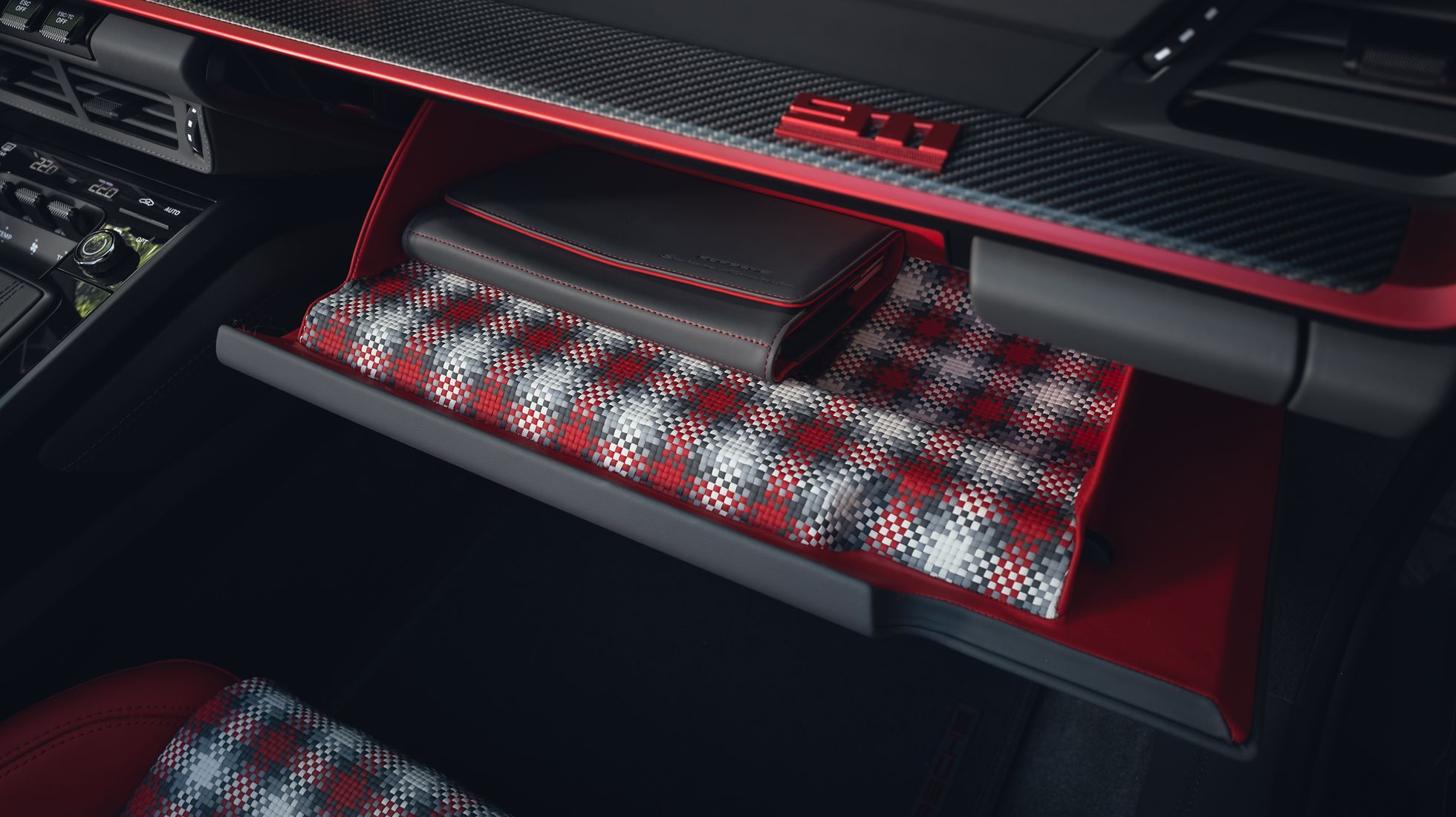
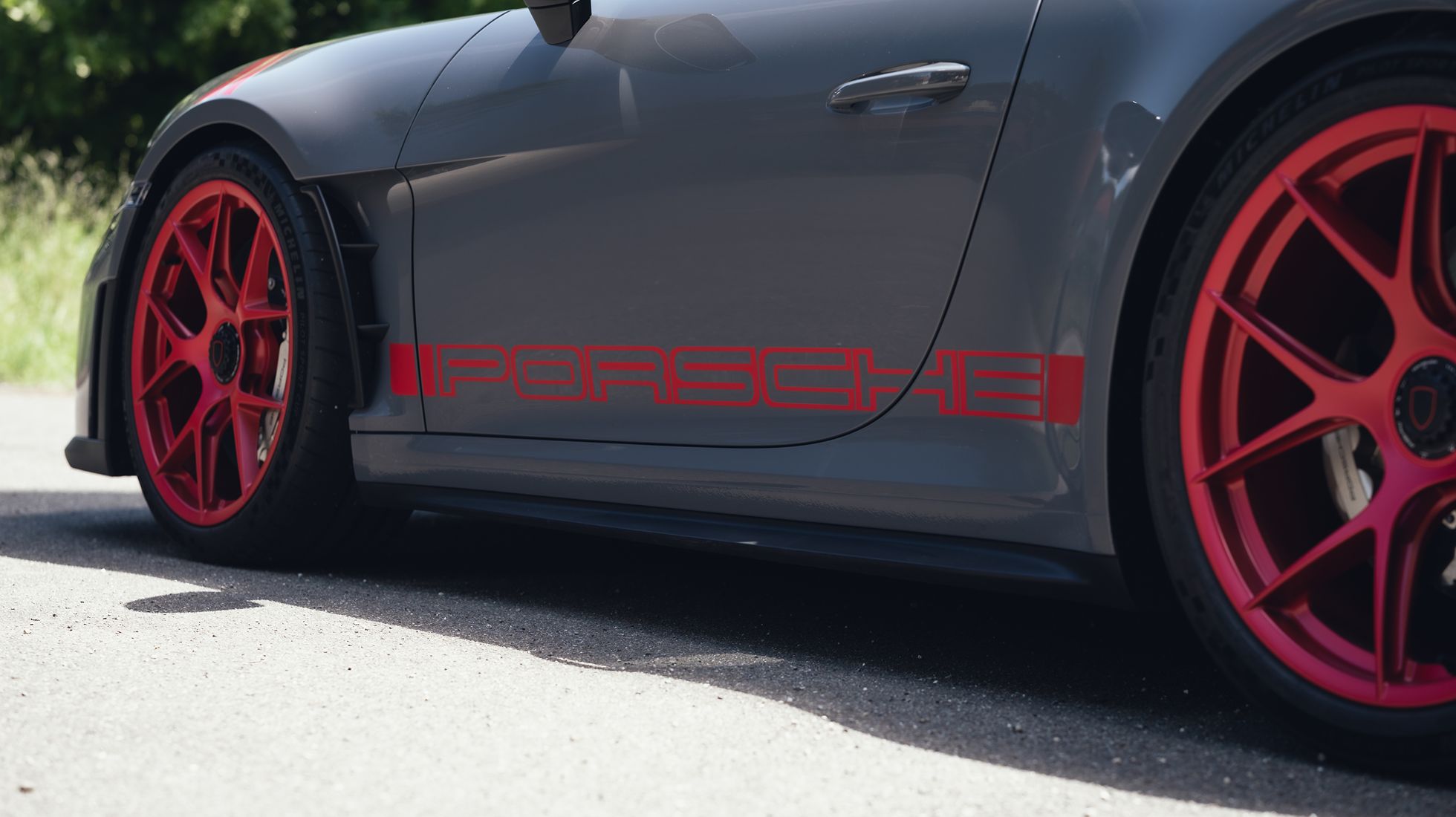
If the standard GT3 S/C isn’t distinctive enough, Porsche’s new Street Style Package turns the volume up considerably. Curated by Porsche Exclusive Manufaktur, it combines bold exterior colours with contrasting wheels, decals and interior finishes to create a far more expressive take on the GT3 formula. Think Olympus Blue paint paired with Guards Red wheels and graphics, while the cabin introduces an all-new woven leather seat design that blends Slate Grey, Guards Red, Magnesium Grey and Kalahari into a contemporary interpretation of classic tartan.
It’s certainly not for everyone, certainly not to my tastes – and that’s entirely the point. The Street Style Package offers owners another way to personalise an already special GT car, proving that even Porsche’s most focused driver’s machine can indulge a little individuality. I’d guess this will fetch some credit in the US and Chinese markets, but let’s see what happens locally too.