
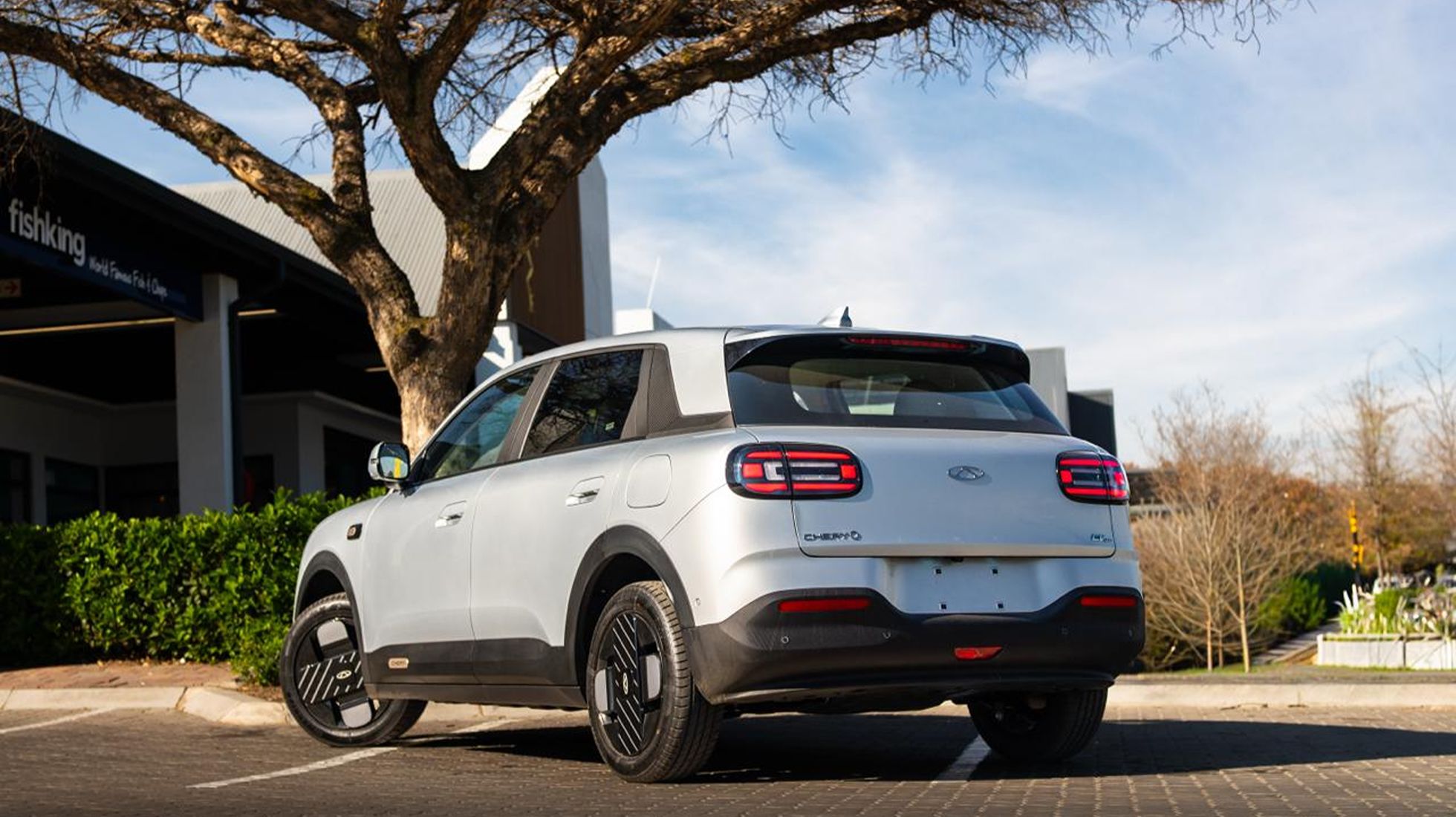
First Drive: Chery Q
Electric car adoption in SA is happening at a steady pace, and it comes down to one thing: pricing. If you want the public to buy into a lifestyle, make it accessible to the average person, and, unfortunately, manufacturers took their time learning that.
If your memory is sharp, you’ll recall the Mini Cooper SE, which, at over R600k, was once regarded as the most affordable EV in SA. That was a stretch because for that money, you could have a perfectly good ICE car and none of the range anxiety. Today the cheapest EV is under R400k, and it’s no longer a one-car race. Look at how many Geely E2s and BYD Dolphin Surfs are out there. The strategy is seemingly working.
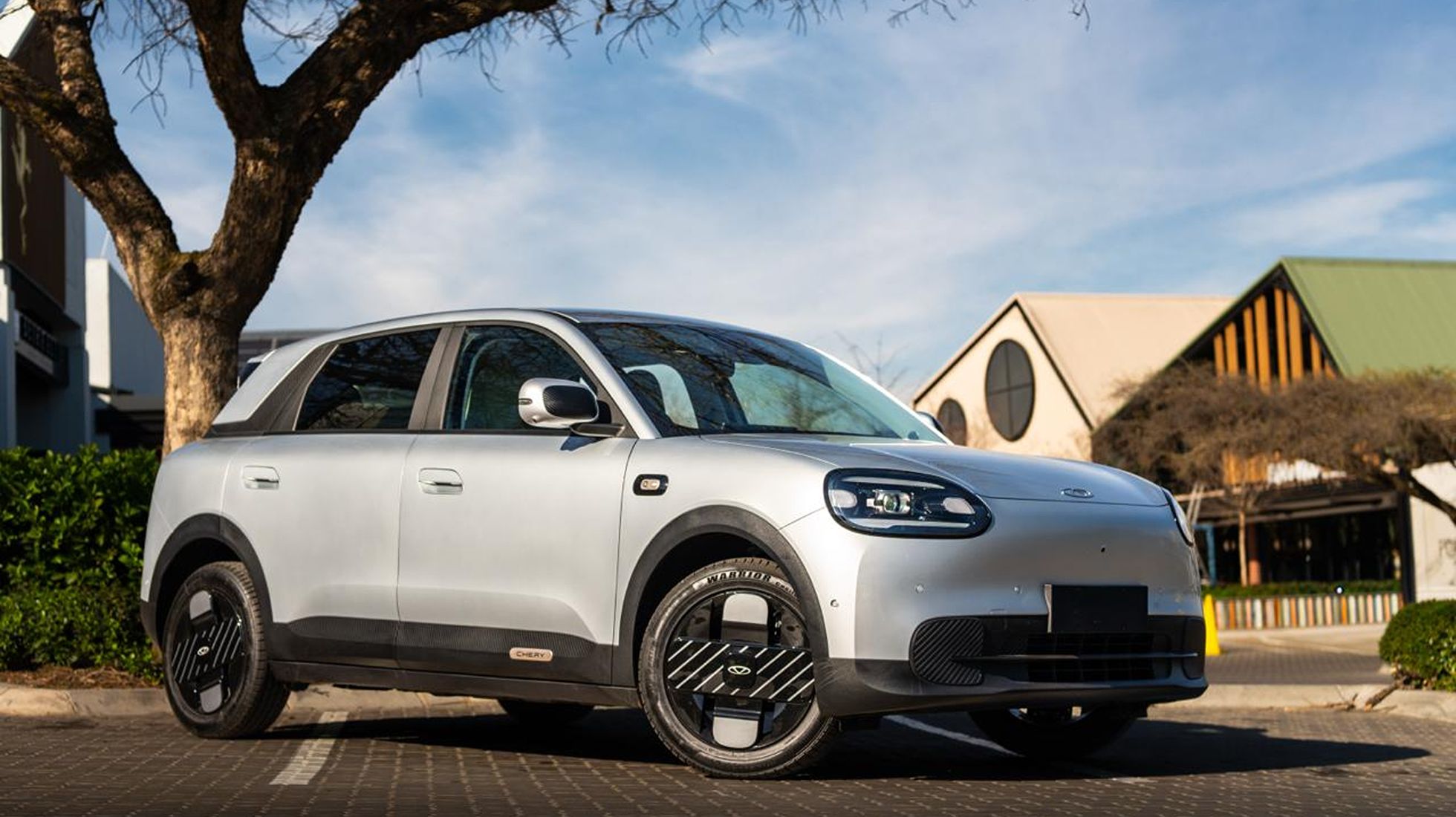
This is why Chery is stepping into the same segment with its first-ever fully electric vehicle bearing the Q nameplate.
How does the Chery Q fare against the competition?
Too early to tell, but the numbers give it a fighting chance. At R349,900, the Chery Q costs R10,000 more than the Geely E2 (R339,900) and R8,000 more than the BYD Dolphin Surf (R341,900), and you get more car for it.
At 4,195mm, it’s 60mm longer than the E2 and 270mm longer than the Dolphin Surf, while the 2,700mm wheelbase pays off inside.
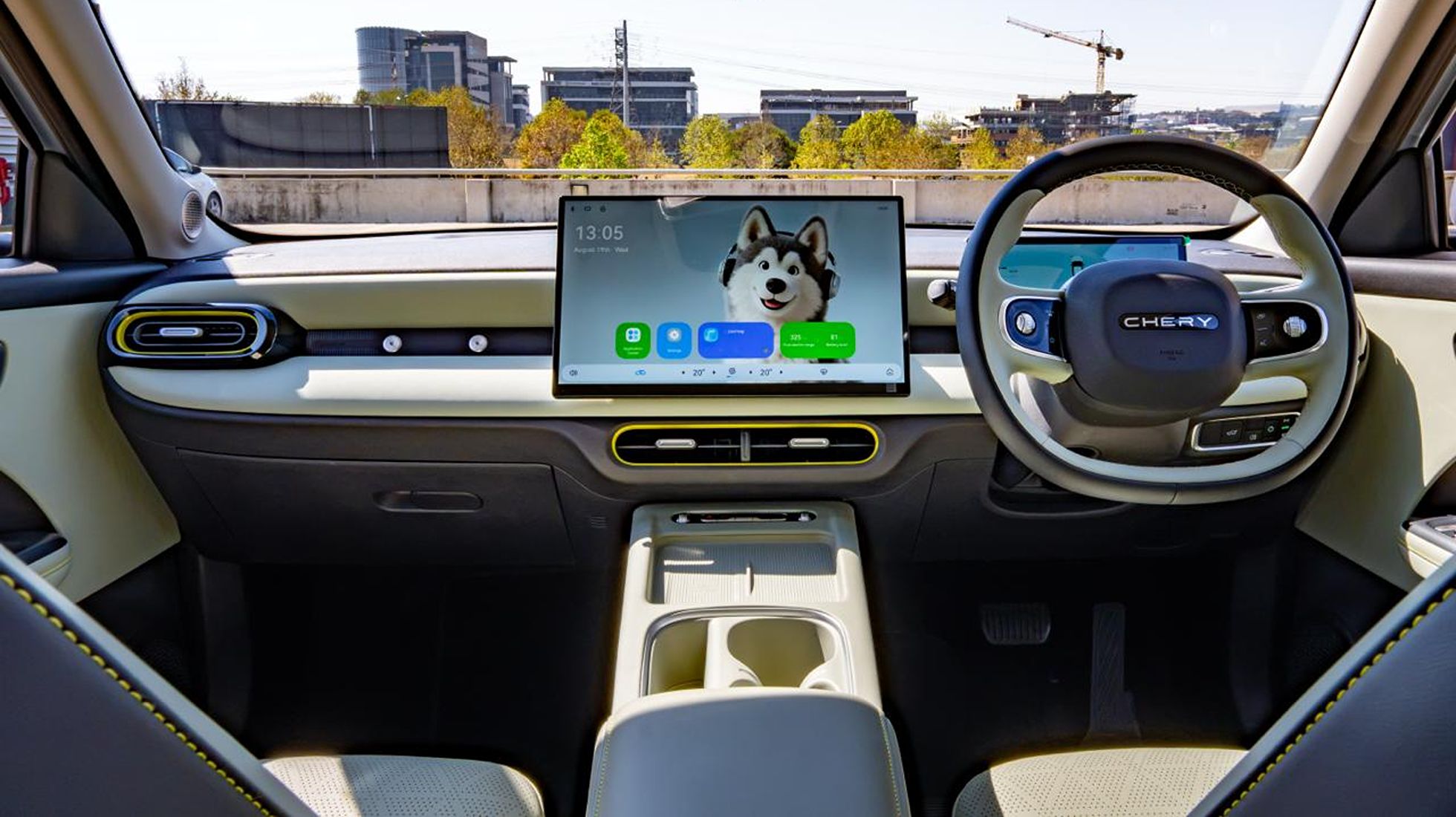
The Q comes in two derivatives. The Comfort gets a 12-inch touchscreen with Apple CarPlay and Android Auto, an 8.8-inch digital driver display and an electric tailgate. The R389,900 Elite is where the Q ups its game with a larger 15.6-inch touchscreen, Level 2 driver assistance, automated parking and a 540-degree camera system.
What powers the Chery Q?
Both derivatives share a rear-mounted 90kW/115Nm electric motor and a 42.7kWh battery, good for a claimed 340km. That’s a bit optimistic, and I’d expect roughly 300km or less in real-world driving, which is still generous for a runaround. Against the competition, the Q has a larger battery capacity compared to the Surf’s 30.1kWh and the E2’s 39.4kWh. It gives up torque, though, where the E2 makes 150Nm and the Surf 135Nm, against the Q’s 115Nm.
In terms of battery size, the Q also has the upper hand. It comes with a 42.7kWh battery, which is bigger than the E2’s 39.4kWh and the Dolphin Surf’s 30.1kWh. Having a bigger battery translates to fewer trips to the charger, and with fewer chargers around, that really matters. Worth mentioning, though, is that the E2 also sends power to the rear, so the Q’s edge comes down to capacity rather than layout.
In terms of recharging the battery pack, Chery claims the Q has a maximum DC charging capacity of 90kW, which will enable the car to charge from 30% to 80% in 16 minutes.
How does it drive?
Don’t expect too much performance. You might climb in expecting the Q to shove like a fast EV, because electric cars usually have that instant punch. It’s there, just not as aggressive, which suits a car like this.
The drive in the Elite was a short one, but it was enough to show a solid, likeable runaround. It has good road manners and takes bumps in its stride, which is what buyers in this segment look for. The top speed is limited to 135km/h, enough to pass traffic on the highway, and it makes the Q the fastest of the three by a narrow margin, with the E2 and Surf capped at 130km/h.
We will definitely expand more on how it drives when we get the car on a proper test.
Faux leather surfaces give it a premium look, and despite a massive infotainment screen, it doesn’t bury everything in it. Chery has kept physical buttons and rotary dials for fan speed, temperature, A/C and the front and rear demisters, while build quality generally feels solid.
The Elite adds a panoramic sunroof, and the interior can be ordered in textured black or jungle green. There’s also an external speaker that works like a loudspeaker, which Chery says is ideal for telling pedestrians to move, since EVs make so little noise. A hooter does the same job, but it’s worth pointing out.
At the launch, I had plenty of legroom, front and rear. The boot space is also generous, thanks to 375 litres that can be expanded to an ample 1,450 when the back seats are folded. This is further complemented by a 70-litre frunk and a 50kg storage compartment under the second-row seats.
Is it safe?
Good question. The Q name might raise eyebrows, because the old QQ3 received zero stars from GNCAP in 2017. That car had no airbags and no ABS, whereas the Q here has no shortage of safety acronyms. It comes with 6 airbags, ABS, ESC, and a Level 2 driver-assistance suite that includes forward collision warning, automatic emergency braking, multi-collision braking, blind-spot detection, and lane-keep assist, to name a few.
Good car?
A resounding yes. Though it was a short drive, the first impression is a positive one. The Q is a likeable, affordable runaround car with a premium feel and plenty of impressive equipment, and with ongoing fuel price hikes, an EV makes perfect sense. If you drive about 40km a day, the Q’s 300km real-world range should last around a week, and you can then charge it at home overnight. With the Q, I think Chery’s first EV strikes the right chords, and at this price, it should do well locally.