The Defender is to off-roading what glamping is to camping: it keeps the adventure, but removes most of the hardship.
7.5
The Defender is to off-roading what glamping is to camping: it keeps the adventure, but removes most of the hardship.


| Engine | Power & Torque | Transmission | 0 – 100km/h | Top Speed | Fuel Consumption | C02 |
| 3.0-litre i6, turbodiesel | 183kW & 570Nm | 8-speed auto | 8.5 secs
(tested) |
188km/h | 10.0l/100km
(tested) |
218g/km |
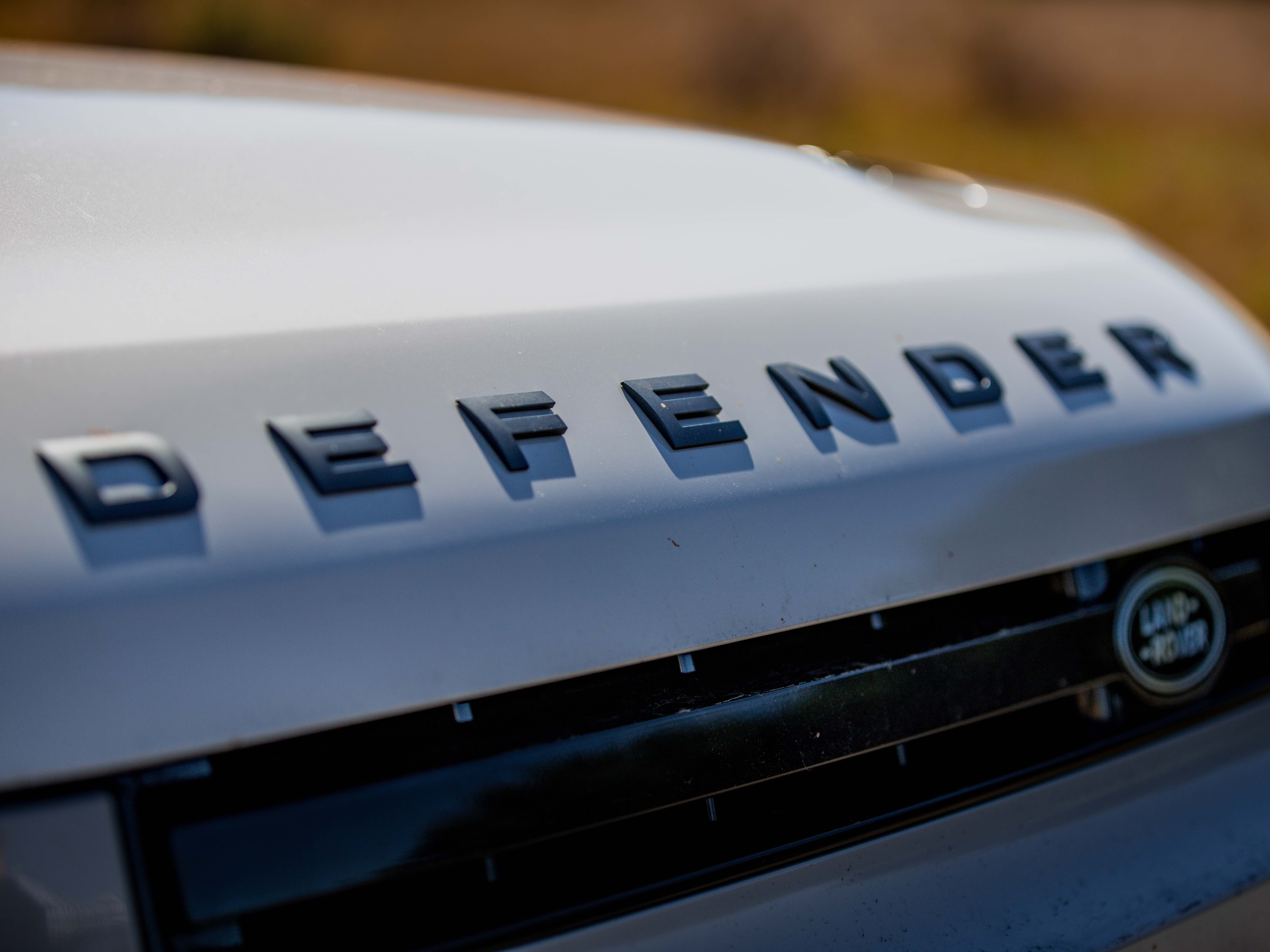
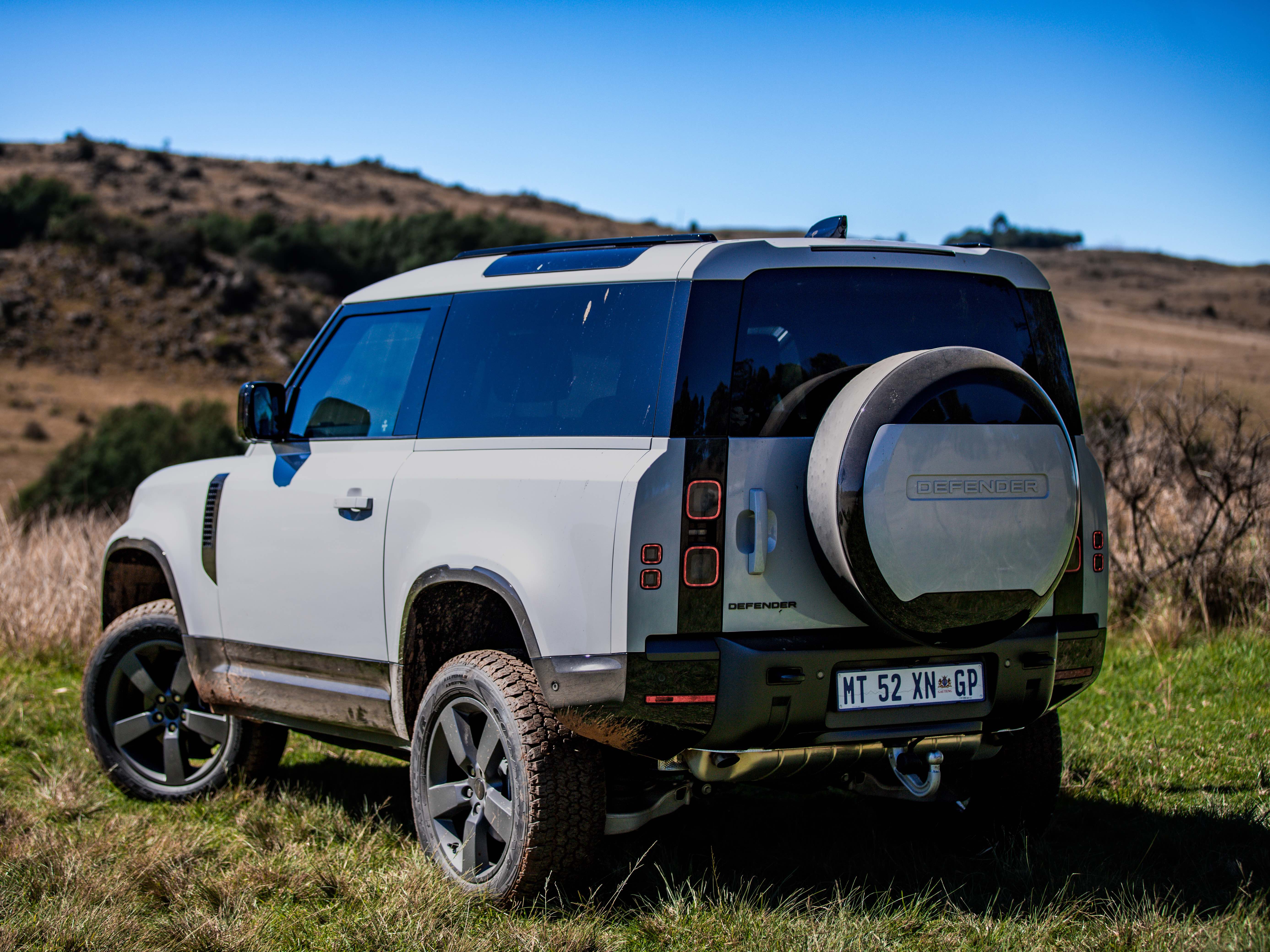
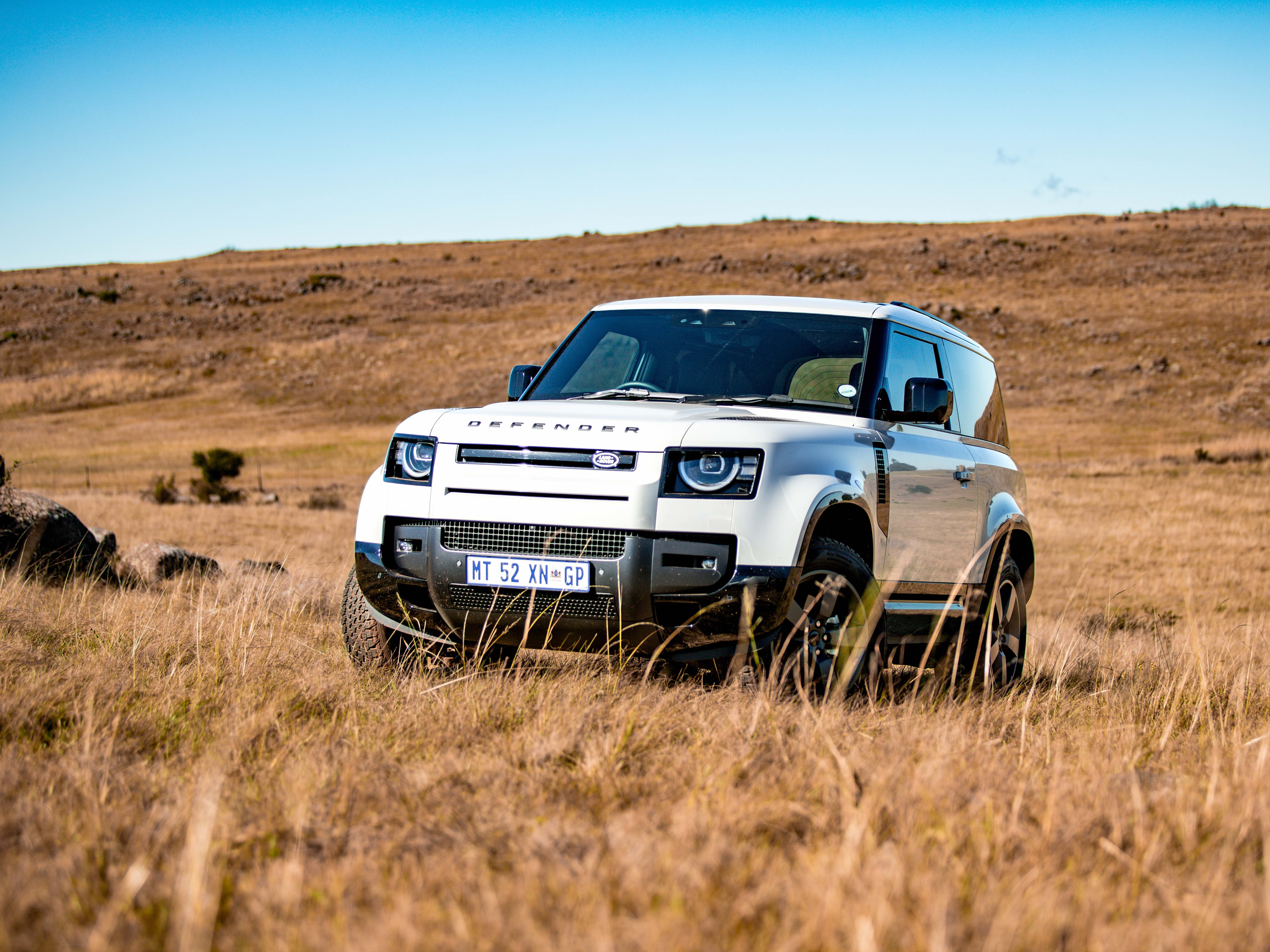
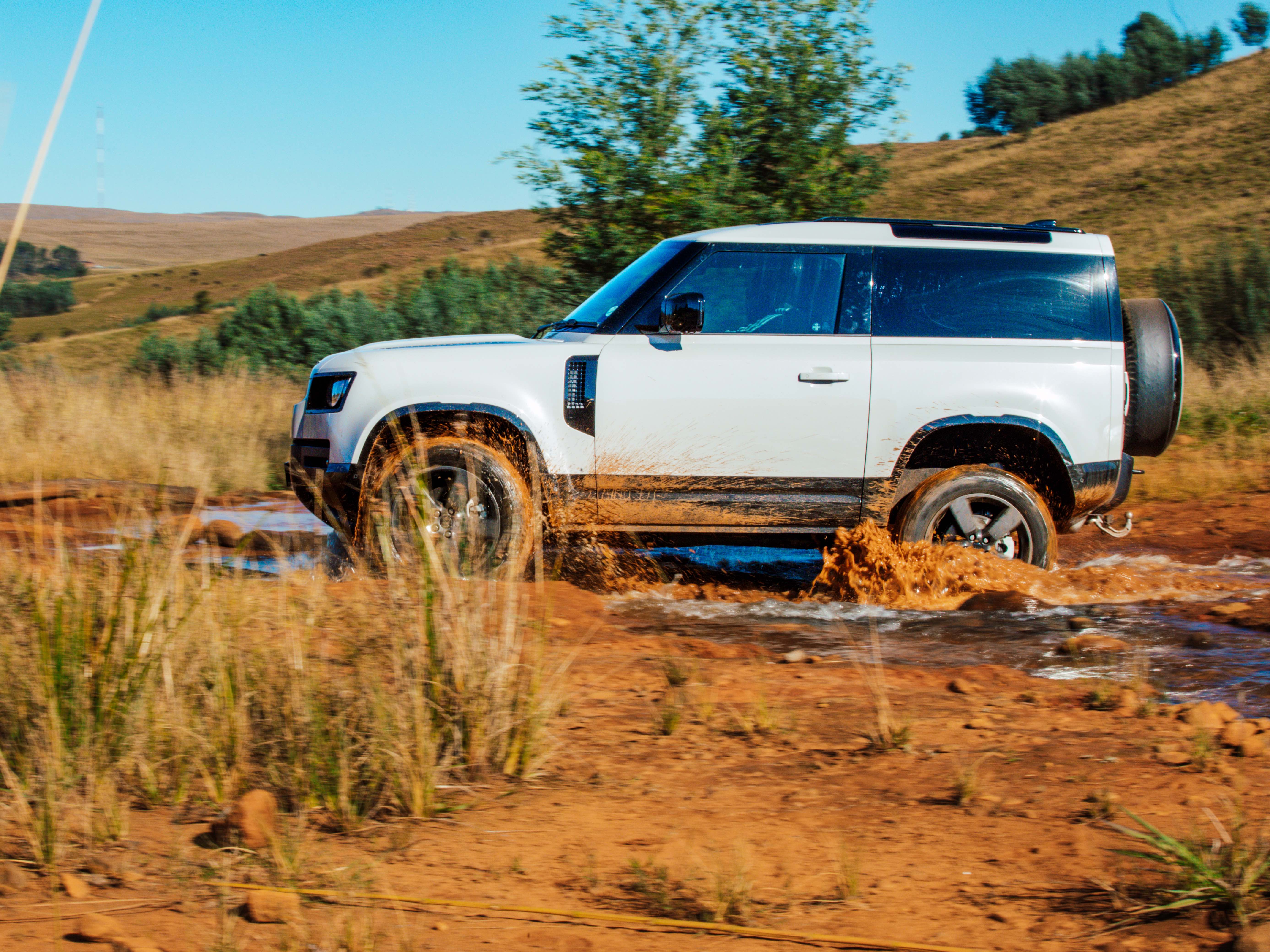
To some, a Defender 90 makes no sense. Its smaller dimensions mean less boot space, only two passenger doors and none of the additional practicality afforded by the longer 110 or 130. Of the three Defender body styles, the 90 remains the rarest. Yet it continues to be as fundamental to the Defender story as the original Land Rover Ninety was when it arrived more than four decades ago. The name has changed slightly, and this example arrives in X-Dynamic SE D250 guise. Whatever your feelings towards the new-generation Defender, it is difficult not to smile at the way the 90 combines something almost cute with an unmistakably utilitarian stance. It is compact, upright and oddly satisfying to look at. As the owner of an original Defender 90 SVX, I find that this modern interpretation evokes many of the same feelings. That’s high praise from me but onlookers too, admire this modern intepretation of the short Defender. It rides high too, surprsingly higher at 1.974m at normal access height. Somehow though, it manages to shrink all of that size and perceptively at least, it appears smaller.
Our test began with a simple assignment. We were scheduled to produce a large feature involving another 4×4 on a private farm in the hills surrounding Dullstroom, Mpumalanga. The owners warned us that the location required a ‘proper’ four-wheel-drive vehicle. To them, we later relalised, that meant Toyota Land Cruisers, but either way, a conventional tracking car was out of the question. We needed something with ‘proper’ off-road credentials and would you believe it, a new Defender 90 had arrived the previous day.
The timing could hardly have been better.
We found the N4 and pointed the Defender east, with the adaptive cruise control set to the speed limit and the updated infotainment system playing the most recently discovered playlist. The Ingenium 3.0-litre straight-six turbodiesel suits this type of journey exceptionally well. Its 183kW and 570Nm are sent through a ZF eight-speed automatic transmission. Performance is adequate rather than urgent, but there is more than enough torque for overtaking. Once cruising, the engine settles into a quiet and refined rhythm that makes the Defender feel every bit as much a luxury SUV as an off-road tool. We recorded a 0–100km/h time of 8.5 seconds and fuel consumption settled at 10.0l/100km during the test. That’s pretty admirable on both accounts for something so large (relatively) and something that can tow over 3.5-tonnes.
The Defender’s upright shape and short wheelbase mean it doesn’t quite possess the relaxed, long-legged composure of the 110, but the 90 remains a comfortable and easy to place. Its compact footprint also gives it a sense of agility that the larger derivatives cannot quite replicate, especially in a parking lot. Watch the height though. It really is higher than it seems.
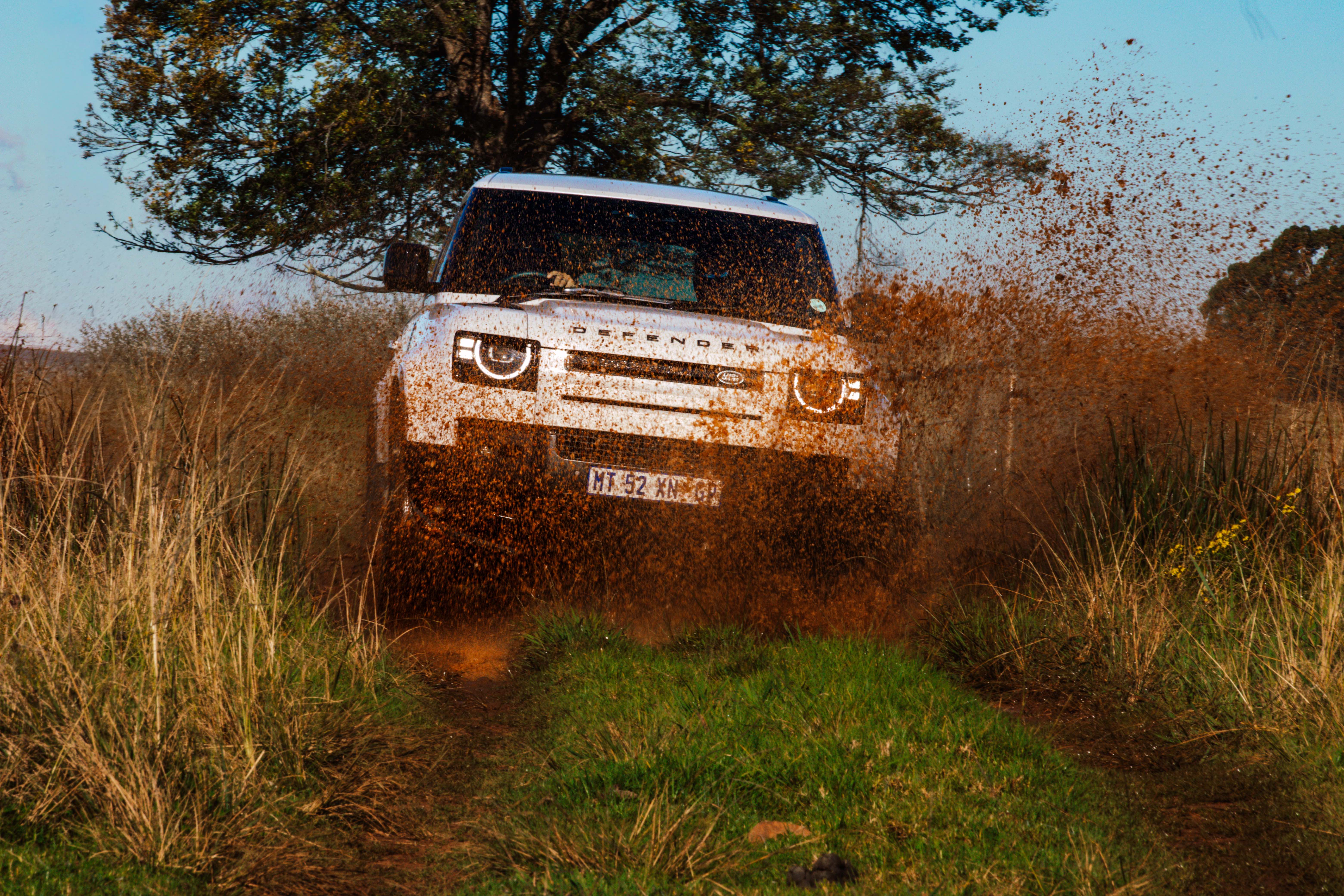
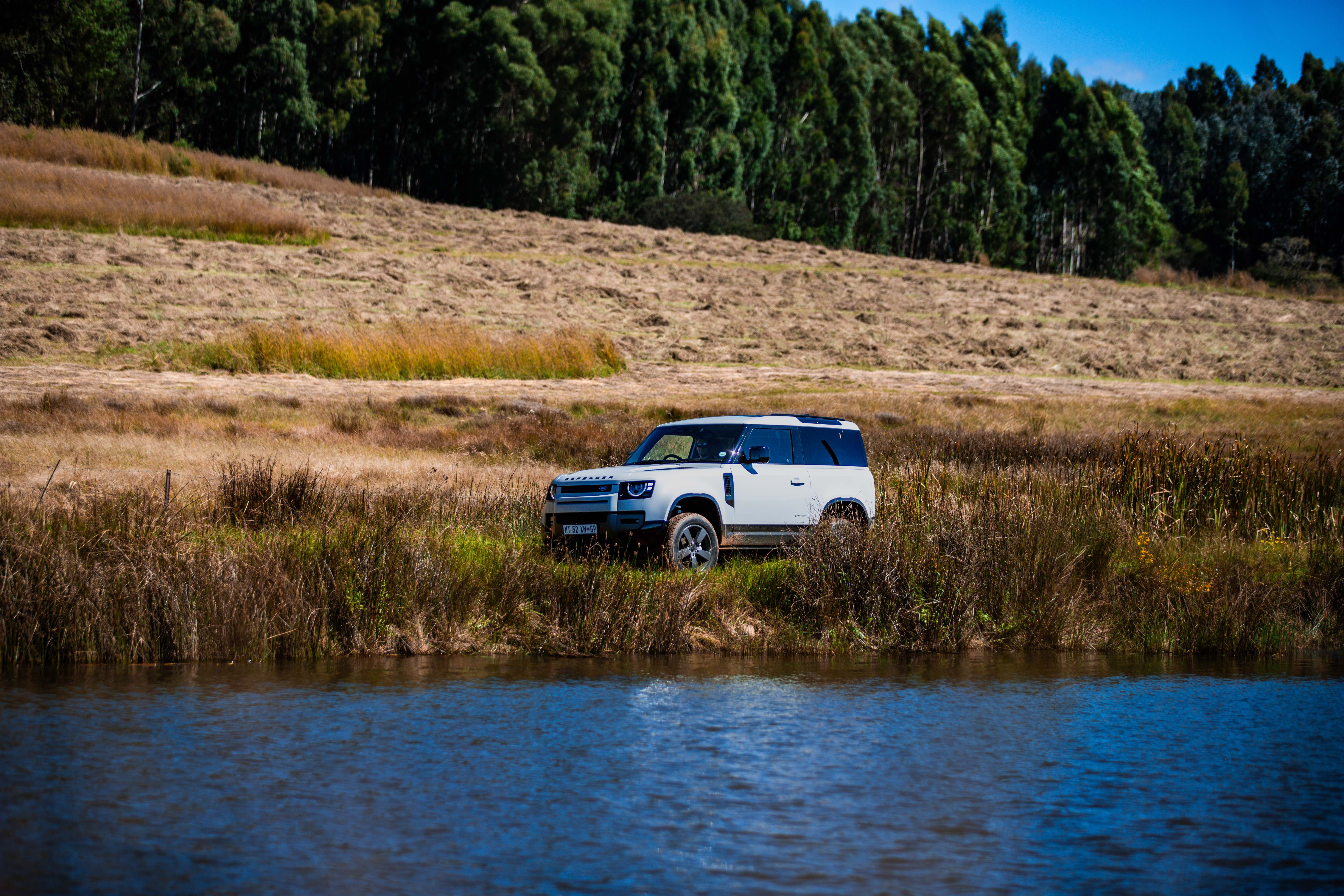
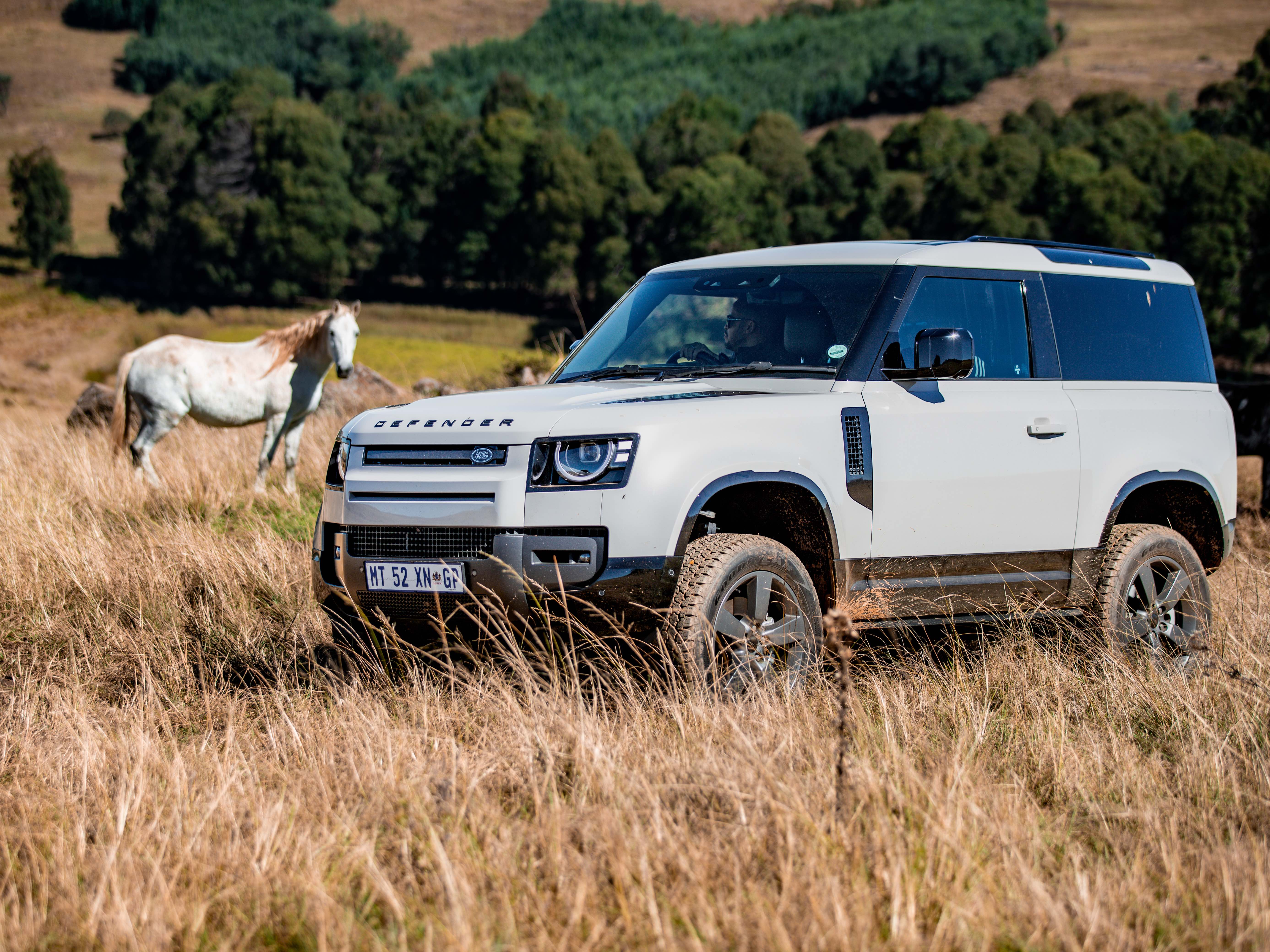
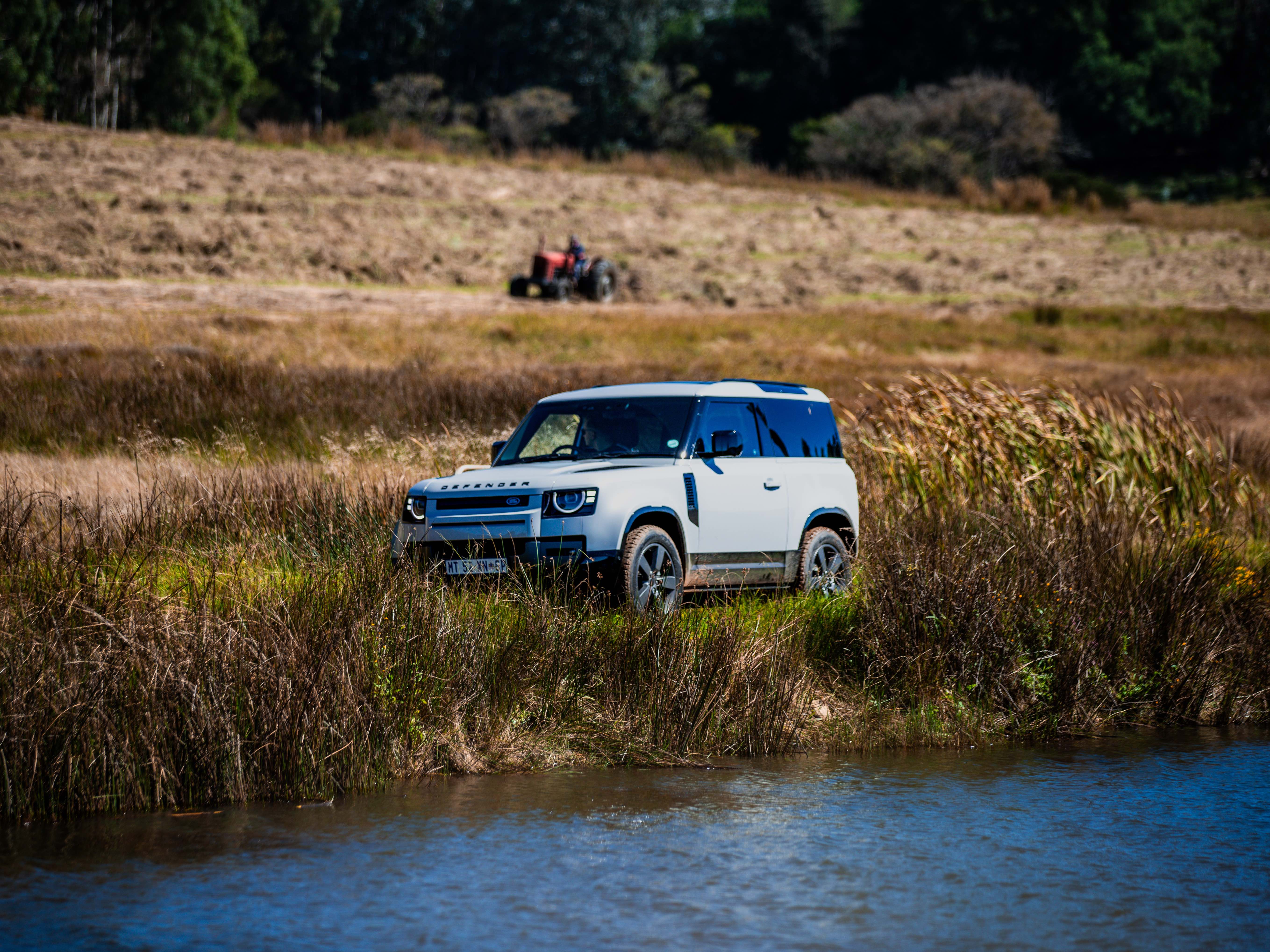
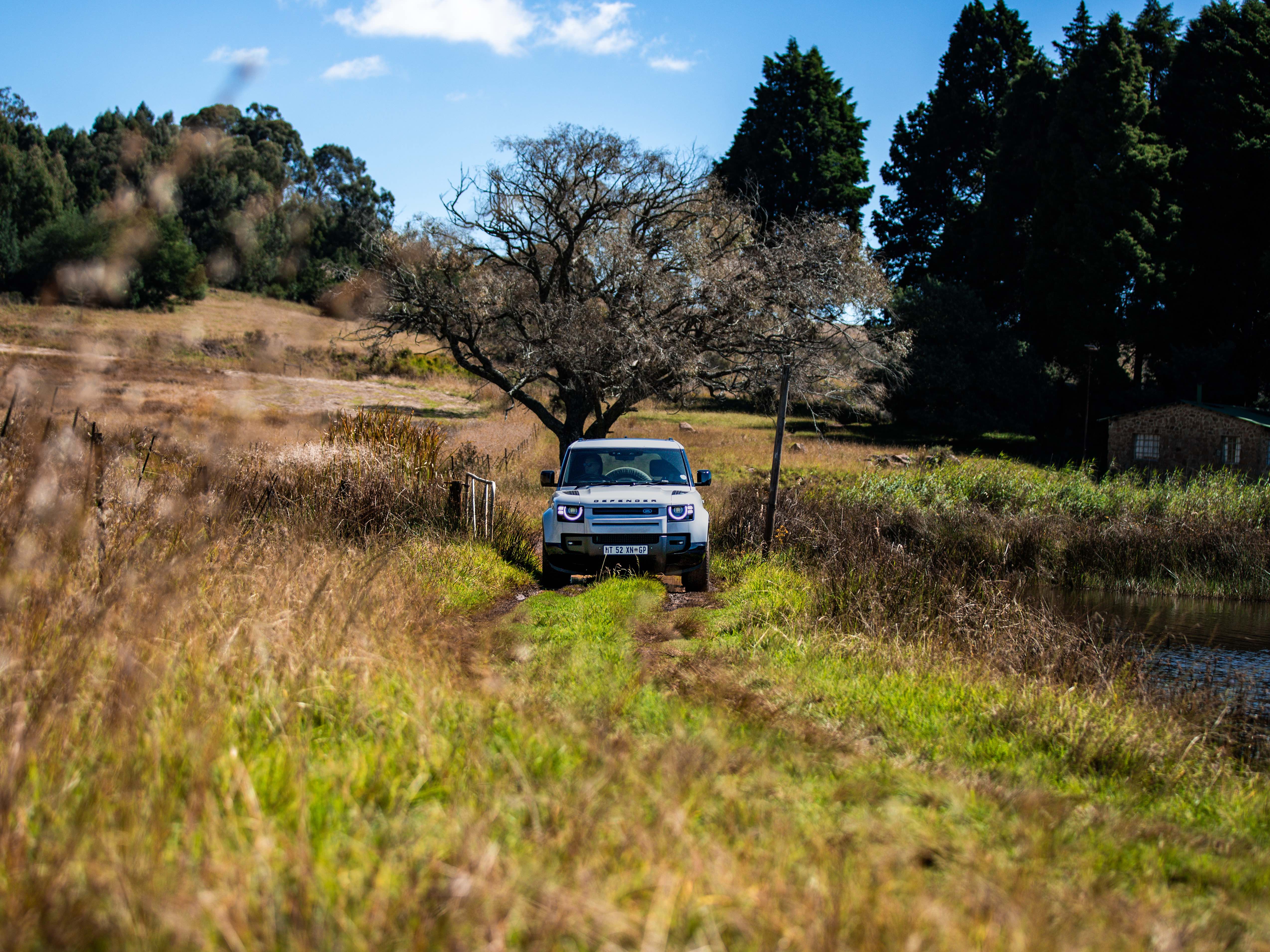
Just over three hours after leaving Johannesburg, we entered a spectacular landscape of rolling hills, tree-lined tracks, dams and frequent river crossings. As we moved further into the farm, there was real comfort in knowing we had chosen the Defender. Deep reservoirs of mud required the use of its Terrain Response system, allowing us to reach the most remote sections of a property whose family history stretches back six generations. Off-road life runs deep here.
The Defender’s role was to serve as the tracking vehicle for the all-new Kia Tasman and as a recovery vehicle should it be required. Wherever the Tasman went, the Defender followed, crawling up, through and over the terrain without fuss.
There is enormous mechanical complexity beneath the surface of this car, including sophisticated differentials, traction-control systems, low-range gearing and height-adjustable air suspension. Yet Defender has made all of it remarkably approachable. It’s been made such that anyone with a driver’s license can get to most places without sweating too much. And that is precisely what modernisation should achieve, right?
The 90’s short wheelbase also feels entirely appropriate on narrow tracks. It places itself neatly and seldom feels like too much vehicle, even when the route becomes tight or technical. Its ultimate limitation during our test was not the four-wheel-drive system but the tyres. The farm included rocky sections where the road-biased rubber suddenly felt vulnerable, with sidewall damage becoming a genuine concern and that also may just be the extra safe approach to taking this car to a place we had never been. We were comfortable in the knowledge that the farm owners had a fleet or Land Cruisers on hand in case something went wrong, but imagine the trauma and embarrasment that would cause. Nope, our caution was unneccesary as it turned out – the Defender was unperturbed, genuinely easy and fuss-free.
On that note though, prospective owners should be honest about how they plan to use their Defender 90. The underlying ability is considerable , but choosing the correct wheel-and-tyre combination will determine how confidently that ability can be accessed. Taking the surfboard down to the beach in Blouberg is a very different proposition to heading to the Okavanga for a fortnight of Botswana wildlands.
Make no mistake, though: beneath the Fuji White paintwork and contrasting black trim is a masterful off-roader.
The same philosophy of accessible capability continues in the cabin. The Defender remains deliberately chunky, with substantial grab handles, exposed fasteners and hard-wearing surfaces. The driving position is commanding, while the Meridian sound system delivers music with impressive clarity. The newer 13.1-inch infotainment interface is easier to read and quicker to operate than previous versions and that’s a good thing. Smartphone connectivity also proved less temperamental than before.
Those details matter because the modern Defender is supposed to be a full-scale luxury SUV that also happens to possess serious off-road hardware. The compromise is generally found behind the front seats. Once inside, the rear bench is reasonably usable, but reaching it requires the familiar two-door shuffle. The Defender’s considerable ride height doesn’t make the process much easier, but JLR has thought about you here. The air suspension can lower the vehicle for entry – access height. You need this sort of thing, because you don’t want to be hauling stuff into the cabin when the Defender is at its 291mm off-road setting. It makes a big difference.
The luggage compartment is similarly limited with all the seats upright, offering 397 litres. That is comparable with many compact crossovers, but considerably less than you would find in a Defender 110 but you don’t choose a 90 because it makes more practical sense. You choose it for its proportions, design, manoeuvrability or coolness.
For a couple, a solo adventurer or someone who rarely uses the rear seats, its limitations may not matter very much at all.
At R1 839 400, this is an expensive and highly specific vehicle. It lacks the practicality of the Defender 110, and our tested consumption of 10.0l/100km means it’s okay on the economical front, but not award-winning. Its two-door configuration may also become frustrating for anyone who regularly carries passengers. I can attest to that in some sense. However, the 90 has an appeal that extends beyond rational comparisons. Its compact footprint makes it easier to manoeuvre both in town and off-road. The cabin is comfortable, the engine is refined and the technology makes accessing its formidable off-road capability remarkably simple.
Tyre choice remains one of the most important ownership considerations. Buyers who intend to explore rocky or particularly demanding terrain should investigate a more off-road-oriented wheel-and-tyre package and perhaps look at having both sets available for a best use case. All-Terrains are also the best-of-both option. The air suspension, substantial wading ability and sophisticated four-wheel-drive systems provide the deeper reserves of capability and that is ultimately where much of the Defender’s considerable price is justified.
Beyond that, it’s still a luxury product backed by a company that isn’t striking that off their strategy soon. If exclusivity is anything you enjoy as well, the 90 is the justified option simply because of its rarity. I like that.
The Defender 90 is intentionally specific. It can seem expensive and of course, it’s less practical than other models carrying the same name. Yet it remains a brilliant demonstration of how luxury, technology and rugged durability can coexist. It is also a car that people react to. Most think it is effortlessly cool, even if they can’t understand why you would choose it over the more versatile Defender 110. That division is actually part of its appeal.
Is it a good car? Yes it is. Absolutely. Is it the most sensible Defender? Not at all. But as is the case with my own Defender 90 story, this new Defender 90 was never designed to win that argument. It was designed for a specific type of audience within a package that strikes on the tones of heritage, capability and design with excellence.
And, in case you were wondering – we did not need to recover the Kia Tasman during the making of this story. Nor did we need recovery from external parties eother.
Get TopGear SA news and reviews in your inbox