Review: Porsche Cayenne Turbo GT

You drive it like a Porsche, and it does what Porsches do.

9

9

ratings-block

You drive it like a Porsche, and it does what Porsches do.

Porsche

R4 660 000

For

Ludicrous pace. Extraordinary agility. Improved ride quality. V8 theatre and noise.

Against

Still firm. Some turbo lag.

What is it?

Engine Power & torque Transmission 0–100km/h Top speed Fuel consumption
4.0-litre twin-turbo V8 485kW & 850Nm 8-speed Tiptronic S automatic 3.38 seconds (tested) 305km/h (claimed) 14.9l/100km (tested)

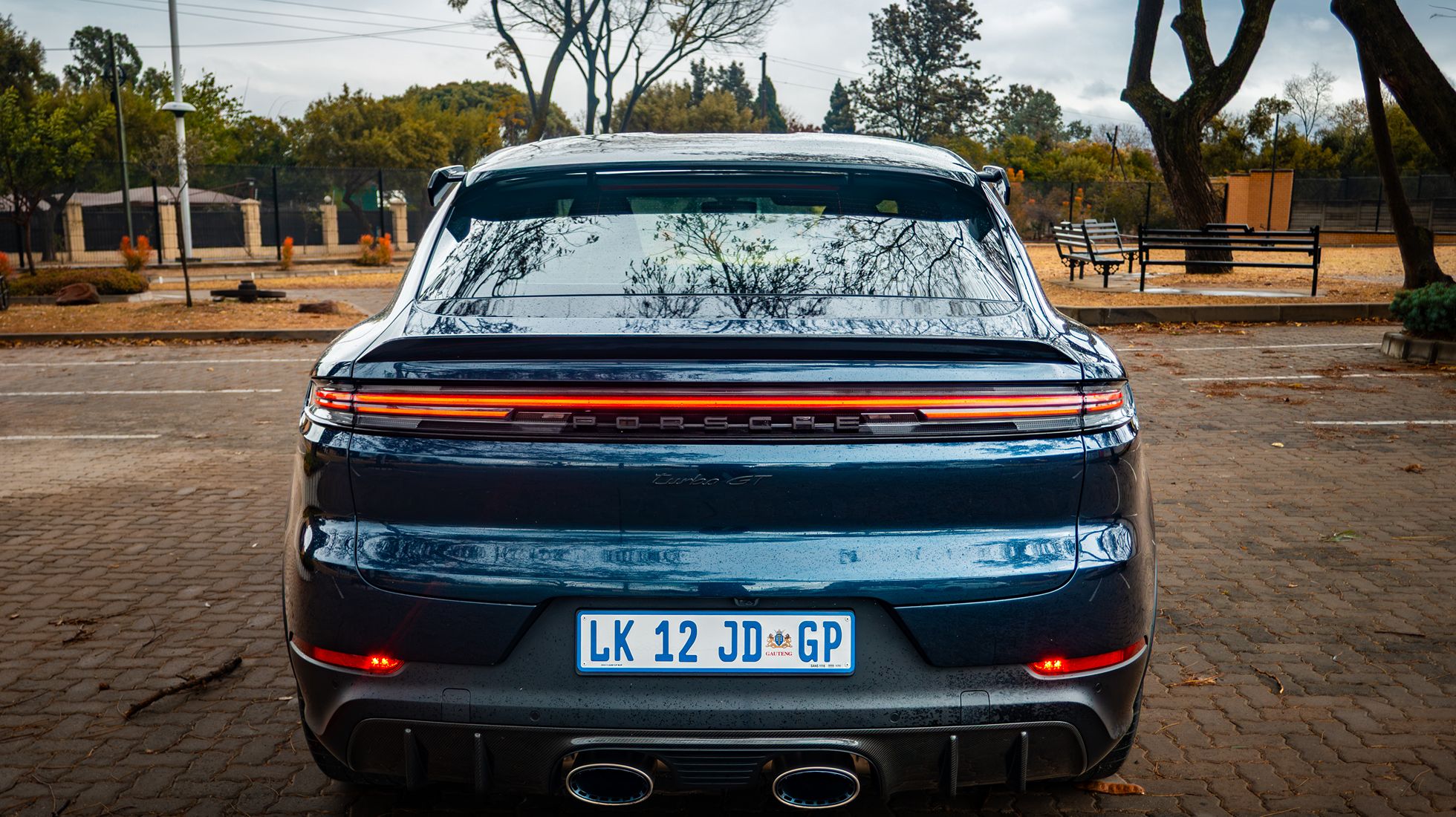
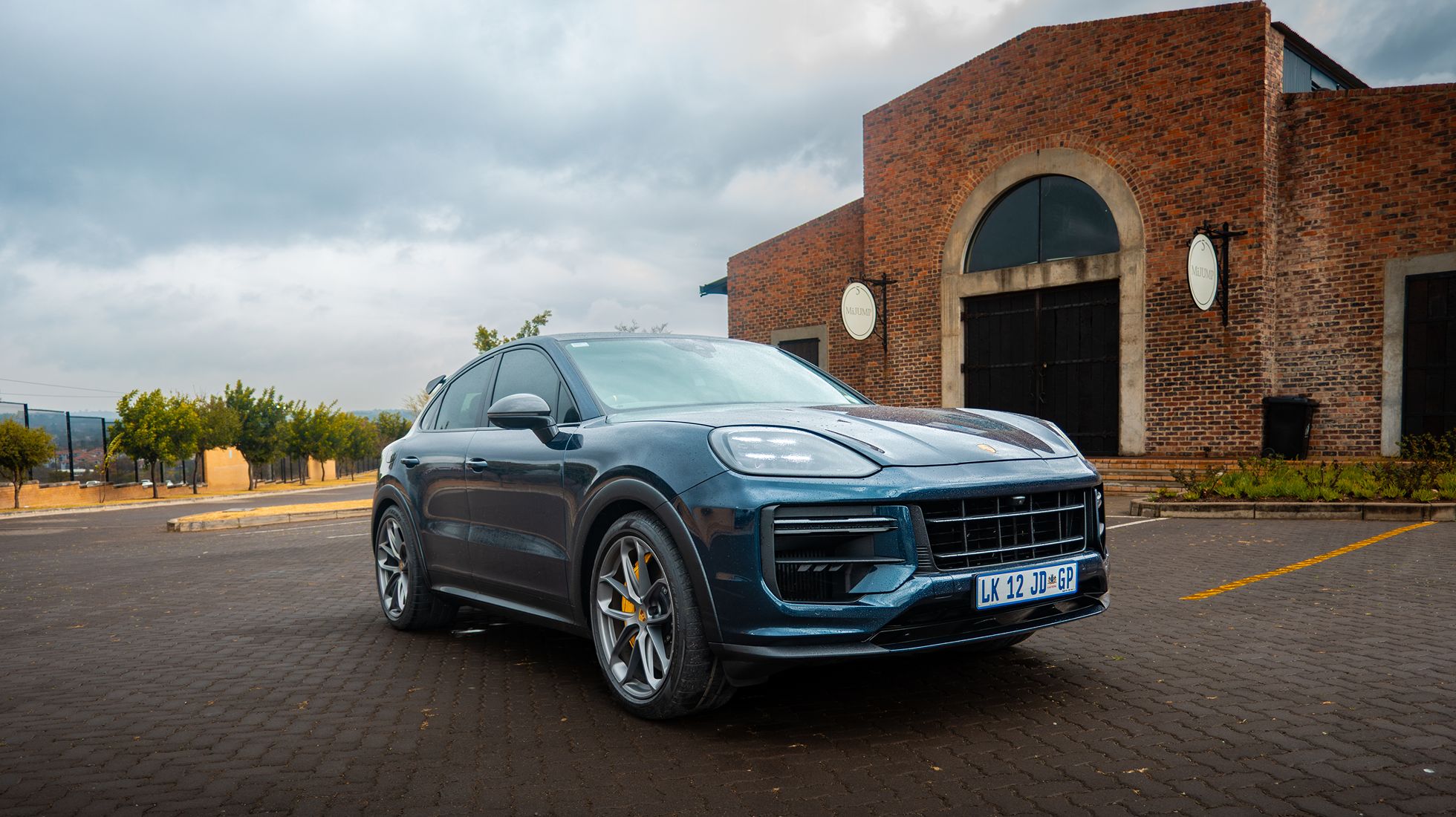
There was nothing particularly wrong with the original Porsche Cayenne Turbo GT. It was spectacularly fast, hilariously capable and sufficiently angry to make you question whether Porsche had forgotten that the Cayenne was technically an SUV. On a smooth road, it was brilliant. On a racetrack, it was astonishing. On a typical Johannesburg road? It was a bit eina. In a world of SUVs dancing around as sports cars, the Turbo GT felt like a sports car wearing an SUV costume. It was unbelievably sharp, but that came at the price of a punishing ride.

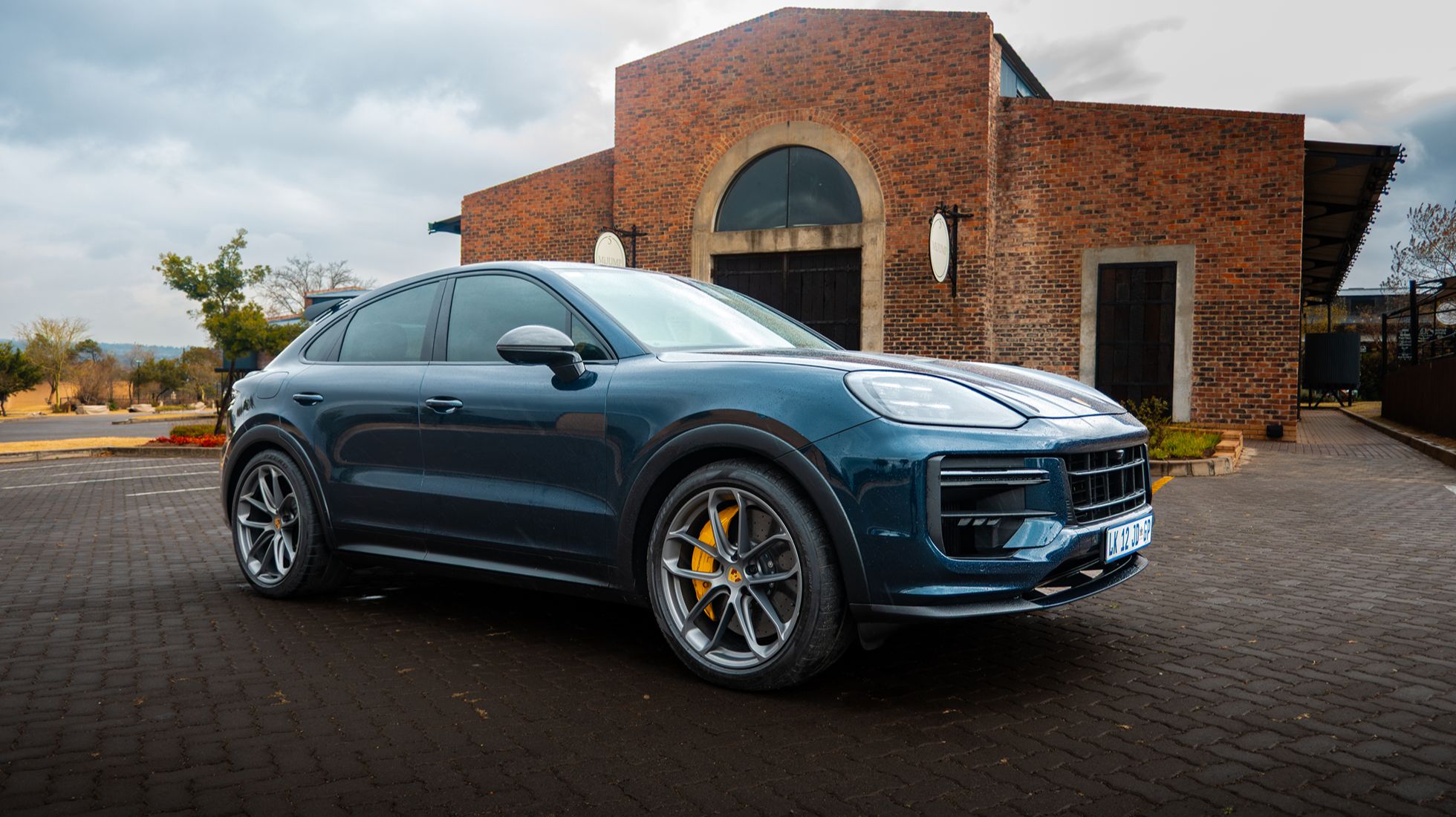
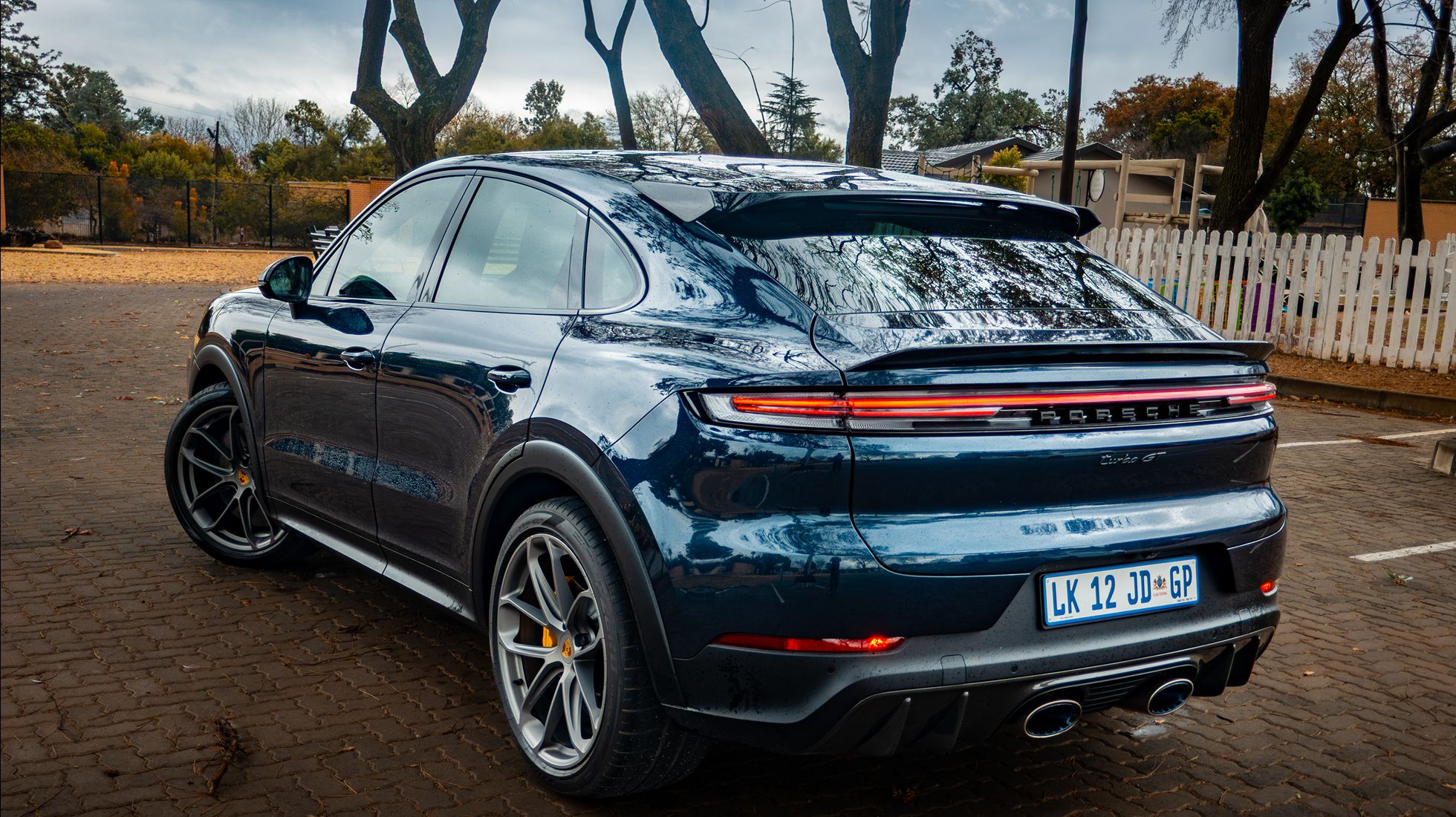
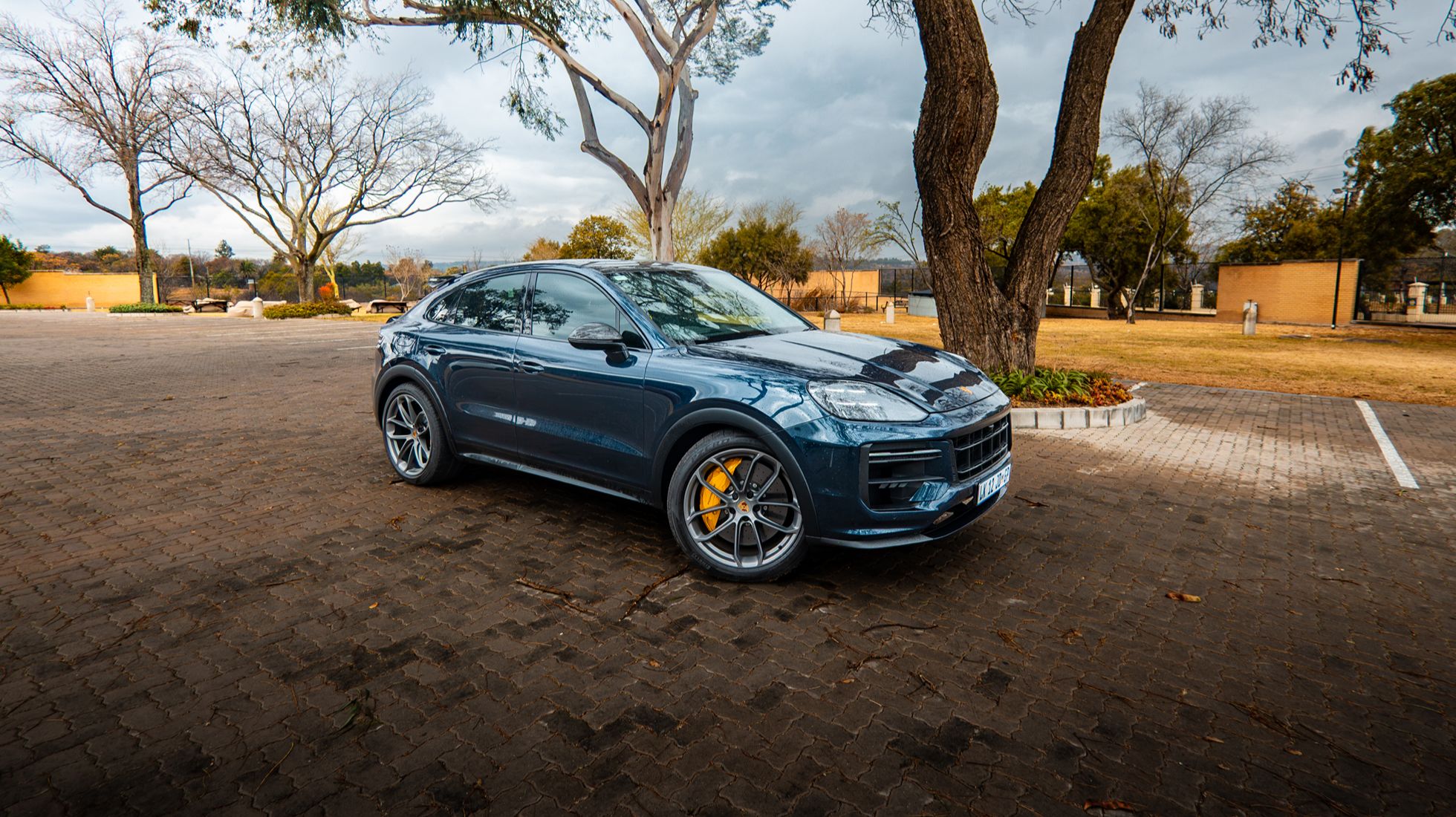
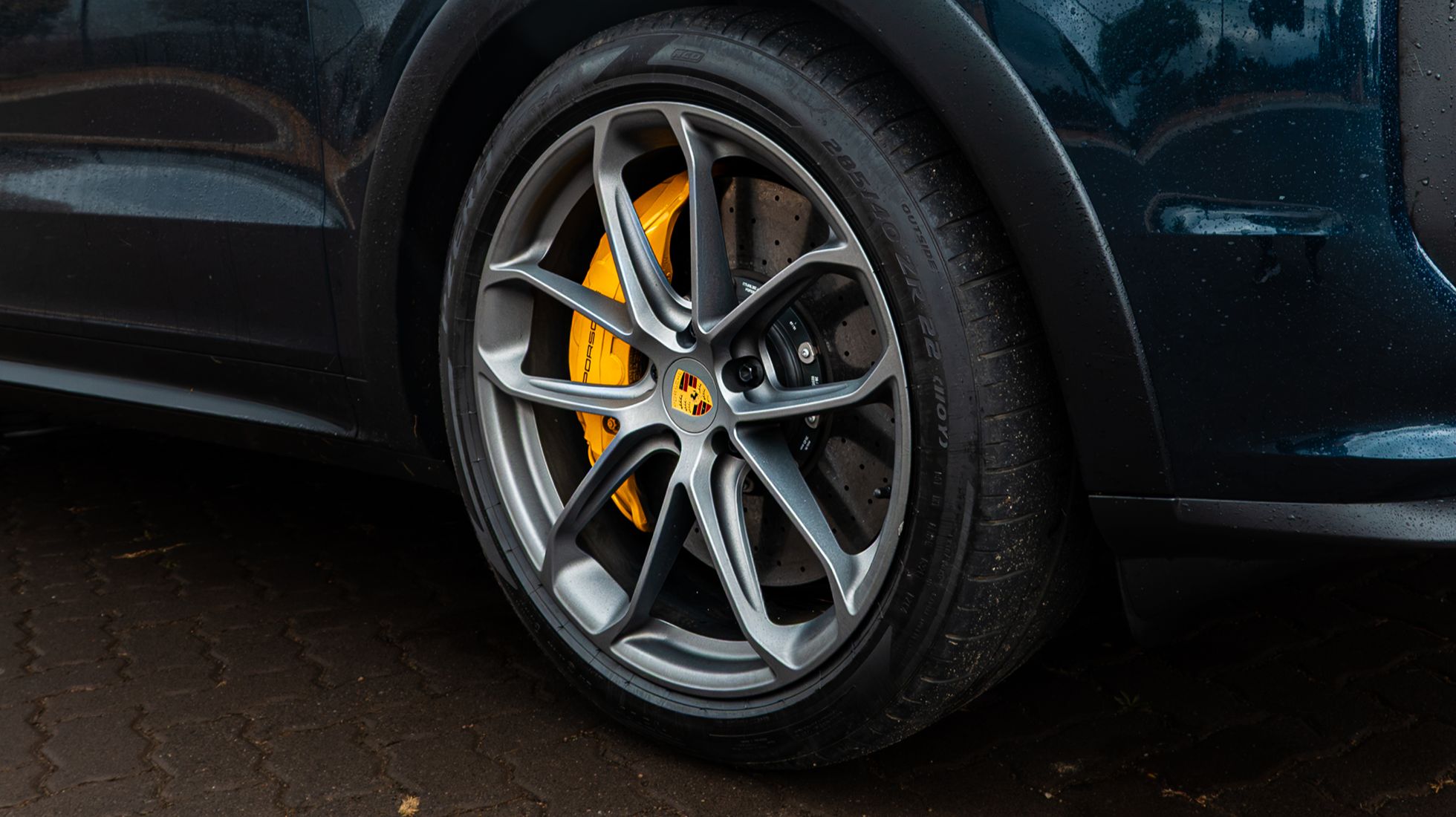
Porsche has done something rather sensible with the updated Turbo GT: it has softened it. Before anybody starts composing an angry email to Stuttgart, “softened” needs some context. This is still a GT-badged Porsche sitting on enormous wheels, wearing serious Pirelli P Zero rubber and fitted with suspension that considers the thought of body roll a personal insult. Turn the steering onto full lock while creeping out of a parking space and it can still hop and scrub its tyres across the paving, just as the previous car did. But it rides better. It is still firm — very firm — and nobody will confuse it with a Range Rover. There is now enough compliance, however, to make the Turbo GT genuinely usable as an SUV rather than merely an extraordinary performance car in an SUV costume. Porsche has not diluted the madness. The 4.0-litre twin-turbo V8 produces 485kW and 850Nm, with Porsche claiming 0–100km/h in 3.3 seconds and a top speed of 305km/h. Three-point-three seconds. In a Cayenne. There comes a point where the numbers stop being assessed and the absolute wildness of the power — and the noise accompanying it — is all that occupies your mind.

What is it like on the road?

What is it like on the road?

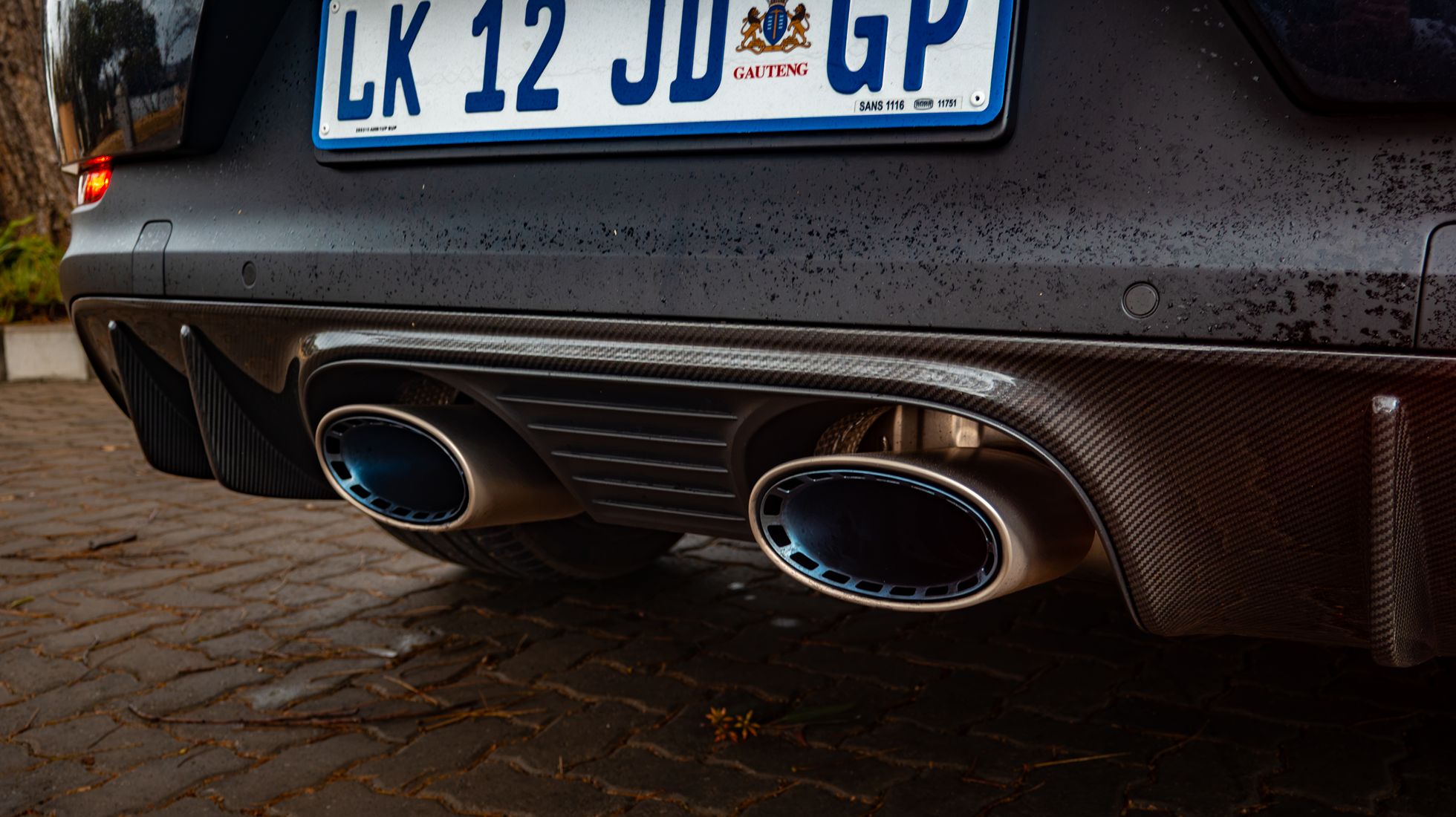
Put it into Sport Plus and the Turbo GT undergoes the sort of personality change that usually requires professional intervention. Mine. My wife described the noise as “a lion about to eat you”. Neither of us has extensive experience of being eaten by lions, admittedly, but I understood her point. There is a deep growl from the V8, followed by barks, cracks and the occasional pop from the titanium sports exhaust as the gearbox aggressively works its way through the ratios. It is wonderfully unnecessary. The violence of the acceleration remains the Turbo GT’s party trick. There is a moment of turbo lag if you catch it napping, even from a stationary launch-control start, but when those turbos arrive, they more than make up for it. Suddenly this large SUV is somewhere considerably further down the road and you are wondering what happened to the scenery. Jordan Schmidt, one of our tamest journalists, simply could not hold back the expletives. His exact words were: “I believed an RS Q8 was fast, but this is [insert expletive here] mental.”

The real witchcraft is not the straight-line speed, though. Plenty of SUVs are absurdly powerful now; an Audi RS Q8, for instance. More remarkable is what happens when you turn the steering wheel. The Turbo GT feels impossibly direct for something this large. Rear-axle steering, active roll control and some very clever chassis engineering disguise its dimensions to an almost suspicious degree. You do not hustle it along a road with the allowances normally made for a large SUV. You drive it like a Porsche, and it does what Porsches do. A wet Johannesburg winter meant less rubber staying on the tar, and the Turbo GT’s lively rear got to show itself more than once. It really does have the ability to dance, as large as it is. Sport Plus is the setting to choose if you are so inclined. The way it turns, brakes and corners is its greatest achievement. Eventually, the novelty wears off. No, it does not. But at some point, one has to calm down.

Switch everything back to Normal, quieten the sports exhaust and the Turbo GT manages something approaching “civilised”. The gearbox relaxes, the V8 lowers its voice and the suspension takes a small step back from attempted bodily harm. The eight-speed transmission remains quite eager, even in Normal mode, and it is easier to keep the Turbo GT at its most docile and comfortable by using the paddles behind the steering wheel. It is an excellent transmission, with immediate gear changes.

Layout, finish and space

The Turbo GT has not forgotten the luxury part of the brief. The cabin gets the latest Cayenne interior architecture, but the GT-specific treatment is far more extensive than a few racy seat inserts. Porsche calls the suede-like material Race-Tex, and it covers the perforated centres of the front and outer rear seats, the dashboard carrier, centre-console grab handles and armrest, door panels, pillars and the rear centre-console surround. Arctic Grey contrast stitching runs through the cabin, accompanied by matching seatbelts and embroidered Turbo GT logos on the front headrests.

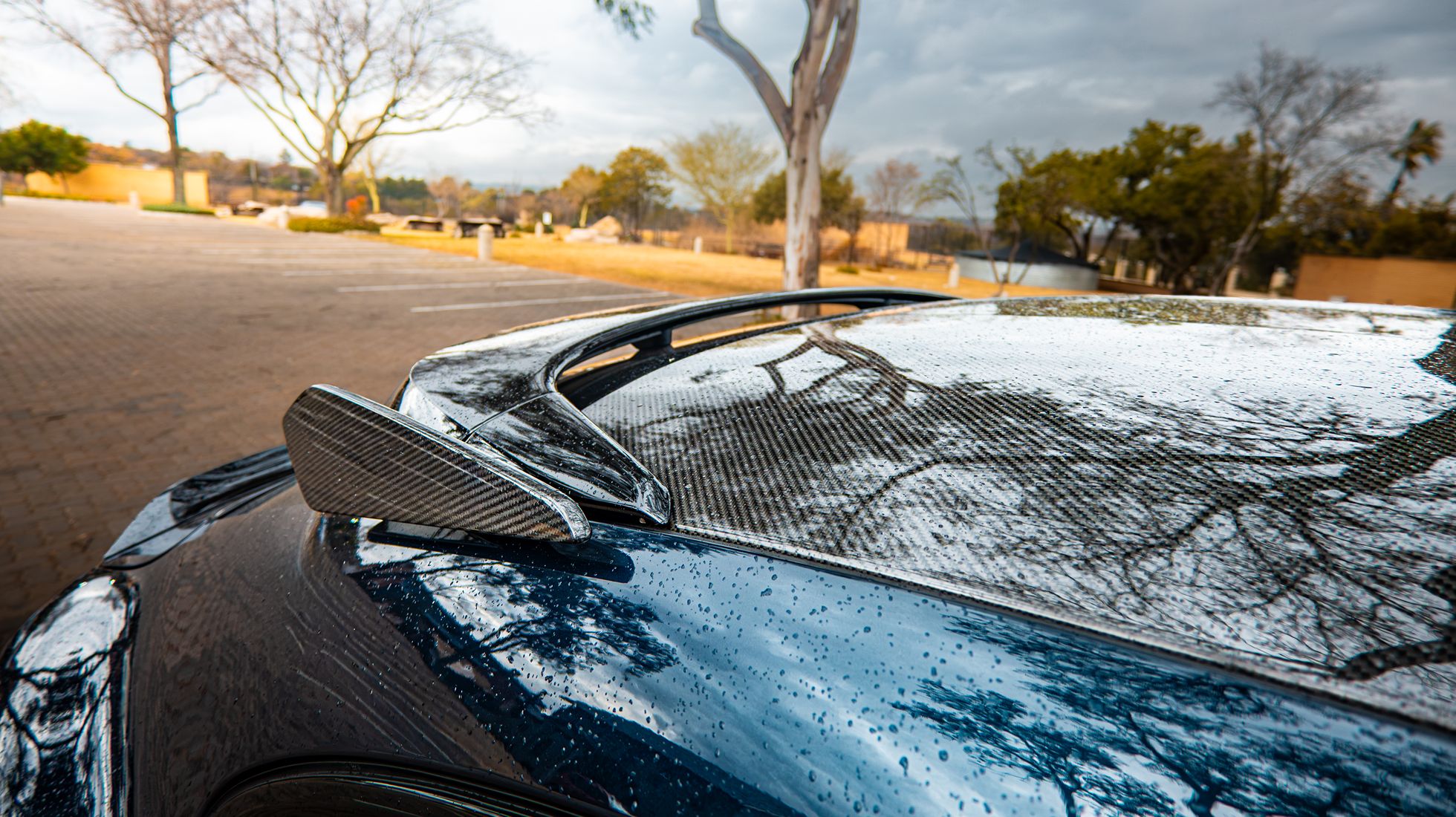
Carbon fibre appears wherever Porsche can reasonably justify it. The standard Carbon Interior Package adds it to the dashboard and door trim, while a lightweight carbon-fibre roof sits above a Race-Tex headlining. The heated 360mm GT sports steering wheel is also wrapped in Race-Tex, with a Racing Yellow marker at 12 o’clock and the red Sport Response button ready beneath your thumb. It is a cabin that feels expensive, but the motorsport references are functional enough to avoid looking like costume jewellery.
The standard front sports seats are electrically adjustable eight ways and feature integrated headrests, a Turbo GT-specific perforation pattern and driver memory. They hold you securely without becoming a nuisance on an ordinary commute. Interestingly, Porsche’s South African configurator also offers 18-way adaptive sports seats at no extra cost. These add extendable squabs, adjustable side bolsters, four-way lumbar support and memory for both front occupants, although choosing them replaces the distinctive Race-Tex seat centres with smooth leather and tones down some of the contrast detailing. Front-seat ventilation is another no-cost choice.

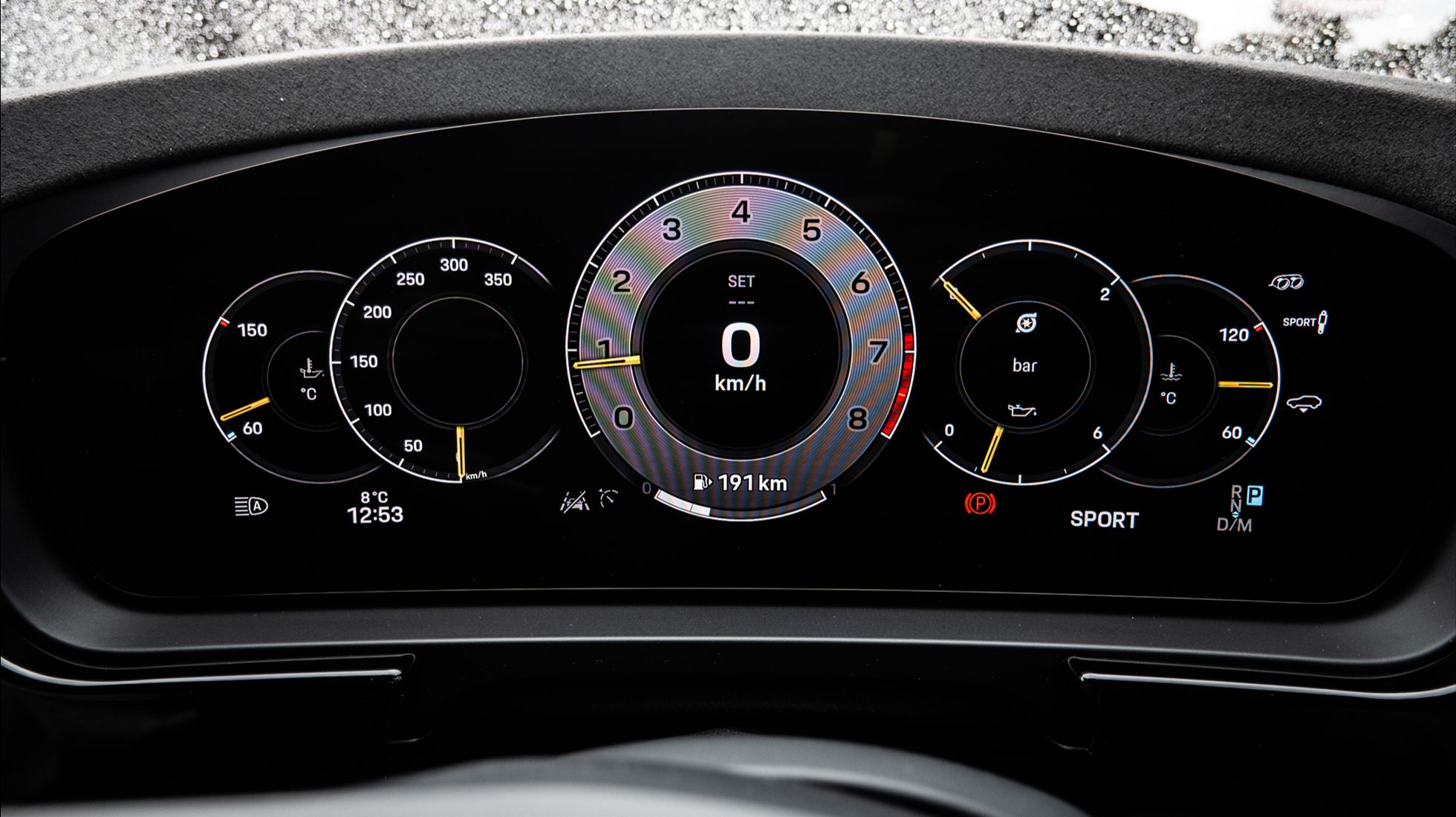
The driving environment is more digital than before, but remains sensibly organised. A curved 12.6-inch instrument display sits directly ahead of the driver, with a 12.3-inch central touchscreen handling Porsche Communication Management. Moving the compact gear selector onto the dashboard has freed space on the centre console for storage and a broad climate-control panel. That panel mixes touch-sensitive surfaces with proper toggle switches and a physical volume control, so the cabin has not surrendered every useful function to a screen.

South African cars are generously equipped by Porsche standards. A head-up display, ambient lighting, an air-quality system, a cooled wireless charging compartment and a 14-speaker Bose surround-sound system are standard. The options list can still do serious damage. Buyers can add a 10.9-inch passenger display, which allows the front passenger to manage navigation, view driving data or stream content without distracting the driver. Four-zone climate control, thermally and acoustically insulated front glass and a 21-speaker Burmester system are also available. Porsche Exclusive Manufaktur then opens the door to contrasting leather, coloured stitching and seatbelts, different trim finishes and Neodyme accents.
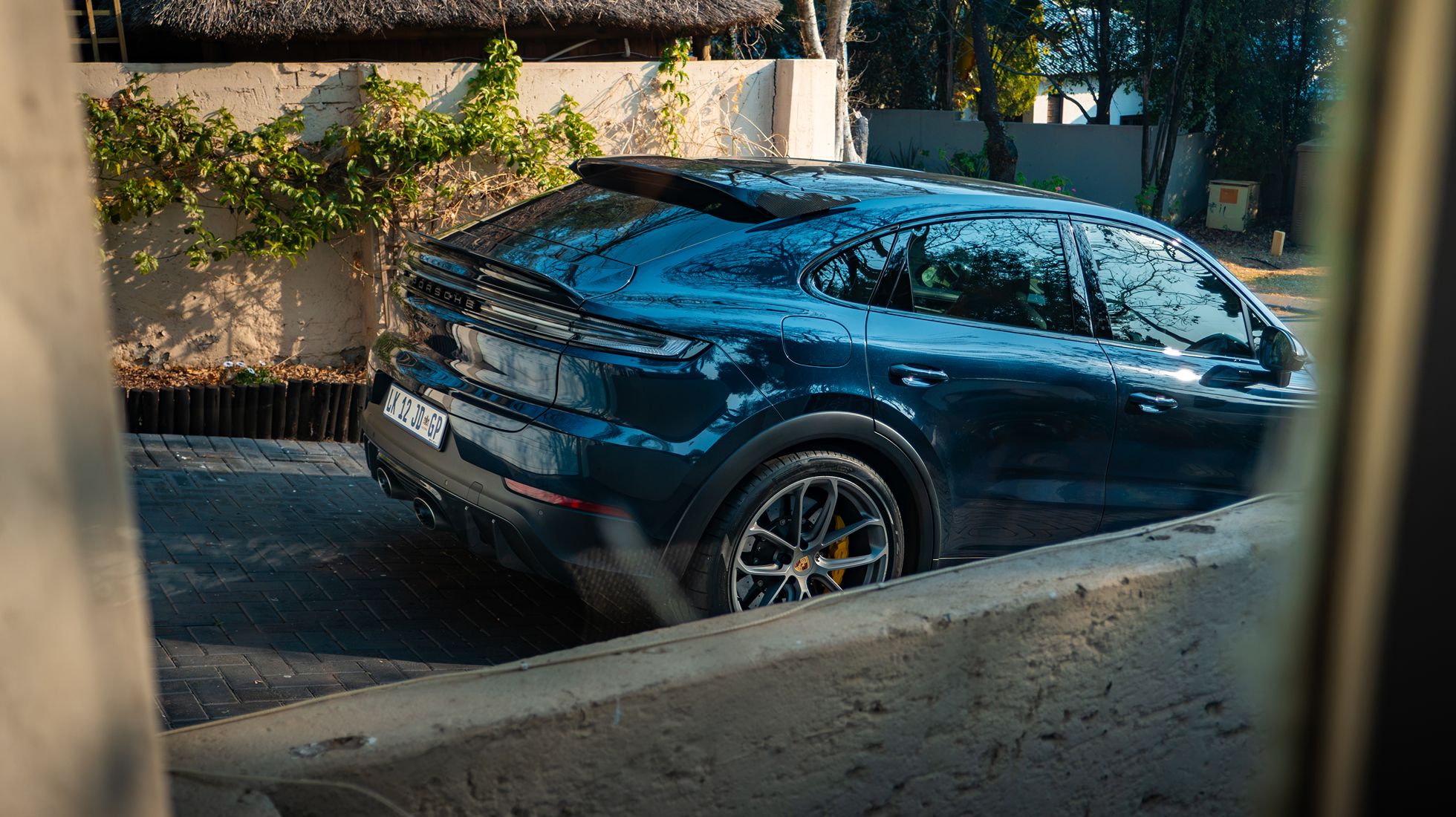
Crucially, it remains a Cayenne Coupé. Our test car was configured with the standard rear sports-seat arrangement to create a 2+2 cabin, but a three-seat rear bench is available as a no-cost alternative if a fifth seat matters more. There is also a useful 540-litre boot and enough everyday practicality to serve as the family car.
That sounds obvious until you remember what this particular Cayenne can do. It has five doors, usable luggage space and genuine day-to-day versatility, yet none of those concessions has made it feel any less like a Porsche GT product. The interior strikes much the same balance as the revised suspension: easier to live with, but never allowed to forget what badge is on the tailgate.

Running costs and reliability​

At R4.66 million, the Cayenne Turbo GT is an extravagant thing. Our tested fuel consumption of 14.9l/100km underlines the obvious: this is not the performance SUV to choose if running costs sit high on the priority list. Comparing it with its rivals is not straightforward. There is more road and tyre noise than you will find in something like an Audi RS Q8, and less outright refinement too. The Audi possesses a certain polished manner until you switch it into its most brutal modes; the Cayenne Turbo GT is not interested in hiding what it is. A BMW X5 M or Mercedes-AMG GLE 63? Both are softer, more comfortable and cheaper, but neither comes close to the Porsche’s overall performance. A Lamborghini Urus SE, then? The Cayenne Turbo GT feels faster all round, although that judgement is based on feel rather than a back-to-back instrumented test. For outright agility, the less expensive Porsche is the one I would choose.

There are more refined performance SUVs. There are more flamboyant ones and certainly more comfortable ones. Few, however, are as direct, focused or violently effective.

Final thoughts​

This is a GT car that happens to have five doors, a useful boot and enough ground clearance to mount a pavement outside the children’s school. Its priorities are fairly obvious. The question is not whether Porsche has made the updated Cayenne Turbo GT softer. It has. The more important question is whether that has made it less of a Turbo GT. Thankfully, it has not.

All the menace remains. It is still brutally fast, still startlingly agile and still one of those cars that makes you laugh at the sheer absurdity of what modern engineering has achieved. A large SUV has no business accelerating, stopping or changing direction like this. Now, though, you can drive it to work without needing an appointment with a chiropractor afterwards.

The Cayenne Turbo GT remains expensive, noisy and unapologetically firm. It is also one of the most focused and thrilling performance SUVs on sale. Softer, yes. Soft? Not even close.

Advertisement - Page continues below

You might like

ratings-block-small

7

7

Review: Ford Ranger 2.3 EcoBoost Wildtrak

ratings-block-small

7

7

Review: iCaur 03T 2WD

ratings-block-small

6

6

Review: Geely Coolray Vertex

ratings-block-small

9

9

BYD ATTO 8 DM-p

More from TopGear

9
Review

Review: Porsche Panamera GTS

10
Review

Review: Porsche 911 Carrera T

Advertisement - Page continues below
8
Review

Review: Porsche Macan GTS

Porsche Cayenne GTS Coupe
9
Review

Review: Porsche Cayenne GTS Coupe

911 Carrera
8
Review

Review: 2025 Porsche 911 Carrera

Keep informed with our newsletter?

Get TopGear SA news and reviews in your inbox

Advertisement