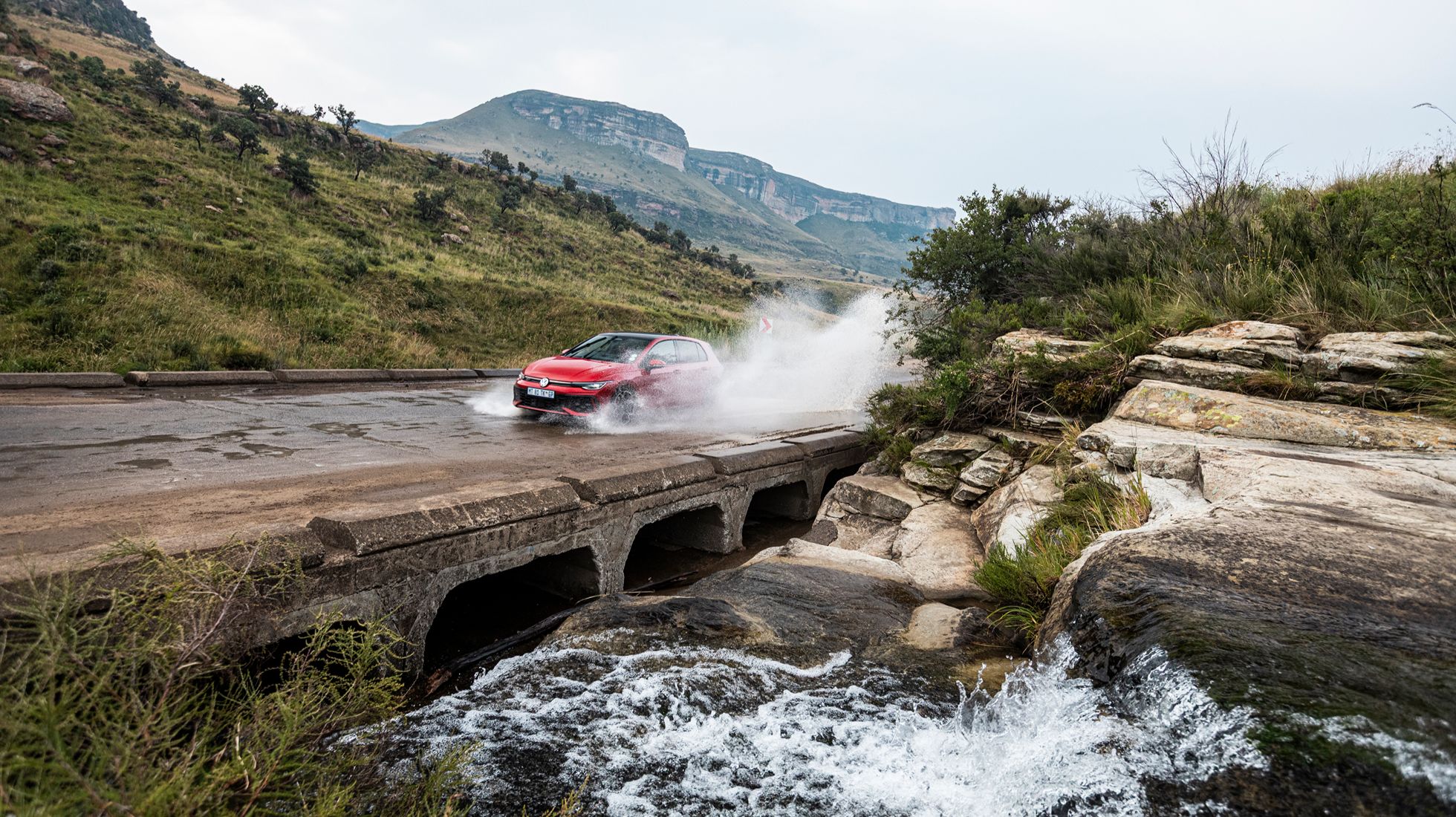
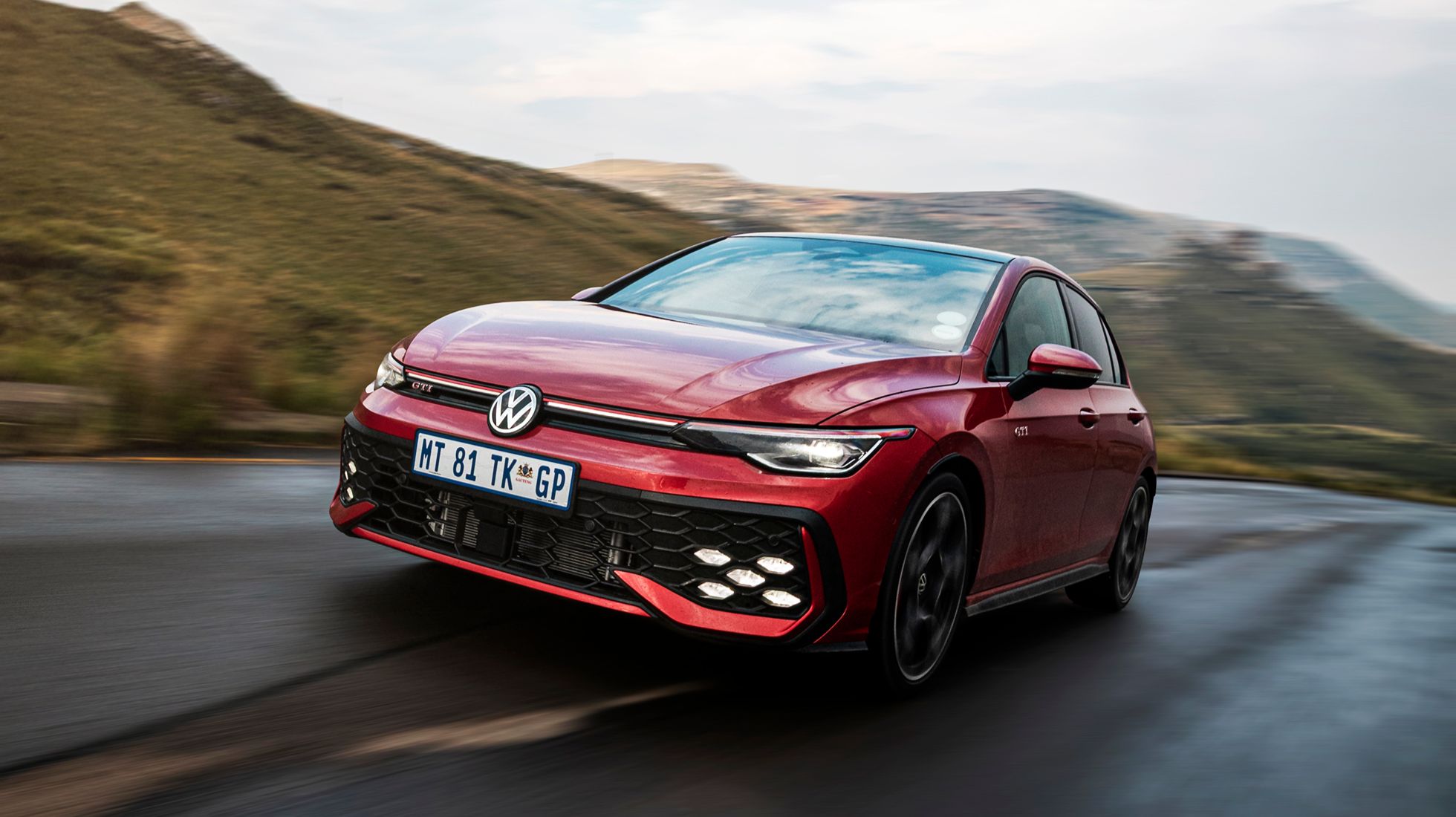
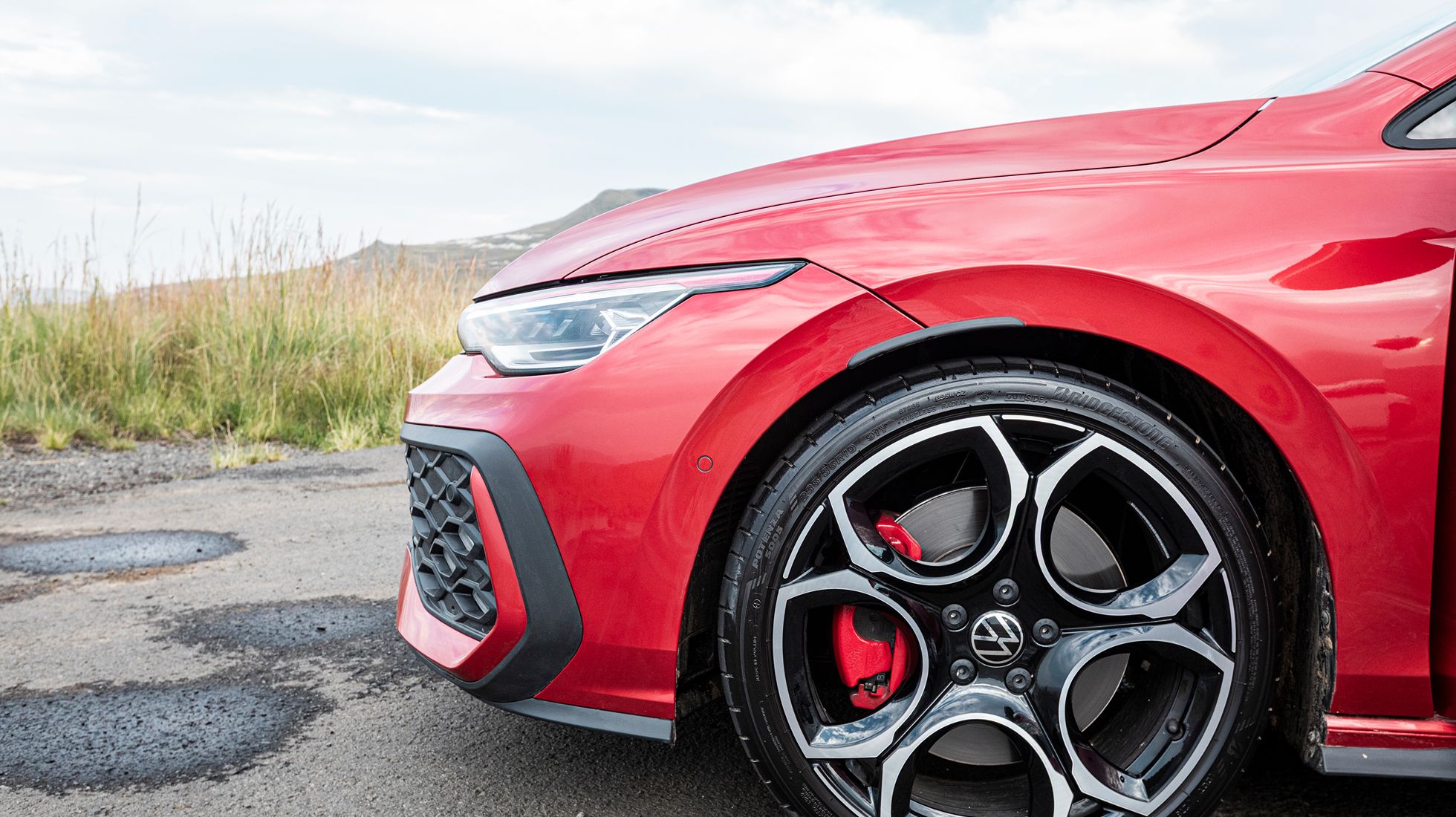
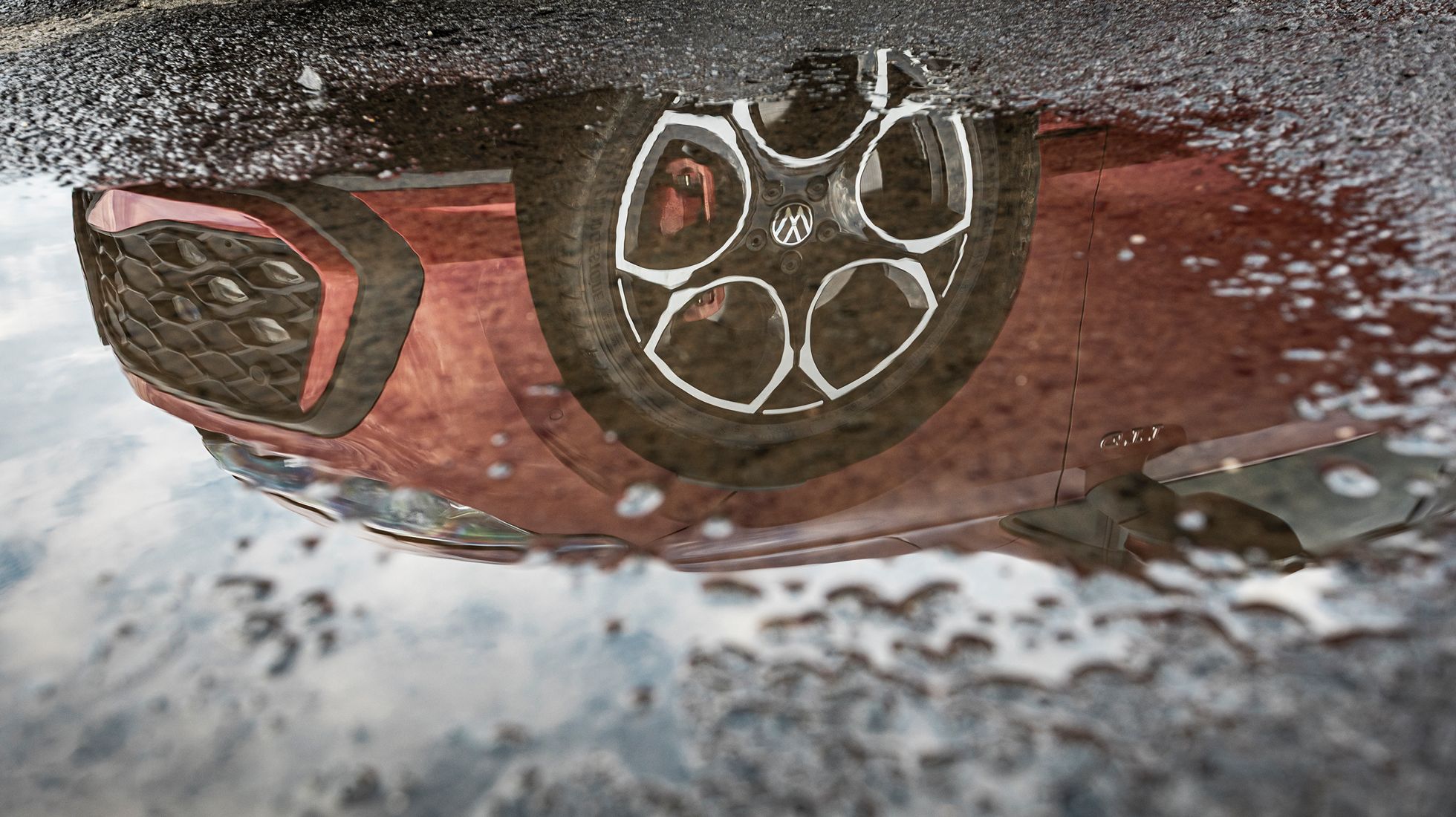
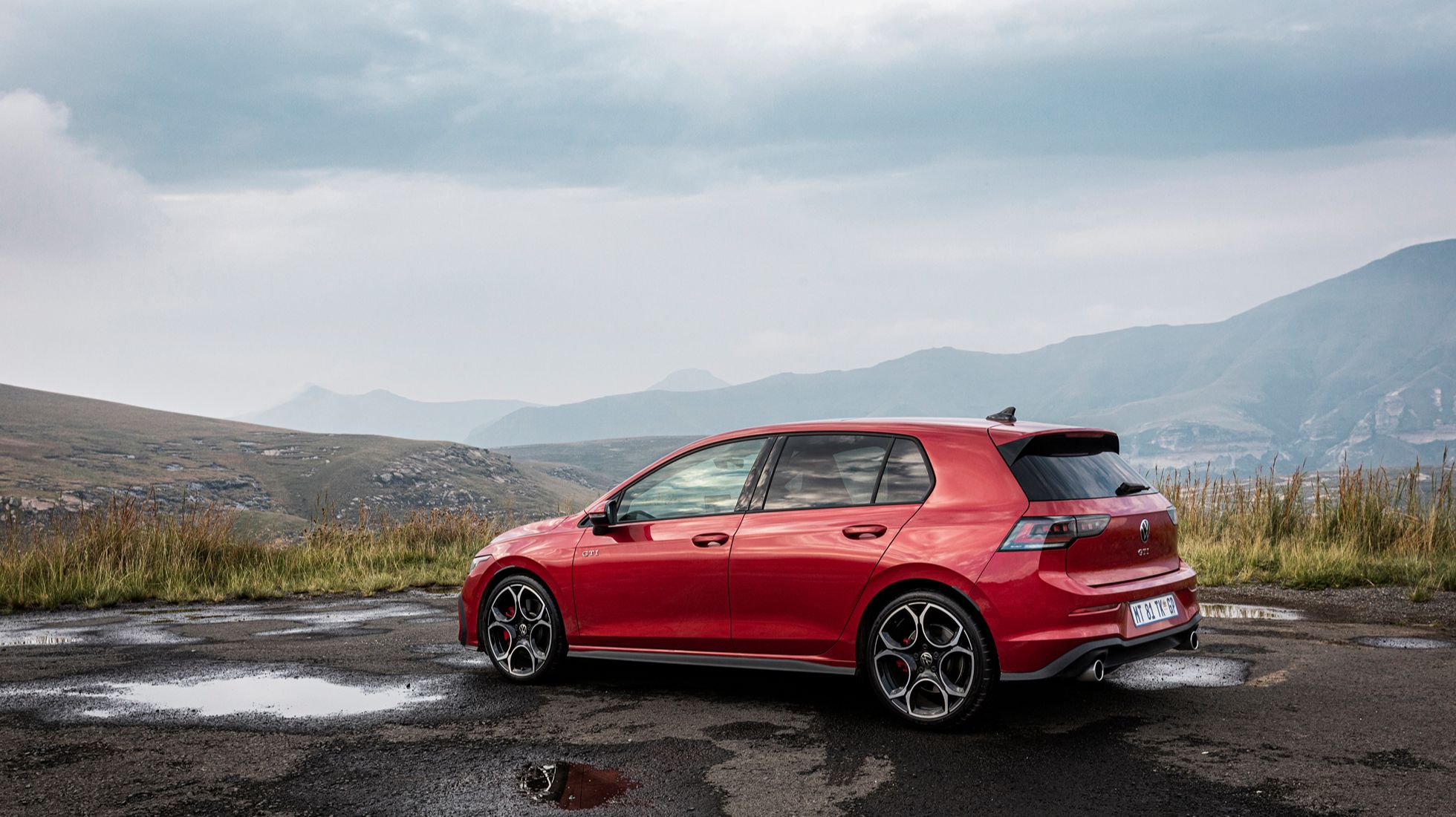
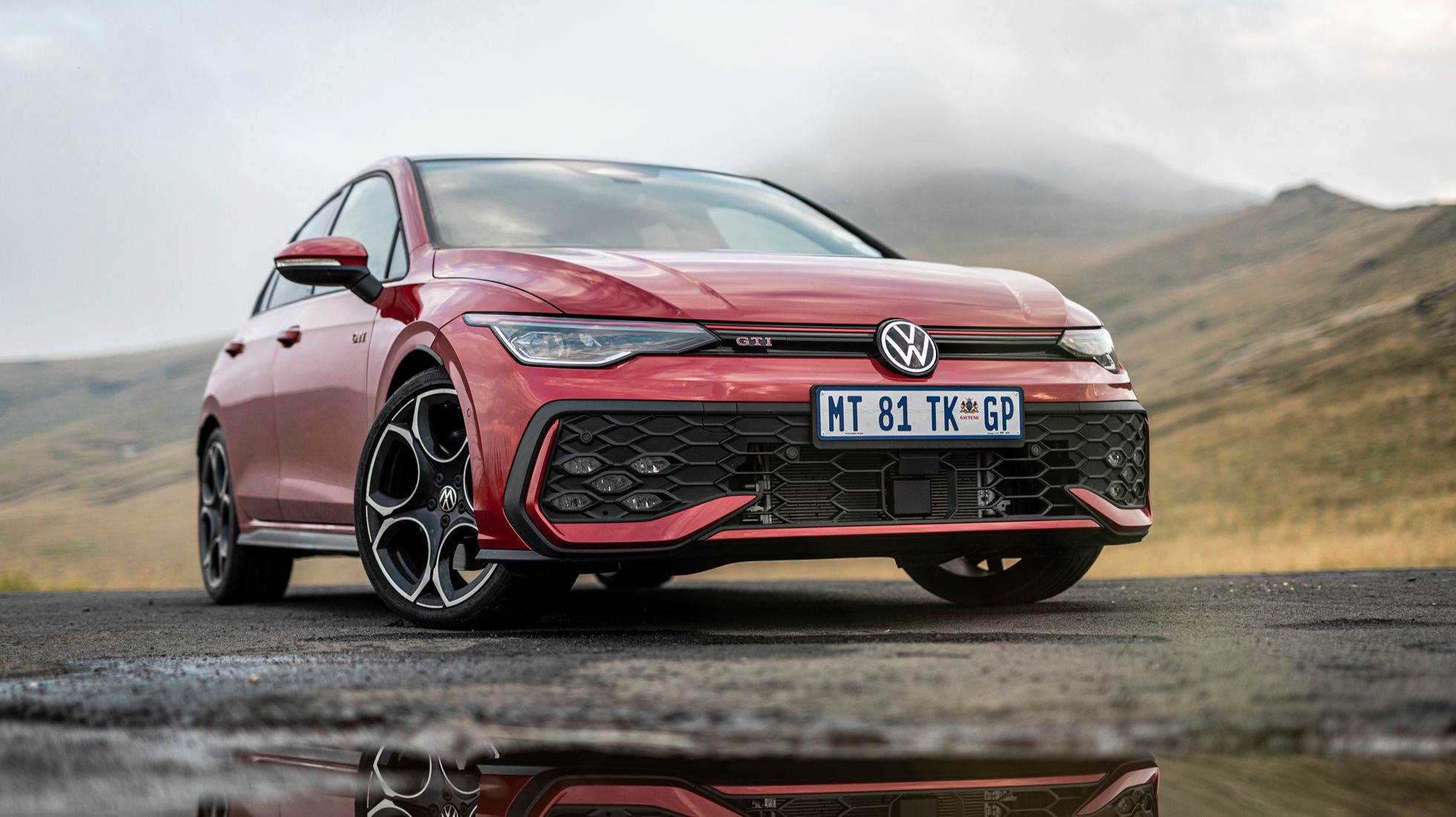
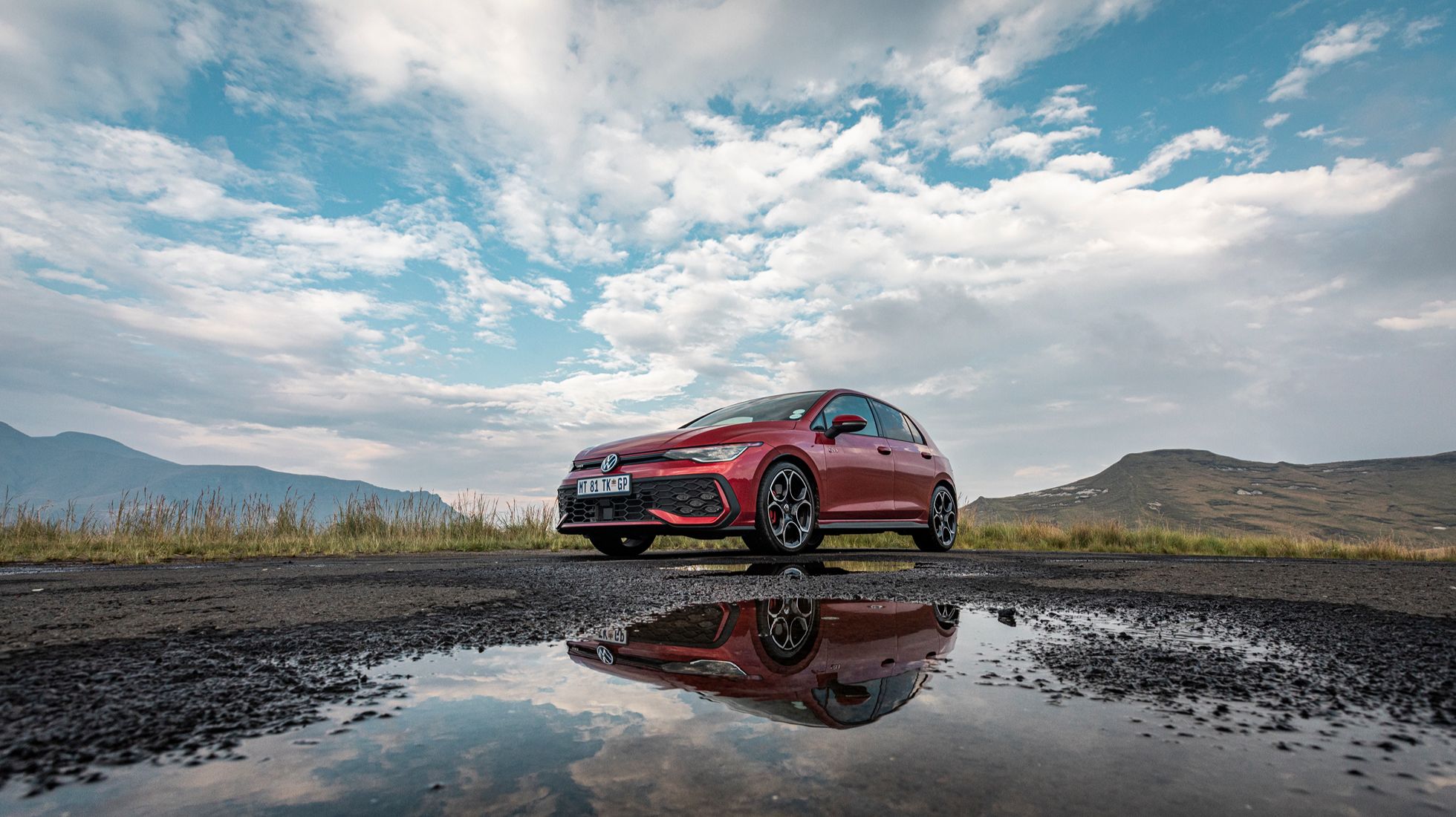
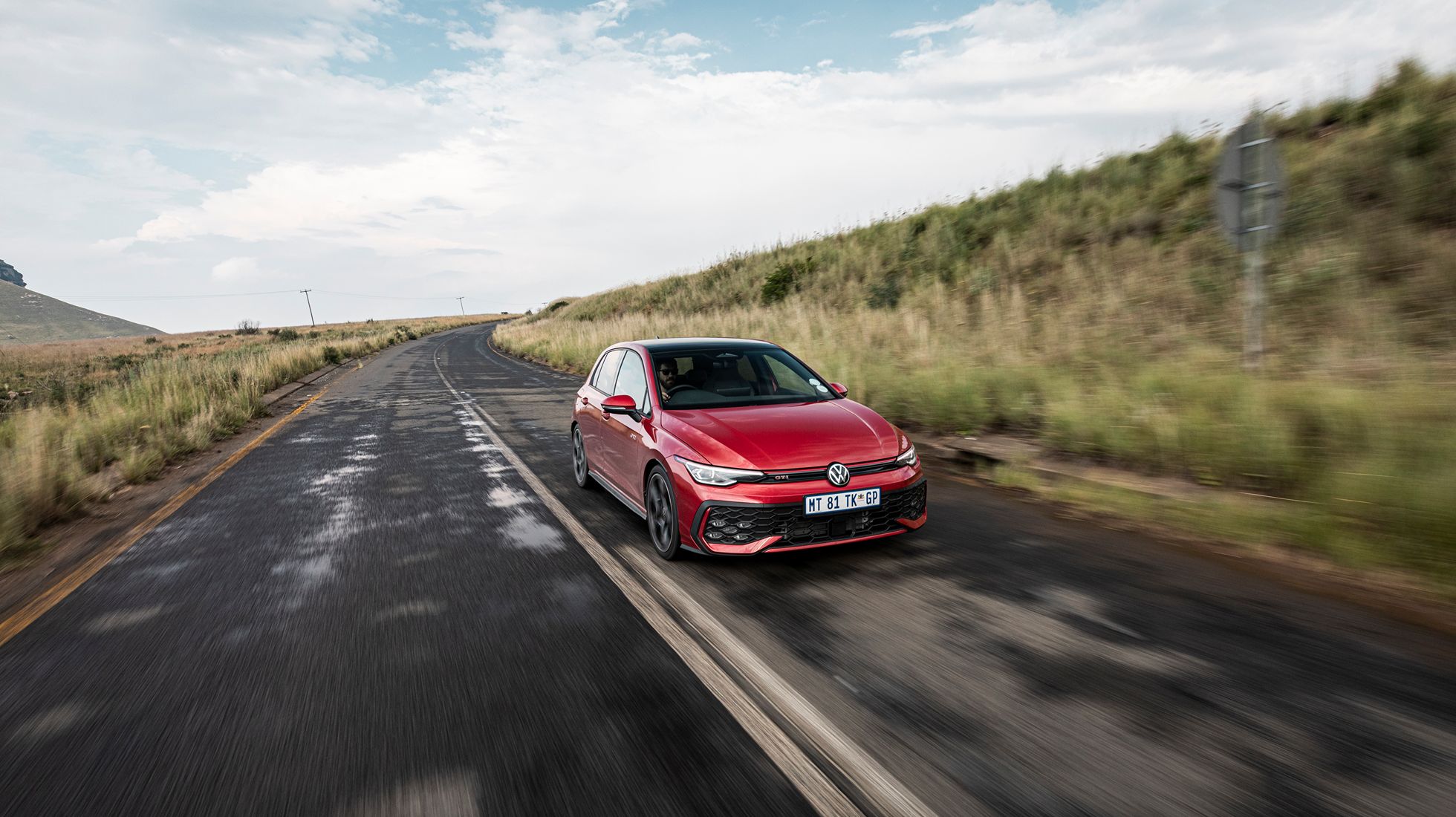
I’m flooring it towards a particularly appealing right-hand sweep where temptation got the better of me. I’m not proud to admit it. I consider myself to be of sound mind. Mostly.
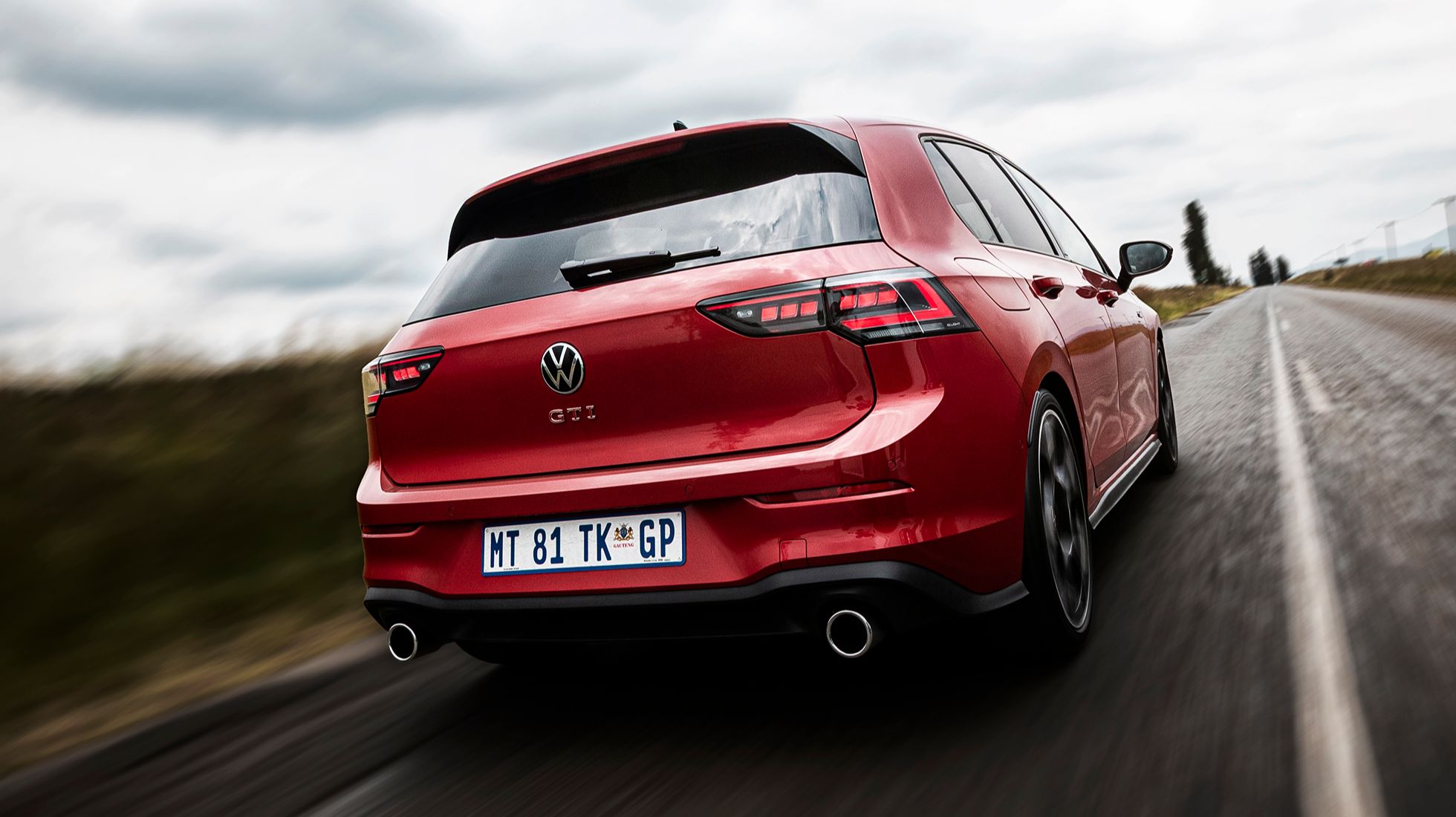
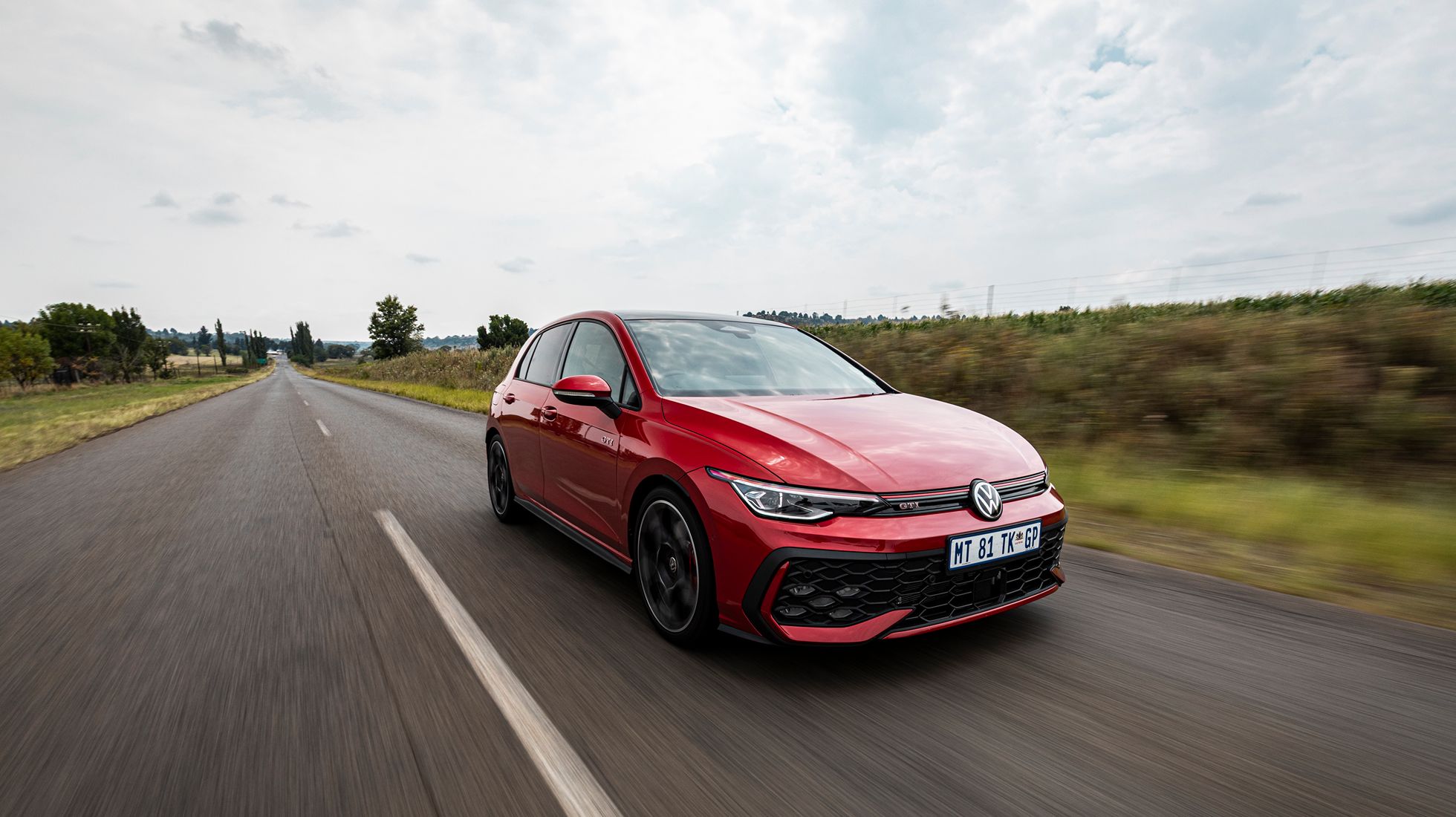
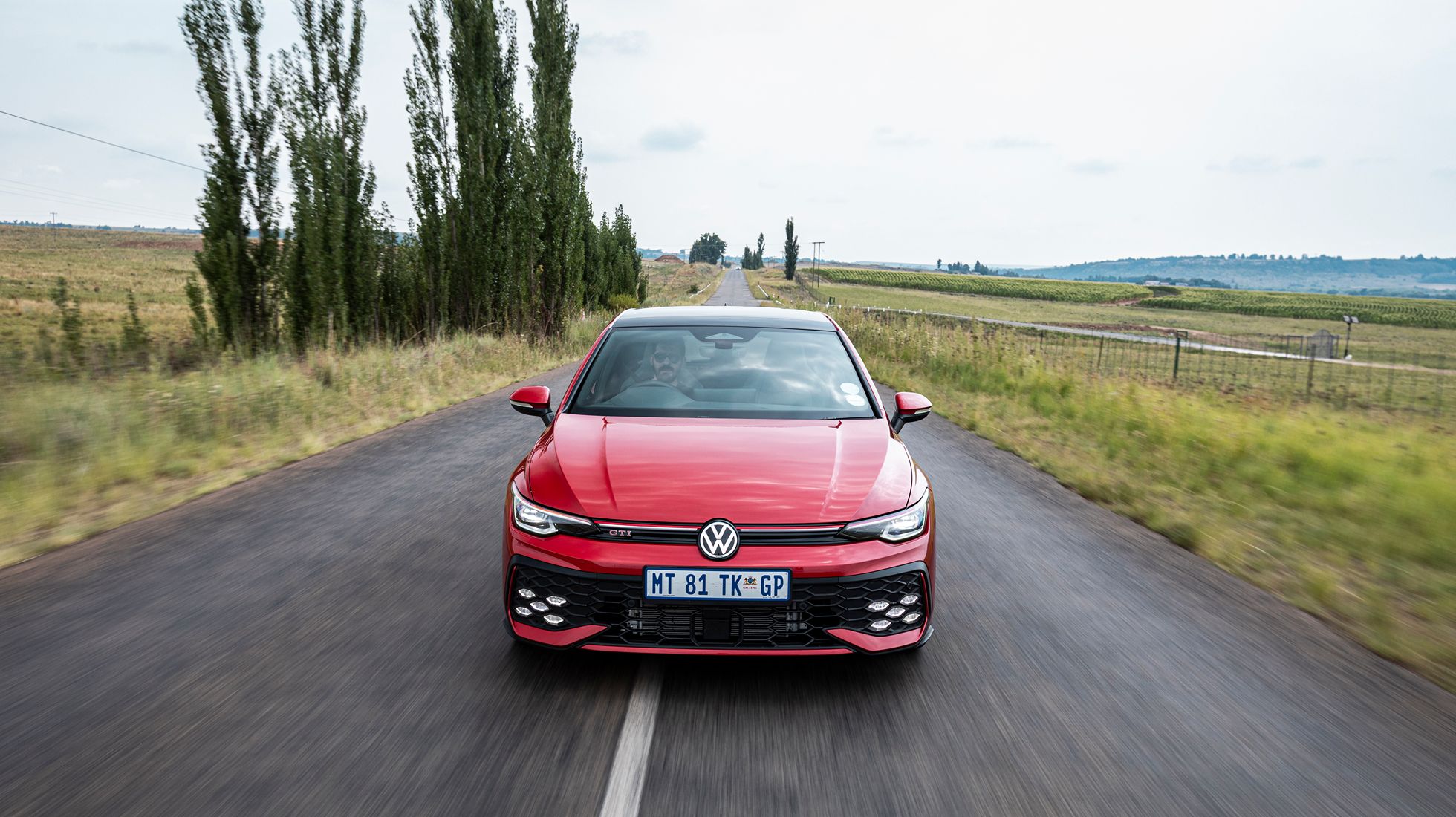
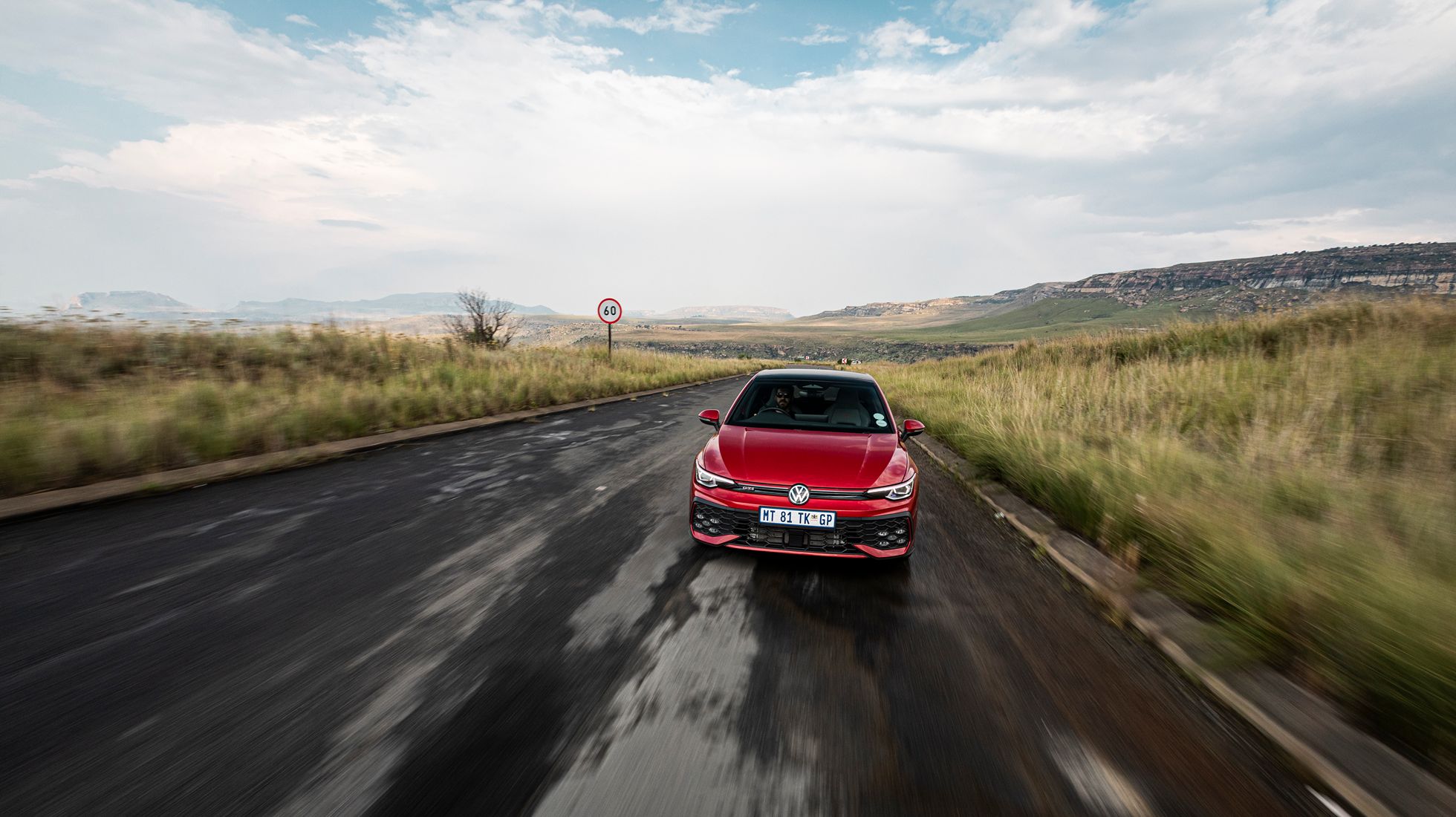
The sweep opened up, and for that brief moment, I could see well into the immediate future. The future looked devoid of traffic and bearing the gift of a near-perfect surface. Said perfect surface still glistened following a bout of rain as my right foot effected an upwards blur of the digital speedometer. I am doing something I probably shouldn’t be doing, on a saturated surface I shouldn’t be doing it on, in a car that six months ago didn’t look like it’d be doing its local rounds. And I am grinning like an idiot.
Let me back up. For the better part of two years, the Golf 8.5 GTI existed in South Africa in that void between “it could happen” and outright pessimism from Volkswagen Group Africa. And yet, the appetite for 8.5 existed, albeit a cautious one following what was, in the kindest of terms, a Mk 8 that was too well buttoned up. But a fuel particulate filter that couldn’t stomach our locally pumped 95 octane was cited as the hold-up for what promised to be the GTI’s saviour. And while the rest of the world was driving said 8.5, we were stuck with the 8, which, for all its competence and sleek lines, lacked the charisma that should so ooze from the hallowed GTI.
The 8.5 delay especially stung locally, given South Africa’s love affair with the GTI. It’s a car many South Africans identify with. Or reminisce about. It’s a car many South Africans, myself included, dreamt of one day driving or, had illegally-downloaded, explicit-adjacent images of. Guilty on that charge. In a sense, it democratised performance. It gave enthusiasts permission to talk about chassis balance and throttle response without needing the supplemental zeros that typically only come with a trust fund at my age.
VW SA has since cracked the emissions puzzle that perplexed the best and brightest minds, allocated 300 units for local sale, of which we received a pre-launch model. The subtext, though, was clear. ‘You’ve complained enough, you’ve mercilessly lambasted the 8, now shut up and drive it.’ Subtextual message received. Loud and clear.
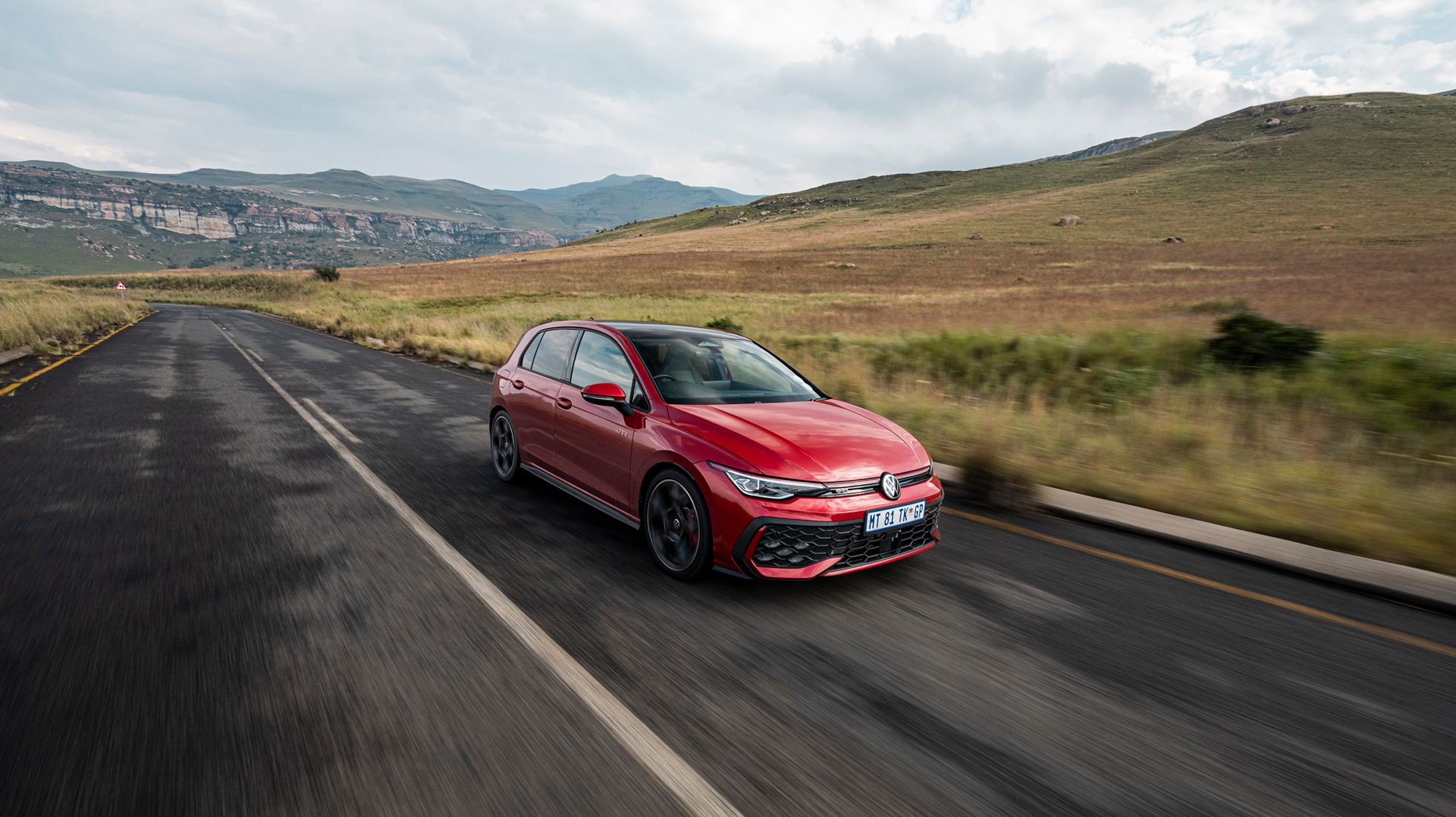
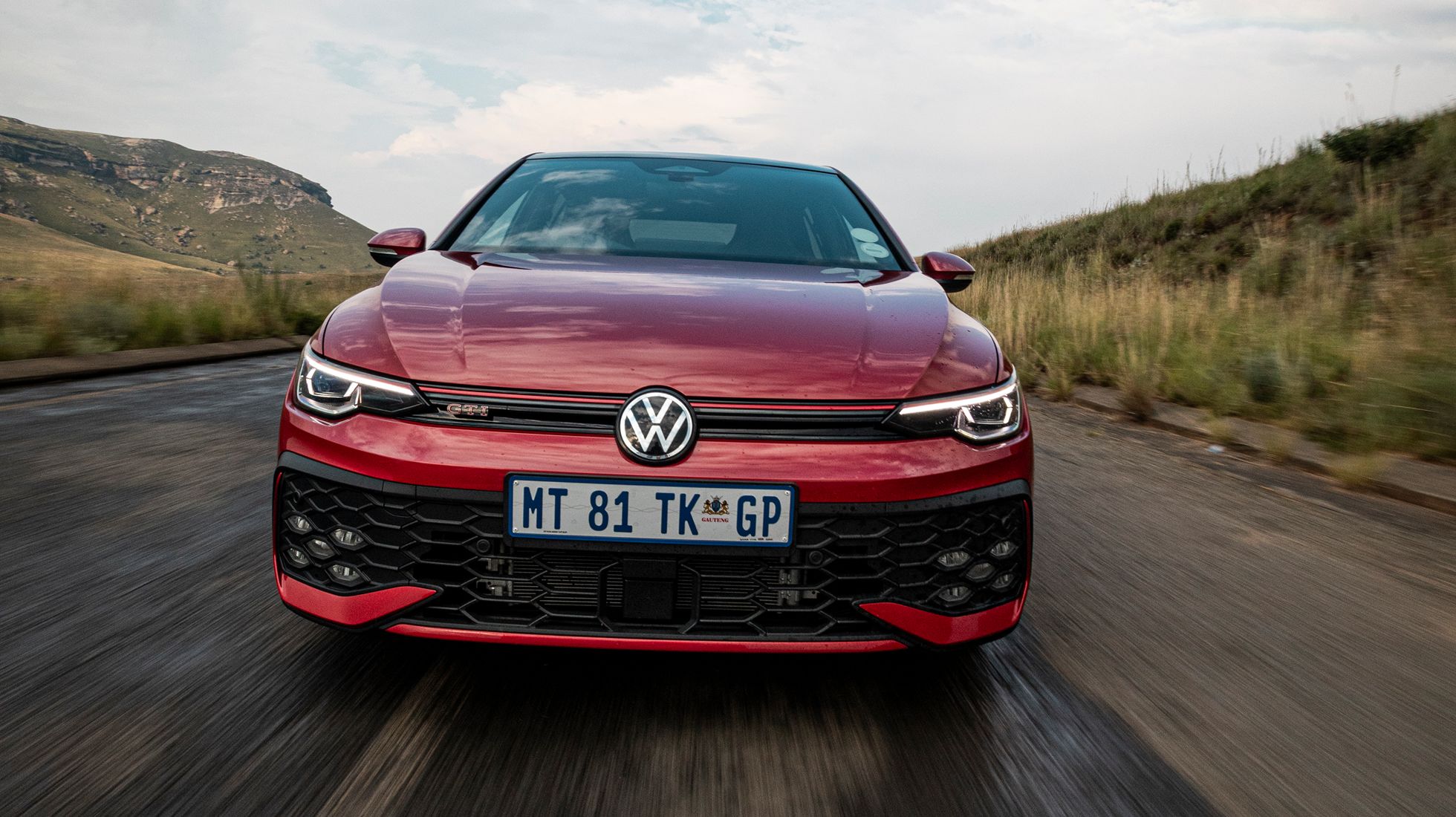
Under the bonnet sits the staple EA888 Gen4 2.0-litre 4-cyl turbocharged engine, which first saw production in March 2008 and has since serviced Mk6, 7, 7.5 and most recently the 8. In its latest, unleaded-accepting tune, it produces 195kW and 370Nm of torque. That’s 15kW more than the outgoing model. Marginal then? An increment… a mere tweak. For R238,700 more than the price of what the 8 packed when it launched? Call it what you will, but here’s the thing about that affixed point-five at the end of the name. It’s considerably more than the sum of its on-paper increases.
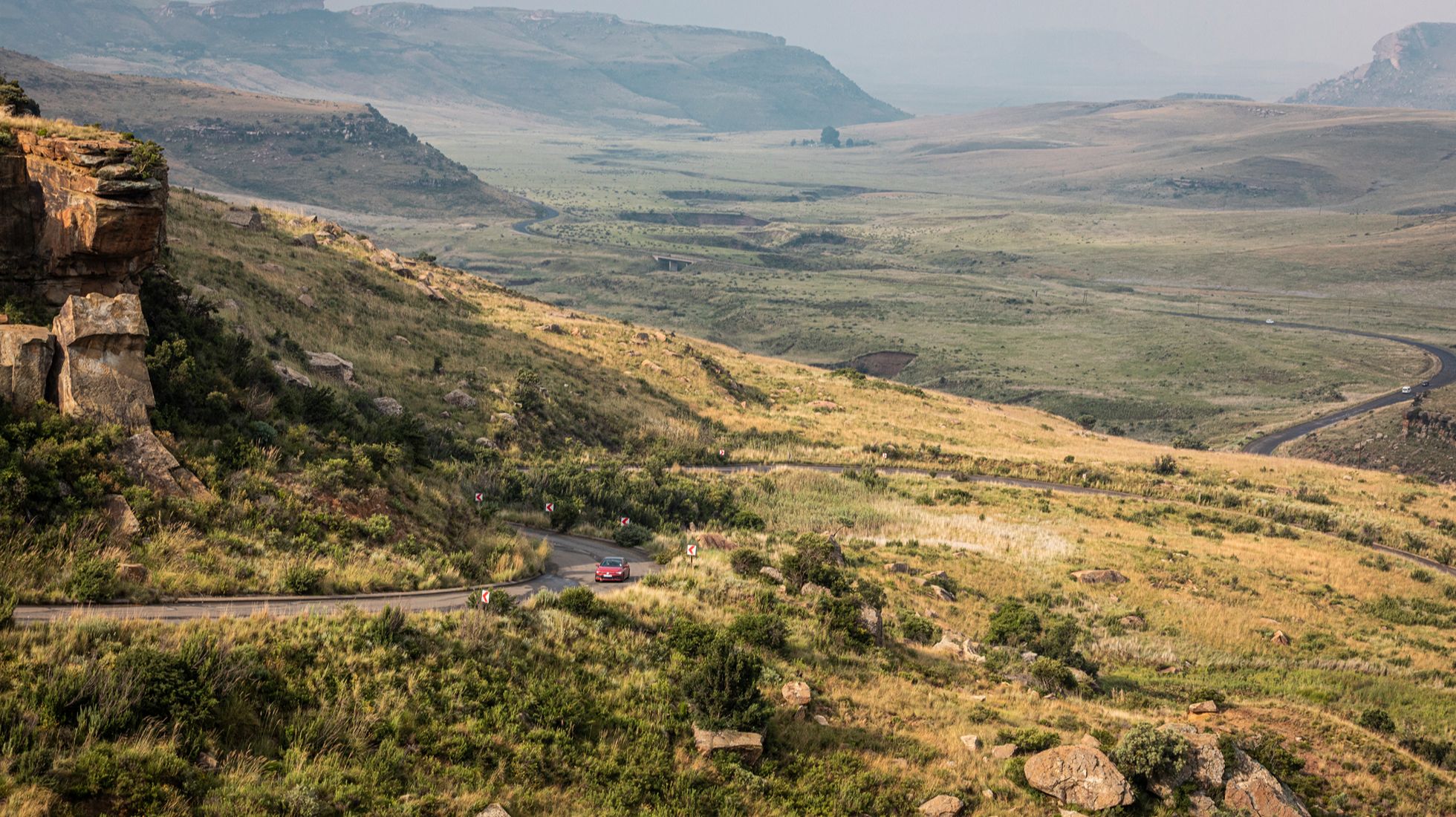
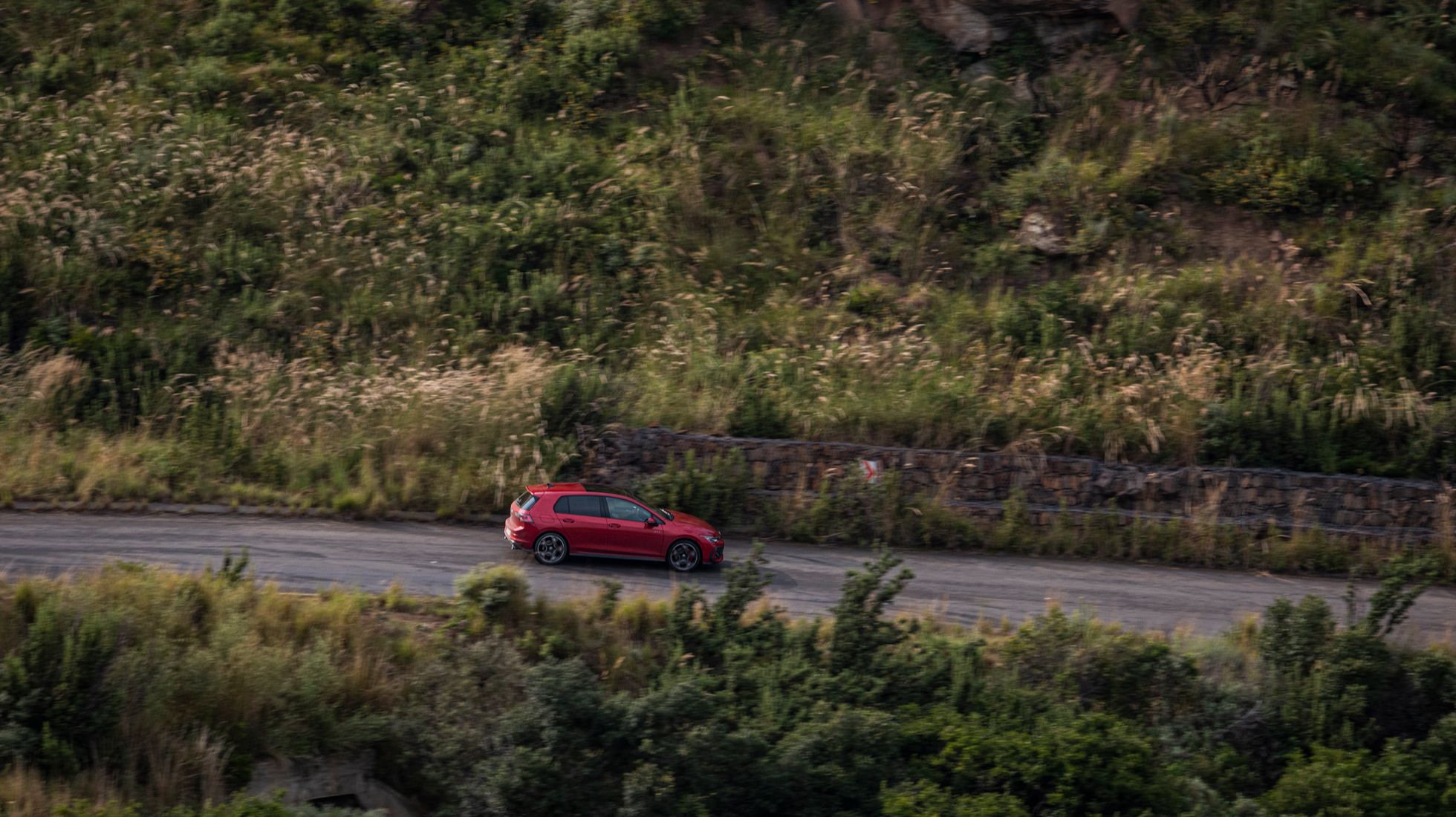
For one, the sprint to the universally accepted 100km/h benchmark of excellence is 0.5 secs quicker at 5.9 seconds. In isolation, that added poke doesn’t mean much. In practice, cresting a rise with sandstone valleys filling the windscreen, slotted into the third cog on the 7-speed DSG, that power conviction translates into plenty of forward sensation. That half a second becomes less elapsed time and more a spectacle of progress. Of a hell-bent determination to right the wrongs of before. The rear starts to emit just enough pops and burbles to formally set it apart. Not quite the 7.5’s sheer rips that sounded like it was tearing the air molecules a new one, but something more representative of what I want to call a polished character. And that word ‘character’ is important here. It’s indicative of what any bona fide petrolhead craves, and probably the reason why you bothered to pick up this magazine, but it points to soul. It’s a tangibility. It’s either there or it’s not. In this case, I have a nagging suspicion that it’s engineered into its very being.
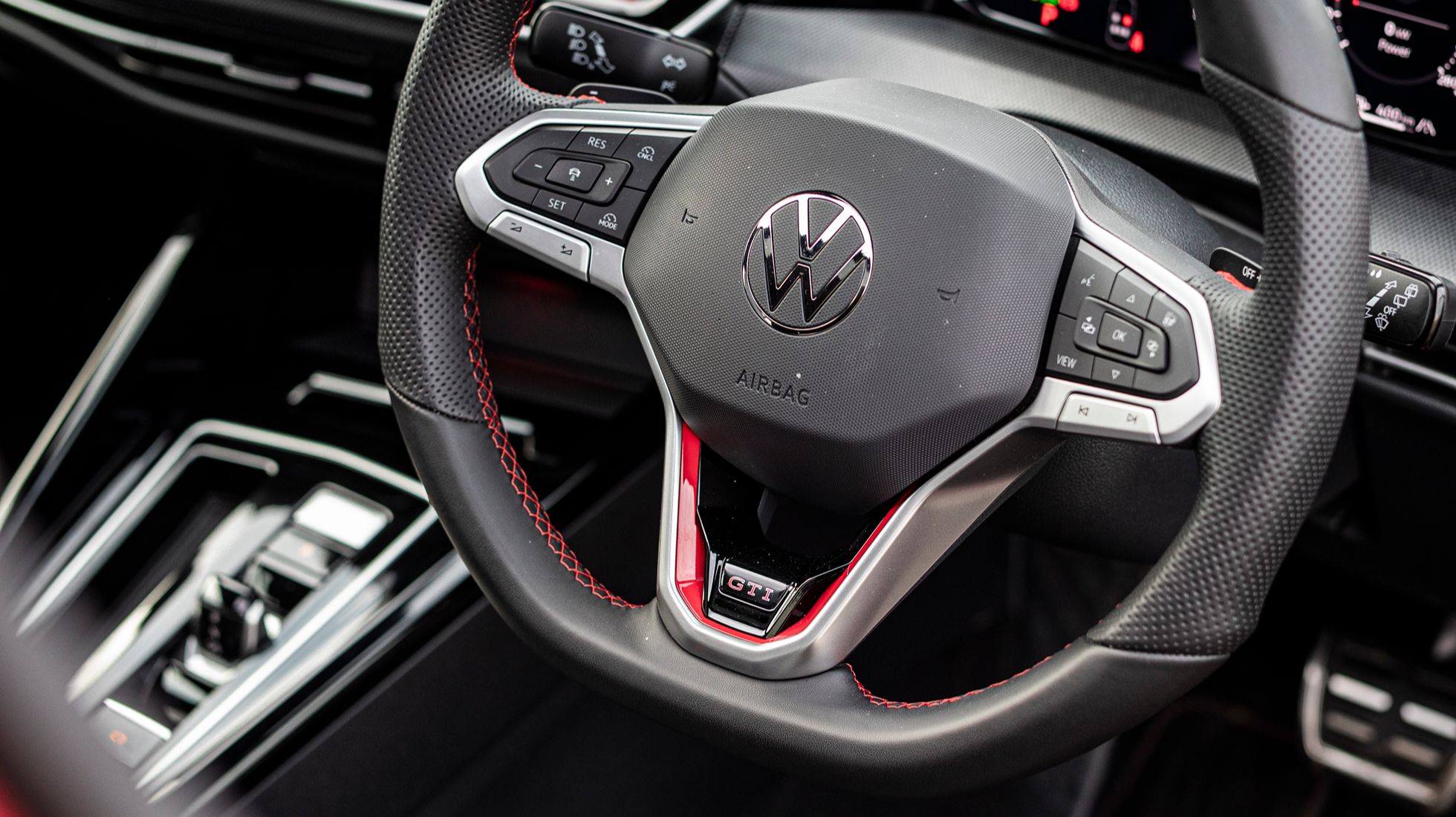
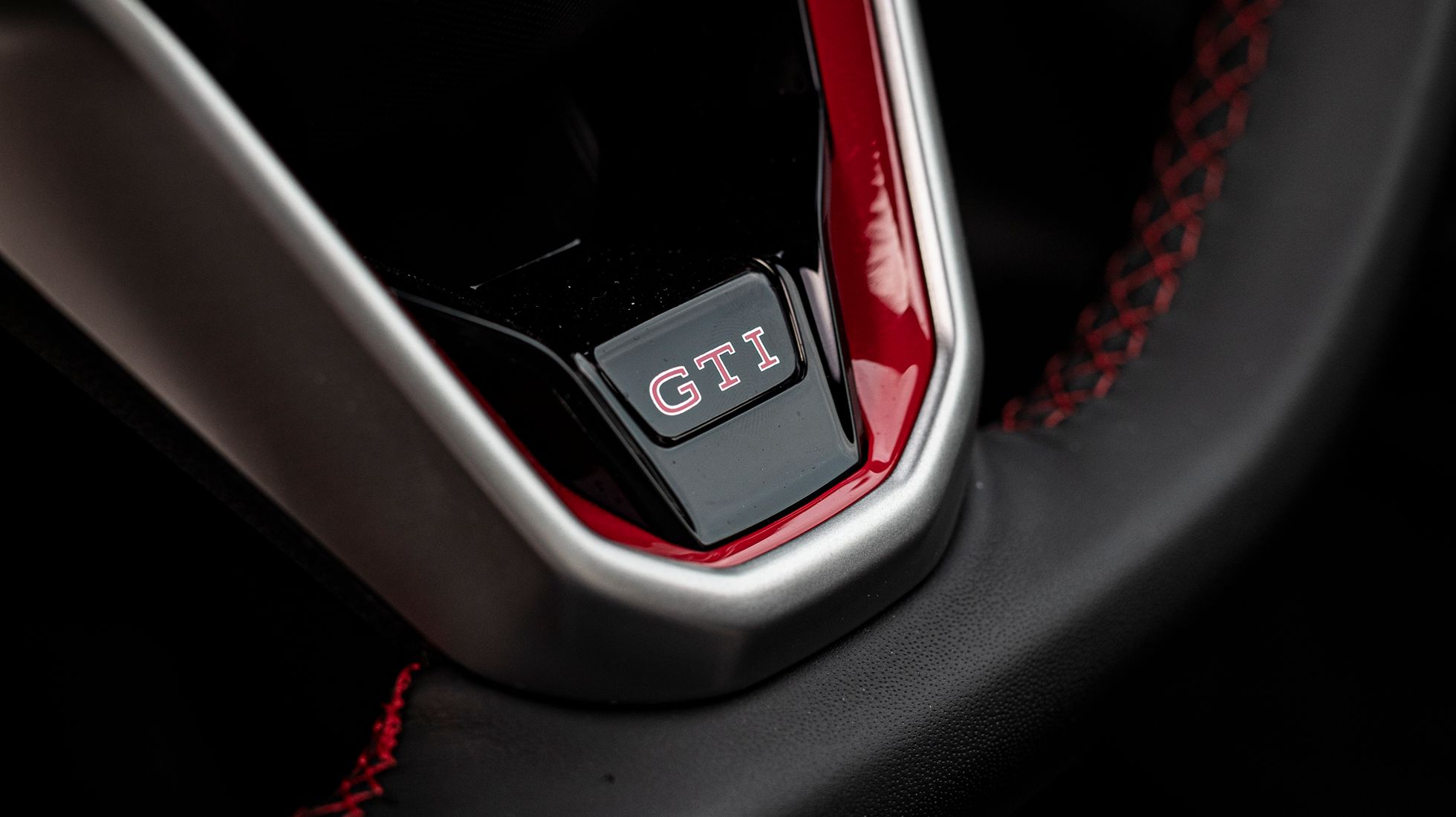
The 8.5 is doing something the 8 never quite mastered. It’s communicating with me in no uncertain terms. Marketing typically pens this under an umbrella called “driver engagement”, which is vague at best and entirely void of nuance. The opposite is true here. This communication from the car is a continuation of Karsten Schebsdat’s work. His know-how includes the fabled GTI 7, and until recently, his job purview included obsessing over driving dynamics at VW’s GTI division. This feels like the GTI he’d have wanted all along. Sven Bohnhorst, of Bugatti test driver repute, has since taken up the baton. It shows here. The perforated leather steering wheel chats granularly, and the feel accurately maps the road’s whims. Added to that is a progressive steering ratio, rather than a fixed-ratio rack, with the system actively adapting to real-time driving conditions. It’s not an entirely new system, but the calibration has been refined whilst also being loaded with new software.
I can’t begin to understand the lines of code and binary sequences that culminate into a tangibility such as “feel”, but I do understand that latter bit. It feels keener on turn-in. It’s never darty, nor is it nervous. The car effortlessly loads up the outward wheels, it turns in with conviction and plasters an appreciative smile on your mug. All the while, the front-axle-mounted XDS electronically controlled diff regulates spin on the inside wheel to help curb some of that understeer that typically plagues lesser front-wheel-driven cars. The ultimate outcome is that it feels at least 100kg lighter than its ballooned 1,471kg heft would otherwise suggest through any measure of a fast sweep. It’s in large parts the DCC (Dynamic Chassis Control), now standard on local GTIs, doing its job here. It reports hundreds of parameters back to the Vehicle Dynamics Manager, which, in turn, coordinates that aforementioned diff and steering response with the shock absorbers. In real-world terms, our photographer was clutching his Jesus handle. I mumbled something, still grinning like an idiot, and the GTI just absorbed my inputs through its chassis.
The 7-speed DSG, too, has found a measure of redemption deserving of at least a mention. It’s always been good on a technical level. If its criteria of excellence is geared toward translating engine speed into wheel rotation, it does a phenomenal job. It’s responsive too, and while I can’t directly compare it to its numeric predecessor on account of having last driven it half a decade ago, I can objectively say it’s responsive in its upward trajectory. Left to its own devices on corner exit, it perfectly hooks the right gear in the torque’s ideal precinct as the numbers once again blur skywards. For the most part, it’s accurate enough that driver input isn’t even strictly necessary. There is a case to be made for manually flicking the plastic paddles up and down where repeatable consistency is needed, like a race track, but here, navigating the sweeps gifted by natural rock formations, it’s hardly necessary. It’s far from the mechanical, rod-and-hand-operated bliss you’d get from a manual, but considering that it’s entirely defunct from the GTI and Golf relationship, there’s no real need to dwell on that.
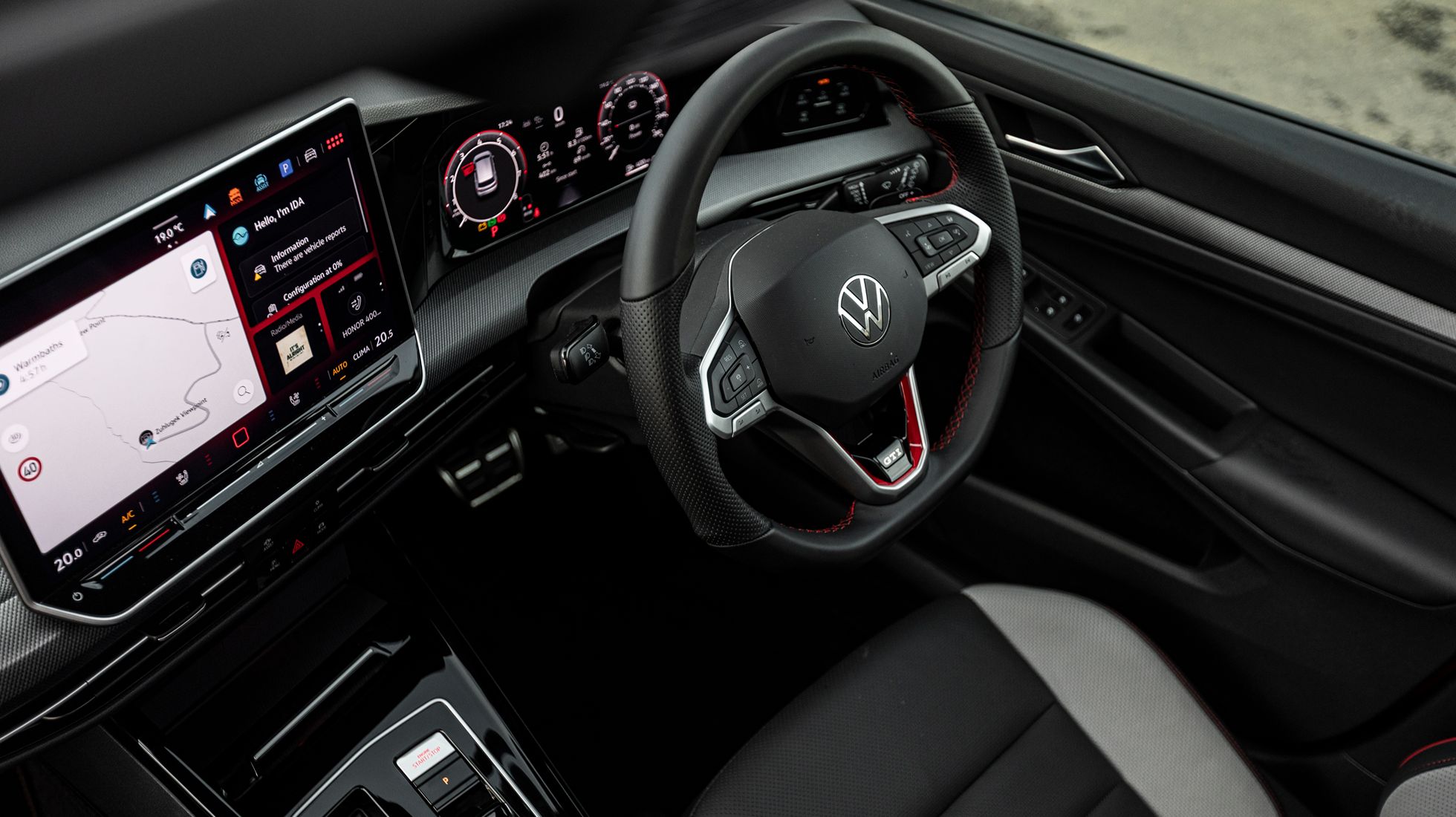
So far, then, it’s a mostly overwhelming sense of renewal for Golf GTI. Staying on theme, the 8’s biggest offence was its cabin with touch-sensitive everything. If something was adjustable on a linear scale of up or down, it was operated using haptic capacitive buttons. Less than ideal for climate settings, but forgivable considering you can set it and forget it. Volume, though? On the steering wheel? With haptic sliders that offered the option of overwhelming silence or apocalyptic trumpeting through the sound system? Let me paint you a picture: Some years ago, plummeting through a series of technical bends, a part of my hand inadvertently touched the steering slider, which transformed the once-muted music into a live concert-adjacent sound explosion. Mid-corner. True story.
But VW has listened to the collective groans and re-adapted to tried-and-tested interactive points. Yes, the climate settings are still haptic, but importantly, the steering-based volume setting has reverted back to a normal, tactile, pressable button. A small revision in the grand scheme of things, but an apt metaphor for this car. A moment of silence for whoever’s entire job description hinged on designing and integrating capacitive sliders on Wolfsburg’s steering wheels.
The screen has grown to 12.9 inches from the former 10.25-inch display and now features newer, shinier graphics. Aside from generous references to GTI, the cabin now looks almost indistinguishable from other, more mass-market VW products, but we expected nothing less. The same button cluster from the 8 hides underneath the screen and still feels like an afterthought with crucial-to-GTI functionality like Drive Modes a mere finger slip away from Park Assist. Ask me how I know…
But I could go on here about modes, interfaces, and safety systems, of which there are plenty. I can complain about an overbearing lane-keep assist system or an overprotective adaptive cruise control. I could suggest that no self-respecting GTI buyer lets safety, or a lack thereof, sway their decisions. I could then conclude that it’s the driving that matters, the character, the ability to make you froth at the mouth, which is the very essence of GTI, albeit briefly lost at one point in time. But that wouldn’t be entirely accurate. It’s all that, yes, but the Golf GTI is also as famed for its completeness as a hatchback as it is for its ‘engagement’ or its vrrpha. The point here has never been to be the fastest hatchback. It’s also not the best handling hatchback of its generation. Many would argue, but again, not entirely the point.
The point was always about accessible character. The appeal was its breadth as a performance car. Said character was missing from the 8 somewhat, but its span of usability? Undeniable. As for the Golf 8.5 GTI, it has all that. It has soul and usability is baked into its very being. One can argue that at R908,000 it’s far from being accessible, but then again, progress costs money, and there’s plenty of just that to be found here.
I couldn’t shake the feeling that this wasn’t just progress for the sake of developing future GTIs as we know it. This, the 8.5, was for the people. For the enthusiasts who live and breathe Golf GTI and can’t shut up about it. It was Volkswagen returning to form in a time when progress is defined by features and not feel. A time when we may well be bidding this exact combination of turbocharged 4-cylinder and front-wheel-drive farewell. The 8.5 is almost certainly the last of its kind, with overwhelming evidence pointing to an all-electric Mk9 from 2028, and it’s likely the last bow following a now-50-year legacy of GTI.
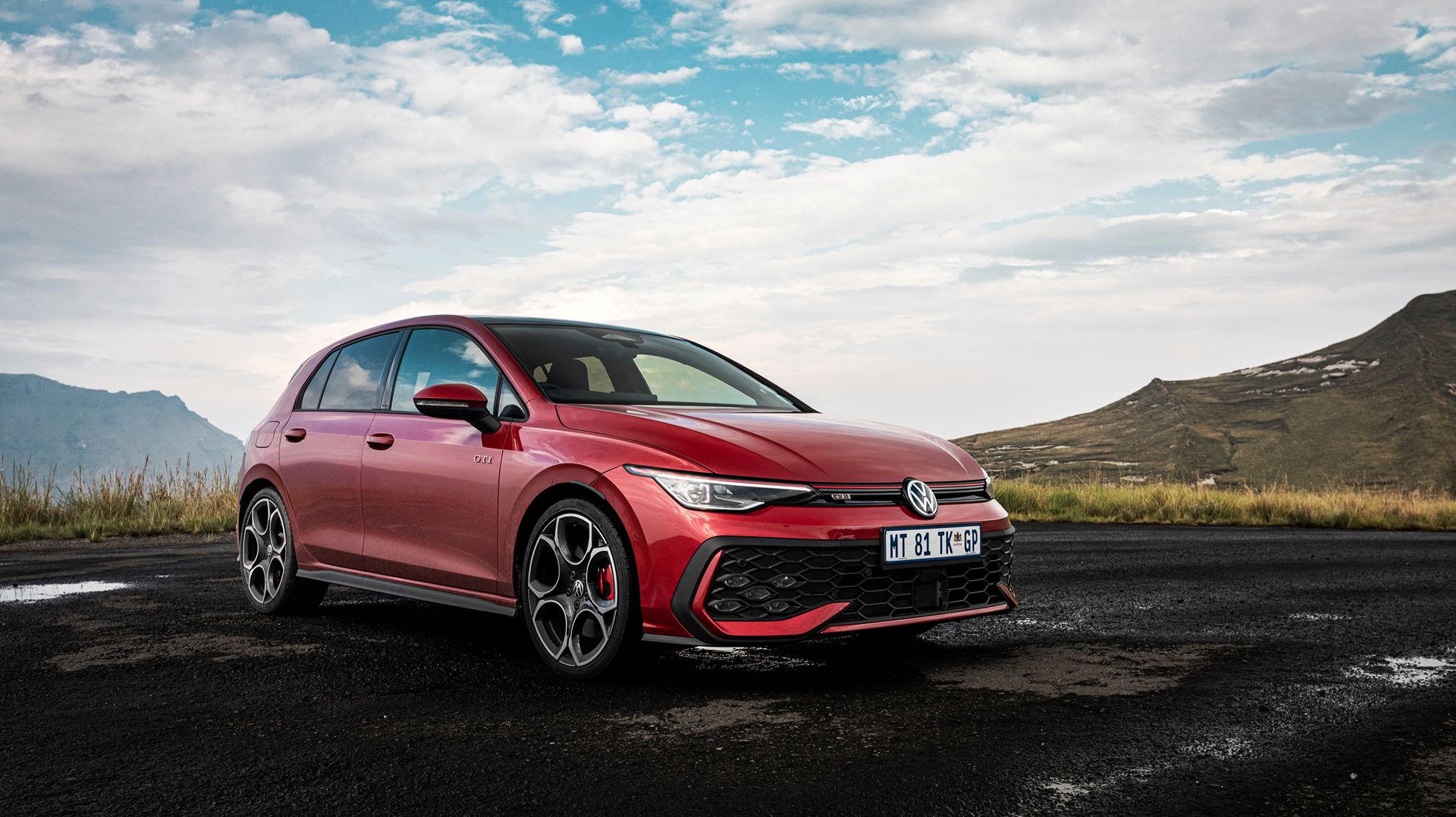
And somewhere on a right-hand sweep are wet tyre marks that belong to a Kings Red Golf GTI we thought would never arrive. It eventually came. It played its part perfectly, quirks and all. And if this is how the GTI says goodbye to the internal combustion engine, an engine that has come to define greatness, it’s not with a whimper, but a car that’s the furthest thing from a half-measure. Diff working, foot-planted and exhaust grumbling with character… I’m still grinning like an idiot.
| Engine | Power & Torque | Transmission | 0 – 100km/h | Top Speed | Fuel Consumption | C02 |
| 2.0-litre 4-cyl, turbo | 195kW & 370Nm | 7-speed DSG | 5.9 secs | 250km/h | 7.4l/100km(tested) | 161g/km |