
First Drive: Renault Trafic
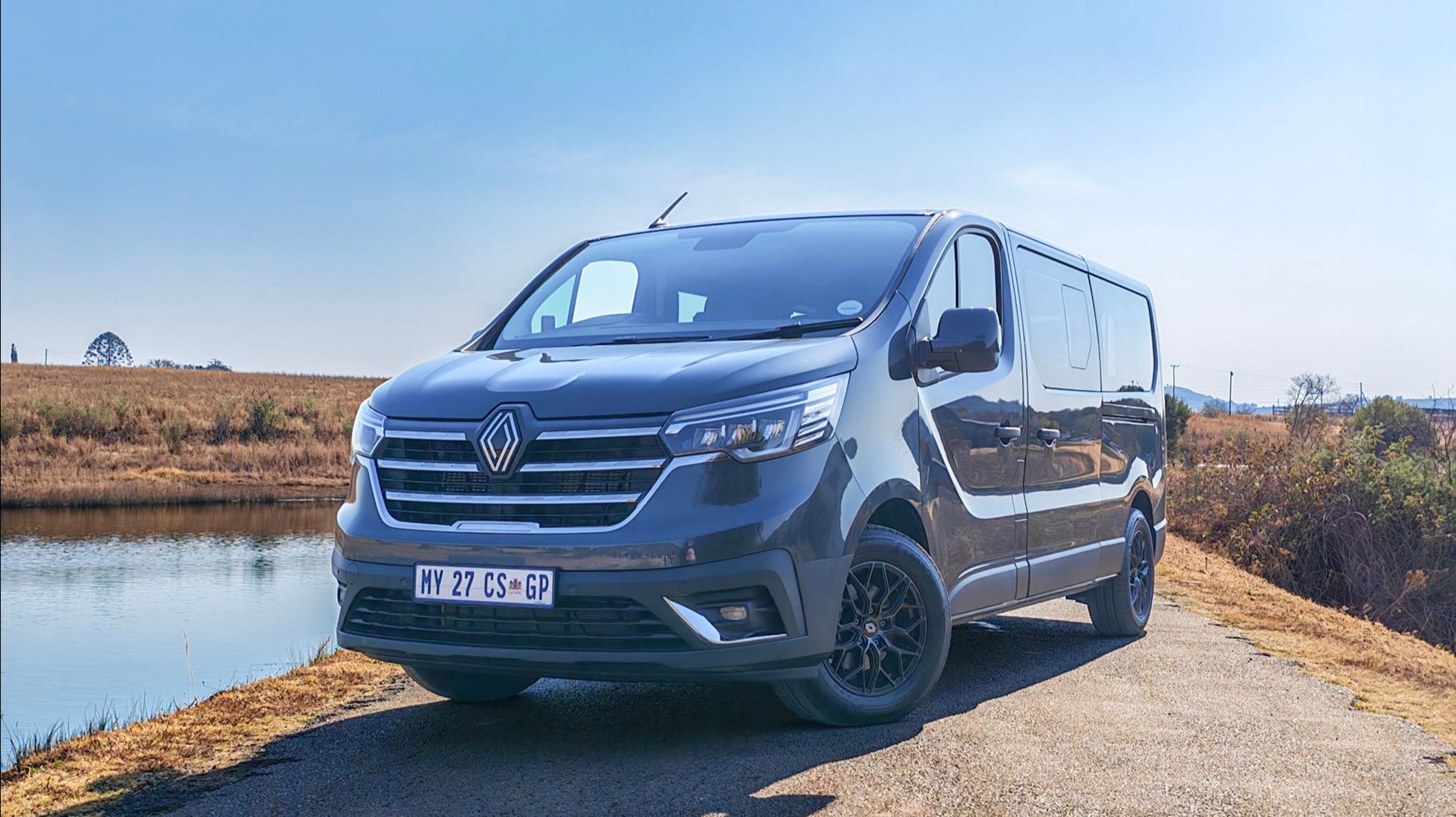
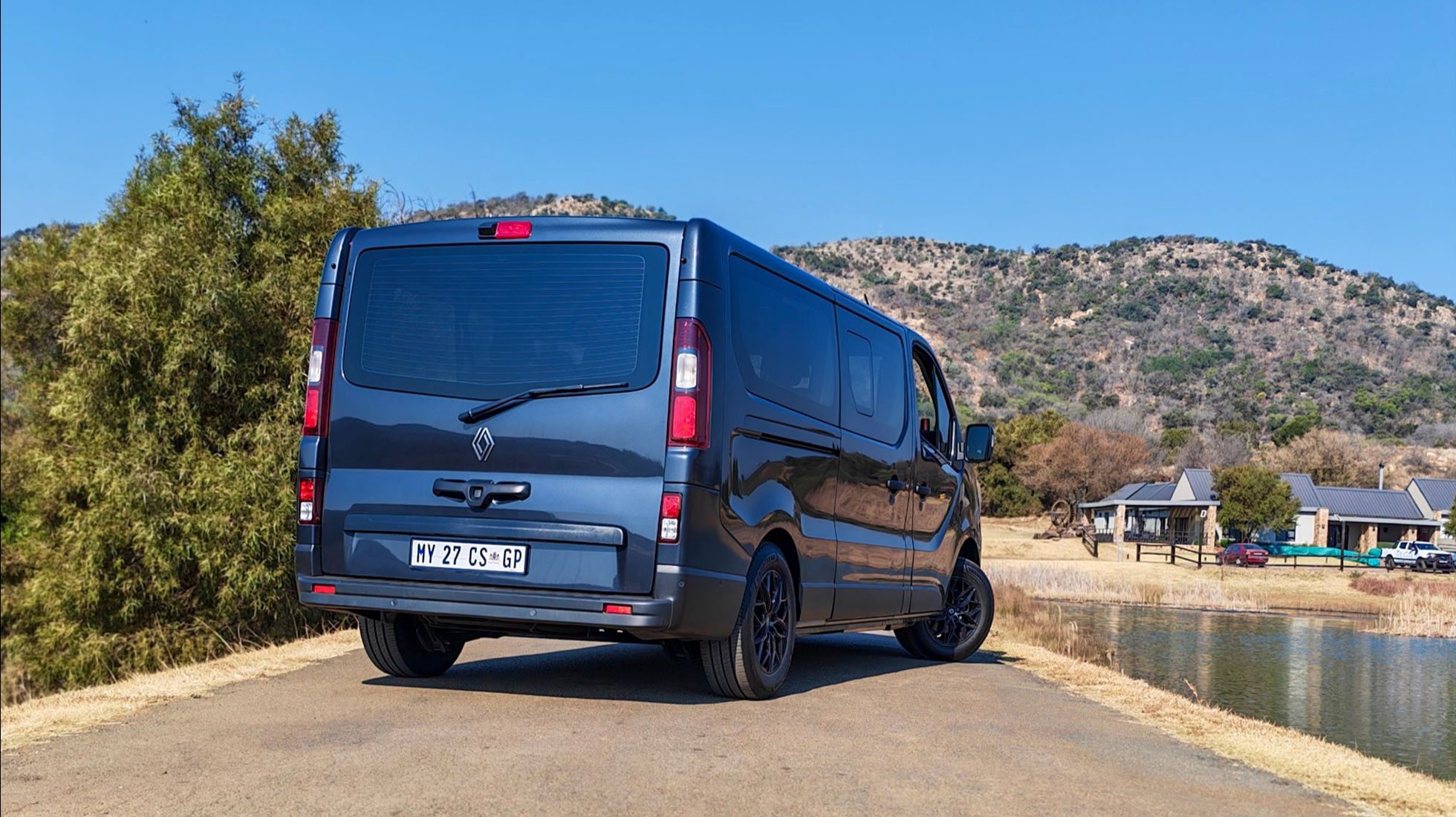
A lot has happened locally since Renault last launched a passenger version of its Trafic van some two decades ago. Renault pulled the plug soon after and only returned in 2022 as a ‘business support vehicle’ or panel van… if that’s what you prefer to call it.
Renault isn’t trying to out-luxury or out-digitise any of its competitors here and instead relies on the value-for-money pitch. Also, the French brand has no qualms about admitting that it’s looking to place its chips in entry-level segments (think Kwid, Triber and Kiger) to weather the threat of an increasingly bloated mid-tier space. The Trafic adopts that same approach (sort of) by offering buyers a simple, few-frills passenger van with passenger van bits, bobs and practicality.
Renault Trafic space and seating: How big is it?
You get 5,480mm of length (30mm longer than Ford’s Tourneo long wheelbase offering), 1,974mm of height and a 3,498mm wheelbase (pretty much on par with the Tourneo, which is 2mm longer).
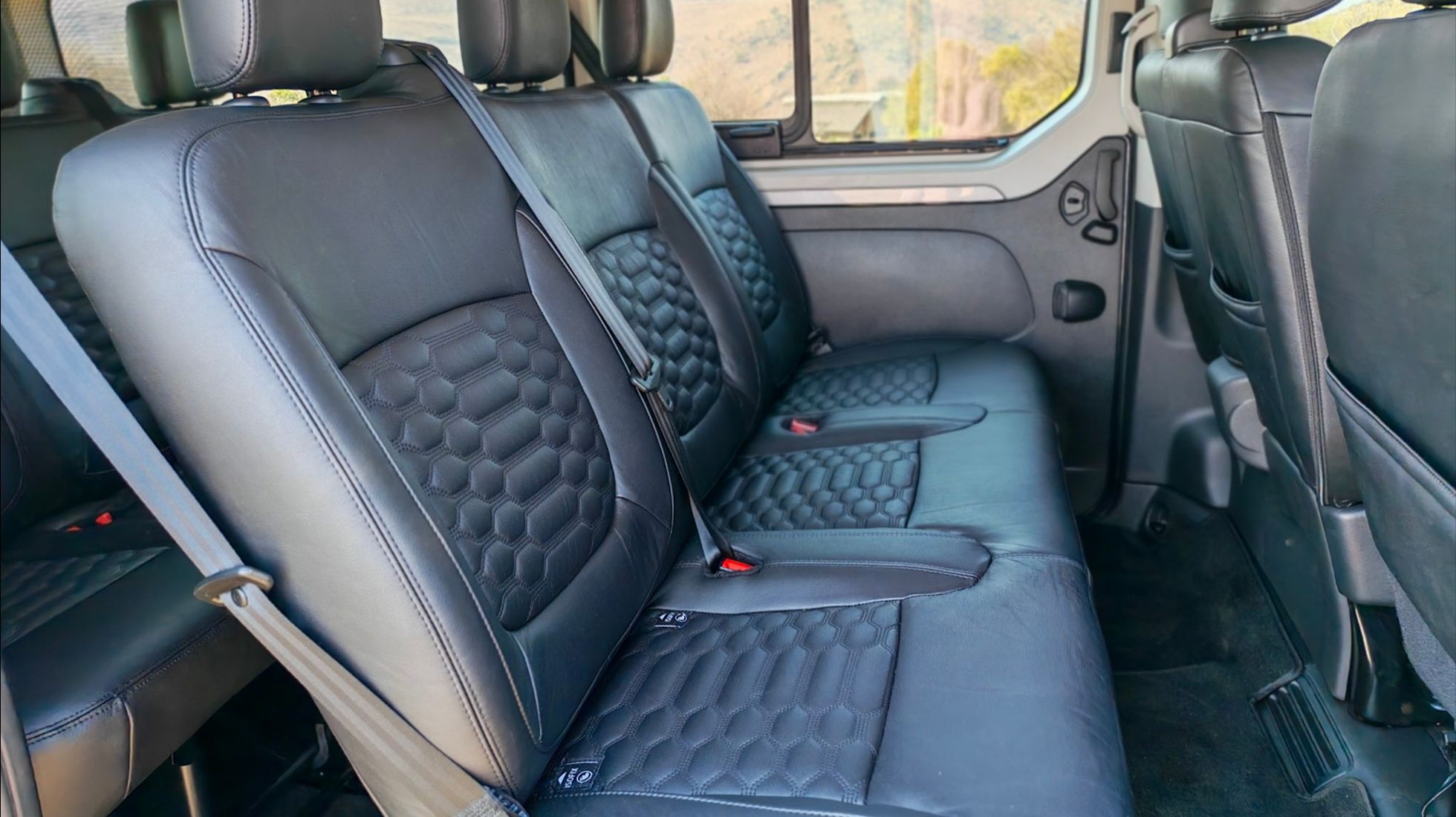
In terms of seating, it’s available as either a 6-seater with 3,570 litres of boot capacity or a 9-seater configuration which ups the seat count but absorbs some of that boot space to the tune of a still-impressive 1,890 litres.
Still on the topic of space, and in typical Renault form, the Trafic offers 84.8 litres of in-cabin storage for small items, including a 6-litre central dashboard storage space and a 54-litre under-seat storage drawer.
It has a sliding door on each side, with the Trafic offered with a choice of an upward-opening tailgate or swinging barn doors, the latter of which Renault says are available at an additional premium.
And the interior comfort?
As mentioned earlier, the Trafic doesn’t rely on spec-sheet bloat to get bums in seats and instead relies on a value-first approach.
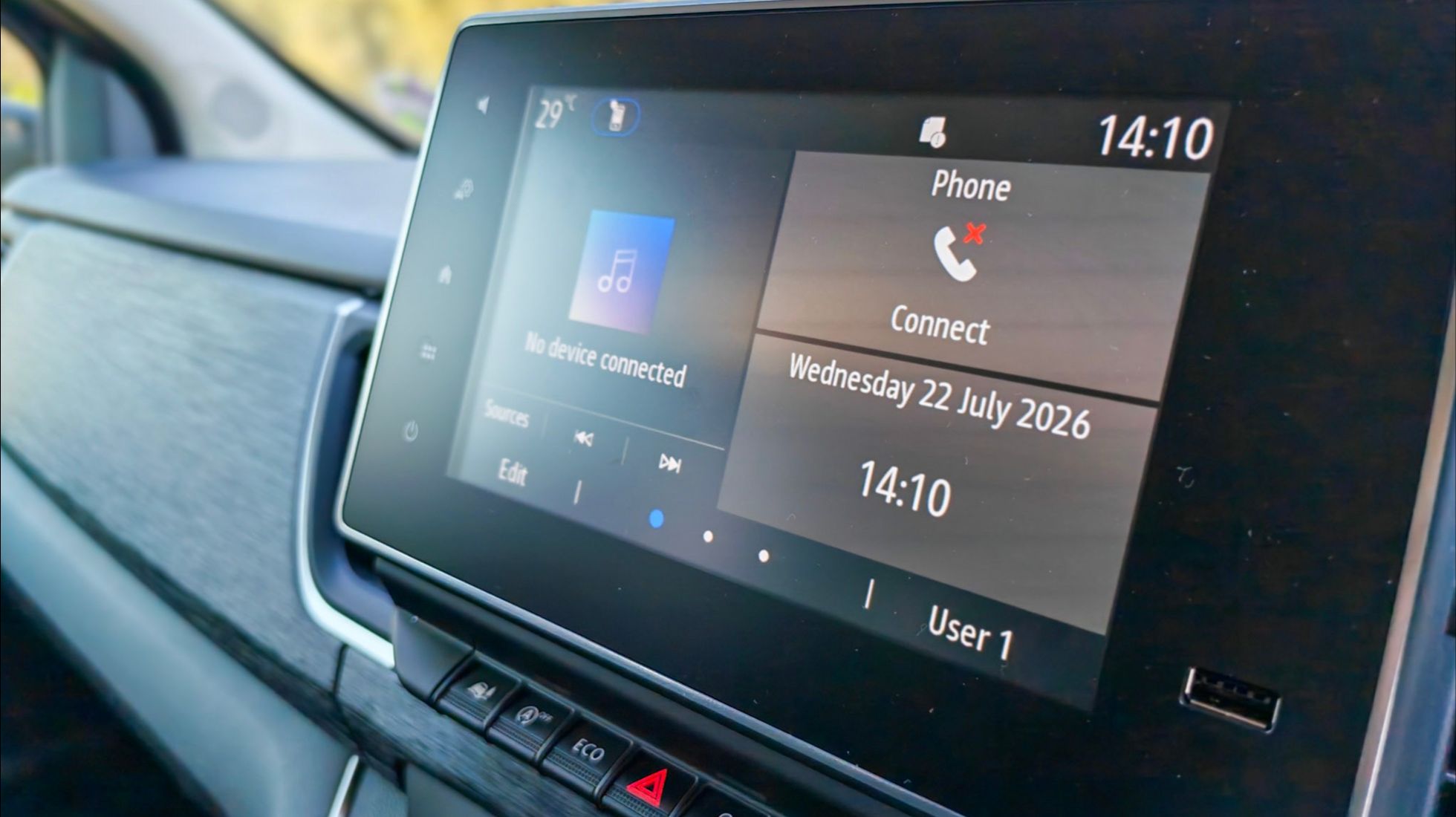
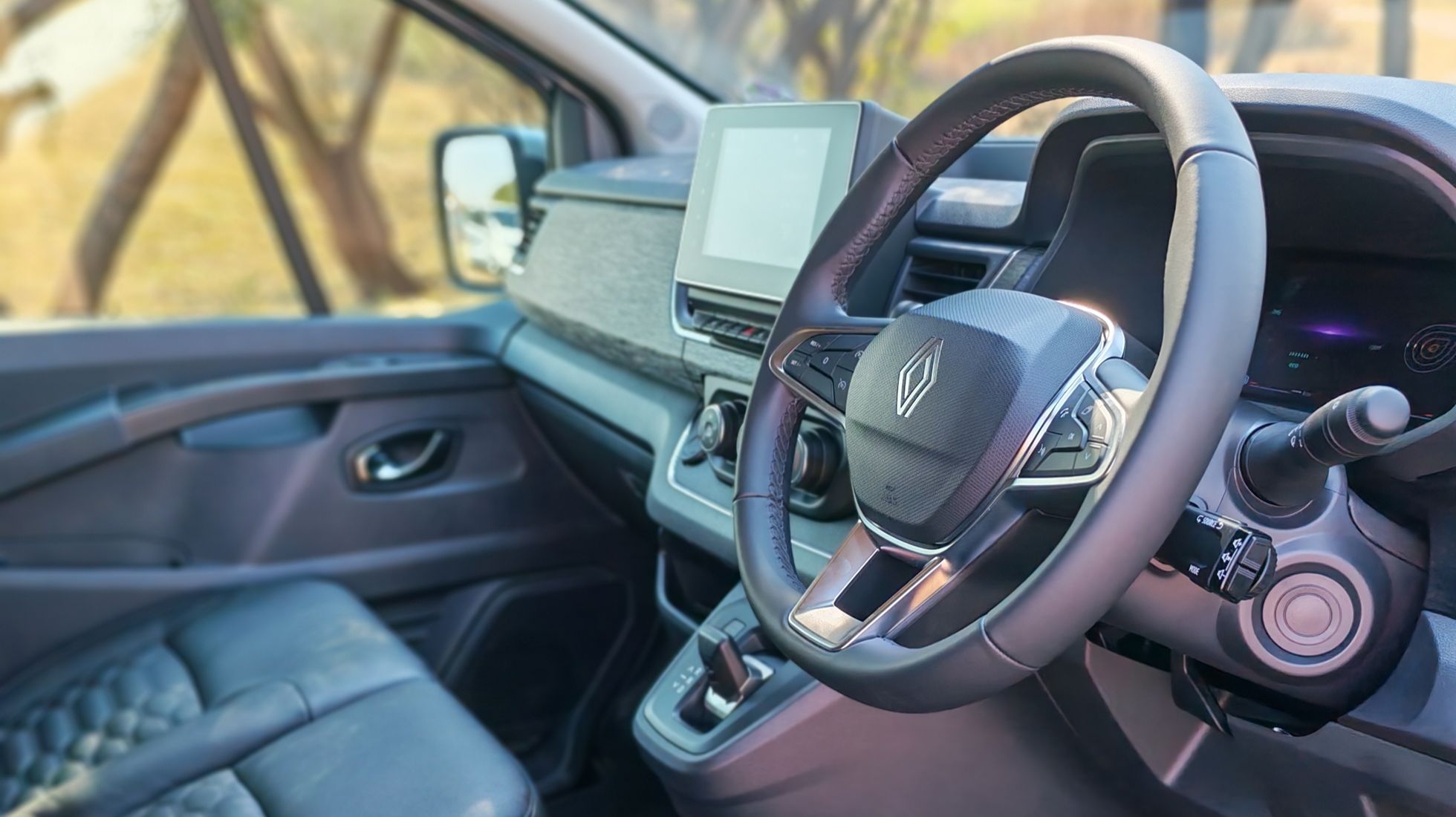
The range-topping Techno+ model we drove on launch is equipped with an 8-inch infotainment screen with Android Auto and Apple CarPlay capability, a reverse camera, a scrollable digital driver’s display, a wireless phone charger and a heated seat for the driver.
The seats are also draped in a model-specific patterned woven leather in Techno+ trim, while the mid-range Evolution+ gets more basic leather upholstery. At the more cost-conscious end, the entry-tier Evolution model makes do with cloth seats.
What powers the Renault Trafic?
A 2.0-litre turbodiesel that’s good for 125kW at 3,500r/min and 380Nm from a lowly 1,500r/min drives the front wheels via Renault’s EAG9 9-speed automatic.
Since this is a van, and it’s built to accommodate up to nine people and some luggage, that torque figure should do the hard sell here. With five people onboard, the 380Nm on tap proved to be enough to keep up with traffic, but I do suspect a fully-laden Trafic may heave during demanding overtaking scenarios.
For the most part, though, it’s comfortable and easy to drive, and the gearbox does an admirable job of swapping gears during normal driving conditions. It also returned respectable fuel consumption figures of 7.3l/100km during my stint behind the wheel.
Is the Renault Trafic expensive?
Relative to some of its market competitors, yes, it’s on the higher end of the price spectrum. The Trafic passenger range starts at R979,999 for the Evolution, while the Techno+ will set you back R1,049,999. The middle-order Evolution+ costs R1,016,999. For reference, the similarly sized Ford Tourneo Custom LWB, which is the opener in Ford’s passenger van line-up, costs R1,117,500. VW’s Transporter auto passenger 8-seater, on the other hand, starts at R933,500, while Hyundai’s Staria 9-seater is available for R939,900.
 Verdict
The Renault Trafic is first and foremost a people carrier, and considering that job title, it’s outstanding at doing just that. The seating comfort is good, the legroom in the second and third rows is decent, and the cabin has enough noise insulation that conversation at 120km/h doesn’t turn into a shouting match. Don’t expect too many plush furnishings, though, since the cabin doesn’t try to impress so much as getting on with that aforementioned job of lugging around people.
Engine & drivetrain (all trims)
| Engine | 2.0-litre turbodiesel |
| Power | 125kW at 3,500r/min |
| Torque | 380Nm from 1,500r/min |
| Gearbox | EAG9 9-speed automatic, front-wheel drive |
| Fuel consumption (tested) | 7.3l/100km |
| Boot capacity | 3,570 litres (6-seater) / 1,890 litres (9-seater) |