You’ll have to look closely to really spot the changes on the facelifted Isuzu D-Max, but they’re there. I’ll start by making the bold declaration that Isuzu may have done just enough to ward off some brands looking to reclaim market share, while others are looking to capture some of the sales success it’s enjoyed since the start of 2026.
Why mess with what works?
Overall, the D-Max is holding steady in third place on SA’s bakkie-selling charts, even churning some 3,000 units in March. But Ford, not to be outdone, fitted a 2.3-litre petrol engine to its range and added the Sport line, all while Toyota is readying to launch its all-new (not facelifted and spruced up) Hilux.
Meanwhile, Chinese manufacturers (read: GWM, Foton, LDV, BYD, and recently Changan) are looking for any chink in the armour of the top sellers to exploit. All of this is to say that Isuzu cannot afford not to remain relevant in the most competitive segment in South Africa.
Does it look different enough?

Yes, but without sidelining its core buyer. The headlight design is arguably the most obvious change, with the DRLs now positioned above the headlamp cluster on LS, X-Rider, LSE, V-Cross and AT35 models, with the updated model also receiving a bonnet bulge, a redesigned grille (featuring improved aerodynamics), new foglight surrounds, which Isuzu says creates a floating effect, and newly-designed 17 and 18-inch wheels.
The rear receives good-looking combination taillight clusters on higher-spec models, a slightly redesigned tailgate – which supposedly has a small effect on aero – while the badges have also been repositioned. In isolation, it’s nothing major, but collectively these changes do enough to freshen the overall design, which was showing its age.
Is D-Max’s cabin up to date?

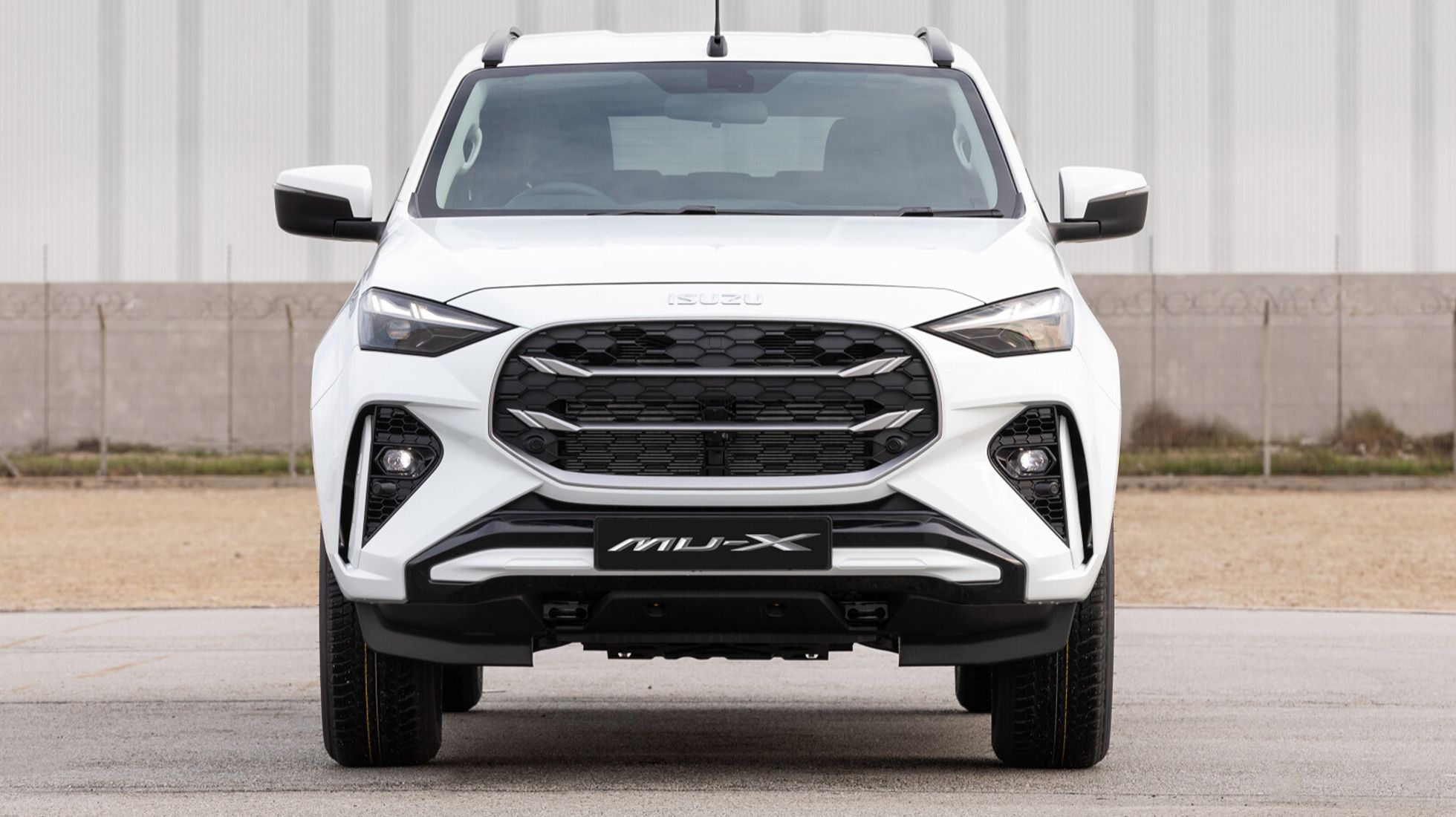
The cabin of the D-Max has always been its Achilles’ heel. Even in its plusher V-Cross trim, the previous generation looked a generation or so behind its competitors. Isuzu narrowed that gap considerably, particularly on X-Rider, LSE and V-Cross (with the latter largely extending to the AT35 spec). The instrument binnacle on these models gained a 7-inch digital screen similar to that of the mu-X, which combines with the still-analogue tachometer and fuel gauge. It’s a small update in the context of some other important changes, but one that helps elevate it into the mid-2020s.
The D-Max takes a further look at the mu-X’s homework with the LSE, V-Cross and AT35 now receiving a central 9-inch infotainment system. It’s intuitive and smooth, if not the most modern, but importantly, it comes with shortcuts for frequently used functions added to the bottom of the digital display, and (thankfully) a physical rotating dial for volume. On the less-premium end, Base and L models receive a basic 8-inch touchscreen system, while LS models receive greater sophistication and connectivity via a unit of the same size.

LSE and V-Cross cabins get a new “digital” texture pattern called “Miura-ori” that’s present on the dashboard, door trims and seats, and is apparently inspired by origami. It certainly adds visual interest and a sense of premium that was missing on the outgoing model. While X-Rider models don’t receive the Miura-ori treatment (effectively an LS model with sporty garnishes), they retain the obligatory red accents on the centre tunnel and dashboard. “X” accents are embroidered on the headrests and make an appearance on the aforementioned 7-inch display that now lives inside the driver’s instrument display.
The somewhat familiar semi-digital climate console with the wonderfully tactile toggle switches is still present on the previously established upper models, but I do feel that Isuzu missed a beat by not filtering this through to lower specification models like the LS.
How does it drive?

Well, like an Isuzu, but the 1.9-litre turbodiesel engine now gained extra low-down pep. Let’s start with that. The outgoing 1.9-litre turbodiesel model was widely criticised for not delivering the gutsiest low-end torque.
Isuzu addressed this by upgrading the turbocharger, adding a new fuel pump that boosts pressure from 200 to 250MPa, redesigning the combustion chamber, and tinkering with the Electronic Control Unit. These upgrades didn’t increase power or torque figures, as they remain unchanged at 110kW and 350Nm, but maximum torque is available earlier at 1,600r/min, compared to the pre-tinkered engine’s 1,800r/min.
During the launch drive, the earlier available torque was palpable, with the 1.9-litre LS model I drove delivering good off-the-line response on the sandy tracks around Kasane at relatively low speeds. The gearbox-engine pairing also performed well with confident shifts.
Like the 1.9, power figures for the 3.0-litre turbodiesel engine also remain unchanged at 140kW and 450Nm, while it received some upgrades to enhance efficiency. My time with a 3.0-litre unit was mostly spent in the LSE trim, traversing the sand tracks and gravel roads of northern Botswana. I had no complaints to level at the bakkie here, and dialled into 4-High, it’s stable, easy-going, and the engine still pulls with conviction. Then again, would you expect anything else from this trusty, albeit old, powertrain combination?
I should also mention Isuzu’s new Rough Terrain Mode that comes standard on all 4×4 derivatives. Essentially, it limits incoming torque if the electronic brain detects excessive wheelspin on any given wheel and reroutes power to the wheels with the most traction. This mode is selectable in 2-High, 4-High and 4-Low via a toggle next to the gear selector.
How does pricing stack up?
At the volume end of the D-Max’s double cab range, the D-Max double cab range opens with the L 4×2 manual at R574,010, which is considerably less than Ford’s entry-point Ranger 4×2 XL manual at R621,000 and the soon-to-be-released Hilux SRX double cab, which will reportedly cost R658,500.
Climb up the pricing ladder, and it’s considerably less straightforward. The V-Cross 4×4 now comes with a sticker price of R948,930, which is R113,830 (12%) more than the outgoing V-Cross’s initial asking price and a few thousand shy of the Ranger 3.0TD V6 Sport AWD at R995,000. Purchasing decisions here, though, will likely boil down to brand preference and feature loadout.
At Isuzu’s most extreme end, the AT35 with its Arctic Trucks kit, Bilstein suspension and 35-inch BF Goodrich tyres will set buyers back R1,211,910, which is almost within spitting distance of the Ford Ranger Raptor at R1,299,000, with what will likely be a nominal monthly repayment difference when financed over several years.
But has Isuzu done enough to keep its D-Max range relevant, and more importantly, competitive amid the onslaught of new and existing brands in the segment? Yes, I think so. The D-Max’s appeal is certainly upped by the changes and modernising updates, but I do think that the mid-segment space where the X-Rider model lives will be what convinces prospective double car buyers – especially when you take the improved 1.9-litre turbodiesel engine into account.